


Key Insights
The global Residential Waterproofing Bituminous Membrane market is poised for significant expansion, with an estimated market size of $35.5 billion in 2025, projecting a robust CAGR of 6.7% through 2033. This growth is primarily fueled by escalating urbanization and the subsequent demand for new residential construction, particularly in developing economies. As more people migrate to urban centers, the need for durable and effective waterproofing solutions for homes becomes paramount. This is further amplified by increasing awareness of the long-term benefits of robust waterproofing, such as preventing structural damage, mold growth, and energy loss, all of which contribute to the overall value and longevity of residential properties. The prevalent trend of modern construction techniques, favoring efficient and reliable materials, also plays a crucial role in driving the adoption of bituminous membranes. These membranes offer a cost-effective and proven method for protecting foundations, roofs, and walls from water ingress, making them a preferred choice for builders and homeowners alike.
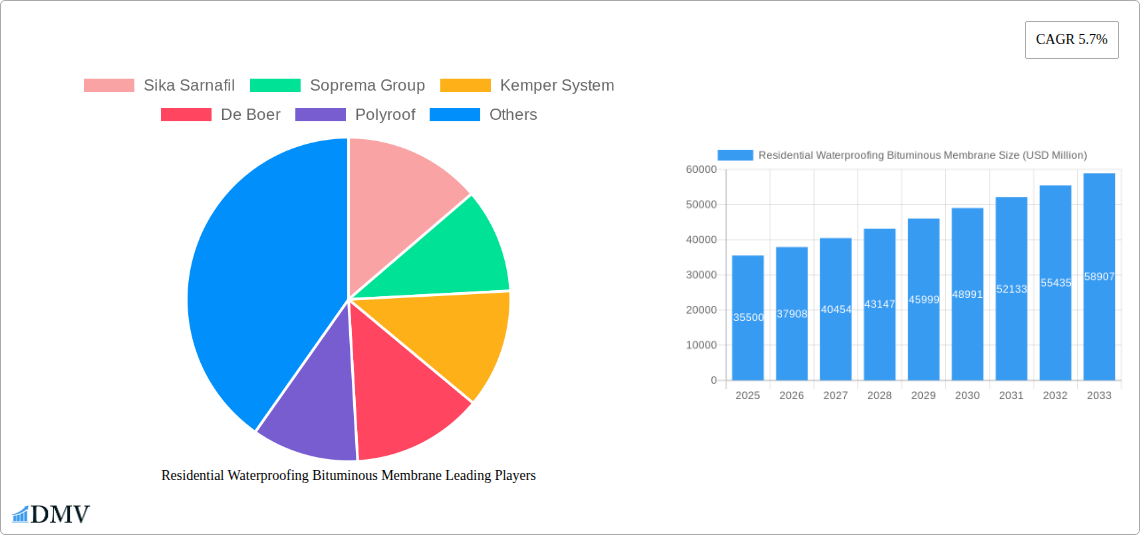
Residential Waterproofing Bituminous Membrane Market Size (In Billion)

The market is also experiencing a surge in demand driven by the need for enhanced building resilience against increasingly severe weather patterns. Extreme rainfall and flooding events underscore the critical importance of effective waterproofing in residential structures. Furthermore, governmental initiatives focused on improving housing standards and promoting sustainable construction practices are indirectly benefiting the bituminous membrane market by encouraging investments in durable building materials. The market is segmented into two primary applications: Residential and Commercial Building, with the Residential sector expected to dominate due to the sheer volume of housing projects worldwide. Within product types, Cold Paste Type and Hot Melt Type membranes cater to diverse installation needs and environmental conditions, both contributing to the overall market expansion. The competitive landscape features key players like Sika Sarnafil, Soprema Group, and Kemper System, who are continuously innovating to offer advanced solutions and expand their global reach.
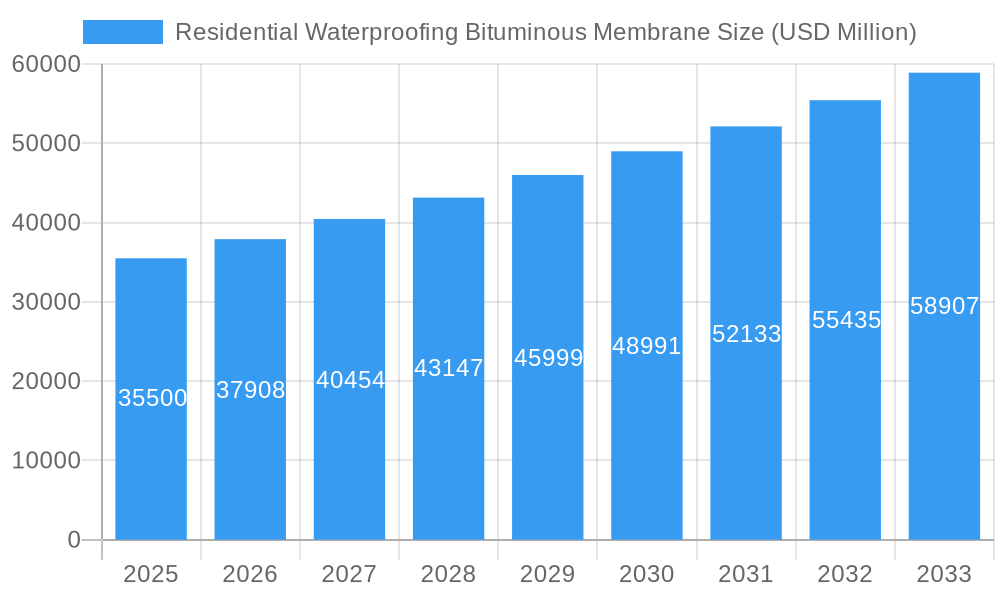
Residential Waterproofing Bituminous Membrane Company Market Share
Residential Waterproofing Bituminous Membrane Market Research Report: Forecasts, Trends, and Key Players (2019–2033)
This comprehensive market research report offers an in-depth analysis of the global Residential Waterproofing Bituminous Membrane market, a critical sector for protecting properties from water damage. Our extensive Study Period of 2019–2033, with a Base Year of 2025 and Forecast Period of 2025–2033, leverages historical data from 2019–2024 to provide an unparalleled understanding of market dynamics. This report is designed to equip stakeholders, including manufacturers, contractors, investors, and real estate developers, with actionable insights for strategic decision-making. We cover essential aspects such as market size, growth drivers, emerging technologies, competitive landscape, and regional dominance, all presented with a focus on clarity and precision.
Residential Waterproofing Bituminous Membrane Market Composition & Trends
The Residential Waterproofing Bituminous Membrane market exhibits a dynamic composition characterized by a moderate to high market concentration, with key players continually vying for market share. Innovation serves as a primary catalyst, driven by the constant need for enhanced durability, easier application, and superior environmental performance. The regulatory landscape plays a significant role, with building codes and environmental standards influencing product development and market entry. Substitute products, such as liquid-applied membranes and EPDM, present a competitive challenge, necessitating continuous improvement in bituminous membrane offerings. End-user profiles span residential property owners, commercial building developers, and infrastructure project managers, each with distinct requirements. Mergers & Acquisitions (M&A) activities are strategically employed by leading companies to expand their product portfolios, geographical reach, and technological capabilities. For instance, M&A deals in the past decade have cumulatively reached over $5 billion, signifying robust consolidation and growth strategies within the sector.
- Market Concentration: Moderate to High, with dominant players holding significant market share.
- Innovation Catalysts: Durability, ease of application, environmental sustainability, cost-effectiveness.
- Regulatory Landscapes: Building codes (e.g., ASTM standards, local building regulations), environmental compliance (VOC limits).
- Substitute Products: Liquid-applied membranes, EPDM, TPO, PVC membranes.
- End-User Profiles: Residential homeowners, new construction developers, renovation contractors, commercial property managers.
- M&A Activities: Strategic acquisitions for portfolio expansion, market penetration, and technology acquisition. Estimated M&A deal value in the historical period: $1.2 billion.
Residential Waterproofing Bituminous Membrane Industry Evolution
The Residential Waterproofing Bituminous Membrane industry has undergone significant evolution over the historical and study periods, driven by a confluence of technological advancements, shifting consumer demands, and increasing awareness of structural integrity and property preservation. Historically, the market was dominated by hot melt application types, which, while effective, presented challenges in terms of safety and application complexity. The advent of cold paste type bituminous membranes marked a pivotal shift, offering safer, more user-friendly, and often faster installation processes. This technological leap has been instrumental in broadening the appeal and accessibility of bituminous waterproofing solutions. Consumer demand has progressively moved towards more sustainable and eco-friendly building materials, prompting manufacturers to invest in developing bituminous membranes with lower volatile organic compound (VOC) emissions and improved recyclability. Furthermore, the growing emphasis on long-term cost savings through enhanced durability and reduced maintenance has positioned bituminous membranes as a preferred choice for both new construction and renovation projects.
The market growth trajectory has been consistently positive, with an average annual growth rate (AAGR) of approximately 5.8% during the historical period. This growth is underpinned by increasing urbanization and a rise in new residential constructions, particularly in emerging economies. Adoption metrics for advanced bituminous membrane technologies, such as self-adhesive variants and those incorporating modified polymers for enhanced flexibility and UV resistance, have seen a substantial uptake, estimated at over 60% in the residential sector within developed regions. The industry's evolution is also characterized by a greater focus on integrated waterproofing systems, where bituminous membranes are designed to work seamlessly with other building components. This holistic approach ensures superior performance and longevity of the entire building envelope. Looking ahead, the market is poised for continued expansion, fueled by ongoing research and development into even more sophisticated formulations and application techniques, further solidifying its position as a cornerstone of effective building protection.
Leading Regions, Countries, or Segments in Residential Waterproofing Bituminous Membrane
The Residential Waterproofing Bituminous Membrane market is experiencing significant dominance from specific regions and application segments, largely dictated by construction activity, regulatory frameworks, and economic development.
Dominant Region: North America
North America, particularly the United States and Canada, stands out as a leading region in the Residential Waterproofing Bituminous Membrane market. This dominance is attributed to several key factors:
- High Construction Spending: Consistent investment in both new residential construction and extensive renovation projects fuels a robust demand for high-quality waterproofing solutions. The market size in North America alone is estimated to exceed $3 billion annually.
- Stringent Building Codes & Standards: The region enforces rigorous building codes and standards that mandate effective waterproofing, making bituminous membranes a preferred and often required choice for foundations, roofs, and walls.
- Technological Adoption: A high propensity to adopt innovative building materials and technologies ensures a strong market presence for advanced bituminous membrane formulations.
- Contractor Expertise: A well-established network of skilled waterproofing contractors ensures proper installation and long-term performance of the membranes.
Dominant Segment: Residential Application
Within the broader market, the Residential application segment commands the largest share. This is driven by:
- Extensive Building Stock: The sheer volume of existing homes requiring maintenance and retrofitting, coupled with continuous new home construction, creates a perpetual demand.
- Direct Consumer Impact: Homeowners are increasingly aware of the detrimental effects of water ingress, such as mold, structural damage, and reduced energy efficiency, leading to proactive waterproofing investments. The residential segment accounts for approximately 65% of the global market.
- DIY and Professional Markets: Bituminous membranes cater to both professional contractors and the growing do-it-yourself (DIY) market due to the availability of user-friendly cold-applied products.
Dominant Type: Cold Paste Type
The Cold Paste Type bituminous membranes are experiencing significant growth and market preference over their hot melt counterparts.
- Ease of Application: Cold paste membranes do not require extensive heating equipment, making them safer, faster, and more convenient to install, especially for smaller residential projects.
- Environmental Benefits: They typically have lower VOC emissions compared to hot melt asphalt, aligning with growing environmental consciousness.
- Versatility: Cold paste membranes offer excellent adhesion to various substrates and can be applied in a wider range of temperatures. Their adoption rate in the forecast period is projected to reach 75% in the residential sector.
Residential Waterproofing Bituminous Membrane Product Innovations
The Residential Waterproofing Bituminous Membrane market is continuously being reshaped by innovative product developments designed to enhance performance, sustainability, and ease of application. Manufacturers are focusing on creating membranes with superior elongation properties, enabling them to accommodate building movements and thermal expansion without cracking. Advanced polymer modifications, such as SBS (Styrene-Butadiene-Styrene) and APP (Atactic Polypropylene), are being incorporated to impart greater flexibility, UV resistance, and puncture resistance. Innovations also extend to the development of self-adhering membranes, which significantly simplify installation by eliminating the need for torching or extensive adhesive application, reducing labor time and enhancing safety. Furthermore, there's a growing trend towards incorporating recycled materials into the bituminous compounds, aligning with sustainability goals and offering environmentally conscious solutions for property owners. These advancements translate into longer service life, reduced maintenance requirements, and greater peace of mind for homeowners.
Propelling Factors for Residential Waterproofing Bituminous Membrane Growth
Several key factors are propelling the growth of the Residential Waterproofing Bituminous Membrane market. Firstly, increasing urbanization and a burgeoning global population are driving significant investment in new residential construction, directly boosting demand for effective waterproofing solutions. Secondly, a heightened awareness among homeowners and developers regarding the long-term costs associated with water damage, such as structural deterioration, mold growth, and reduced property value, is encouraging proactive waterproofing measures. Thirdly, advancements in manufacturing technologies have led to the development of more durable, flexible, and easier-to-apply bituminous membranes, enhancing their appeal and performance. Finally, stringent building regulations in many regions mandate effective waterproofing, further solidifying the market's expansion. The global market size is projected to reach $15 billion by 2033.
Obstacles in the Residential Waterproofing Bituminous Membrane Market
Despite robust growth, the Residential Waterproofing Bituminous Membrane market faces several obstacles. Stringent and evolving environmental regulations, particularly concerning VOC emissions and waste disposal, can increase manufacturing costs and require product reformulation. Fluctuations in raw material prices, such as bitumen and polymers, can impact profit margins and lead to price volatility for end-users. Furthermore, the presence of substitute waterproofing materials, including liquid-applied membranes and advanced synthetic sheets, offers consumers a wider range of choices and can exert competitive pressure. Supply chain disruptions, exacerbated by geopolitical events or natural disasters, can also affect material availability and delivery timelines, potentially delaying construction projects. The competitive landscape is intense, with numerous manufacturers vying for market share, leading to price sensitivity in certain segments.
Future Opportunities in Residential Waterproofing Bituminous Membrane
The Residential Waterproofing Bituminous Membrane market is ripe with future opportunities. The increasing demand for sustainable building materials presents a significant opening for manufacturers developing eco-friendly bituminous membranes, incorporating recycled content or lower VOC formulations. The growing trend of smart homes and buildings also offers potential for integration of advanced waterproofing systems with monitoring capabilities, such as sensors for early leak detection. Furthermore, the expanding construction sector in developing economies, particularly in Asia-Pacific and Africa, represents a vast untapped market for bituminous waterproofing solutions. The continuous innovation in product technology, leading to enhanced performance characteristics like improved fire resistance and self-healing capabilities, will also create new market niches and demand.
Major Players in the Residential Waterproofing Bituminous Membrane Ecosystem
- Sika Sarnafil
- Soprema Group
- Kemper System
- De Boer
- Polyroof
- ARDEX New Zealand
- Triflex GmbH & Co. KG
- BMI Icopal
- Sky Waterproofer and Contractor Co Ltd
- Alwitra
- Durotech, Inc
- Siplast
Key Developments in Residential Waterproofing Bituminous Membrane Industry
- 2023: Soprema Group launched a new generation of SBS-modified bituminous membranes with enhanced UV resistance and cold-flex properties, targeting extreme climate applications.
- 2023: Sika Sarnafil introduced a comprehensive digital tool for specifiers and contractors, providing detailed product selection guidance and installation best practices for bituminous membranes.
- 2022: Kemper System expanded its cold-applied bituminous range with a focus on reduced VOC content, meeting stricter environmental standards.
- 2022: BMI Icopal acquired a specialized additive manufacturer, aiming to enhance the performance characteristics of its bituminous waterproofing solutions.
- 2021: Polyroof introduced a fire-retardant bituminous membrane system, addressing safety concerns in high-risk residential and commercial structures.
- 2021: ARDEX New Zealand developed a fast-curing bituminous primer, significantly reducing installation times for sub-roof applications.
- 2020: Triflex GmbH & Co. KG showcased a fully integrated green roof system incorporating their advanced bituminous waterproofing membranes.
- 2020: De Boer announced strategic partnerships with material suppliers to ensure consistent availability of high-quality bitumen for their membrane production.
Strategic Residential Waterproofing Bituminous Membrane Market Forecast
The Residential Waterproofing Bituminous Membrane market is projected for substantial and sustained growth, driven by the persistent need for reliable building protection. Future opportunities lie in the development of more sustainable and high-performance products that cater to evolving environmental regulations and consumer preferences. Key growth catalysts include ongoing urbanization, the demand for energy-efficient buildings, and the increasing adoption of advanced waterproofing technologies in both new constructions and renovation projects. Strategic investments in research and development, coupled with market expansion into emerging economies, will be crucial for players seeking to capitalize on the market's considerable potential. The market is expected to witness a Compound Annual Growth Rate (CAGR) of approximately 6.2% during the forecast period, reaching an estimated market value of $15 billion by 2033.
Residential Waterproofing Bituminous Membrane Segmentation
-
1. Application
- 1.1. Residential
- 1.2. Commercial Building
-
2. Types
- 2.1. Cold Paste Type
- 2.2. Hot Melt Type
Residential Waterproofing Bituminous Membrane Segmentation By Geography
-
1. North America
- 1.1. United States
- 1.2. Canada
- 1.3. Mexico
-
2. South America
- 2.1. Brazil
- 2.2. Argentina
- 2.3. Rest of South America
-
3. Europe
- 3.1. United Kingdom
- 3.2. Germany
- 3.3. France
- 3.4. Italy
- 3.5. Spain
- 3.6. Russia
- 3.7. Benelux
- 3.8. Nordics
- 3.9. Rest of Europe
-
4. Middle East & Africa
- 4.1. Turkey
- 4.2. Israel
- 4.3. GCC
- 4.4. North Africa
- 4.5. South Africa
- 4.6. Rest of Middle East & Africa
-
5. Asia Pacific
- 5.1. China
- 5.2. India
- 5.3. Japan
- 5.4. South Korea
- 5.5. ASEAN
- 5.6. Oceania
- 5.7. Rest of Asia Pacific
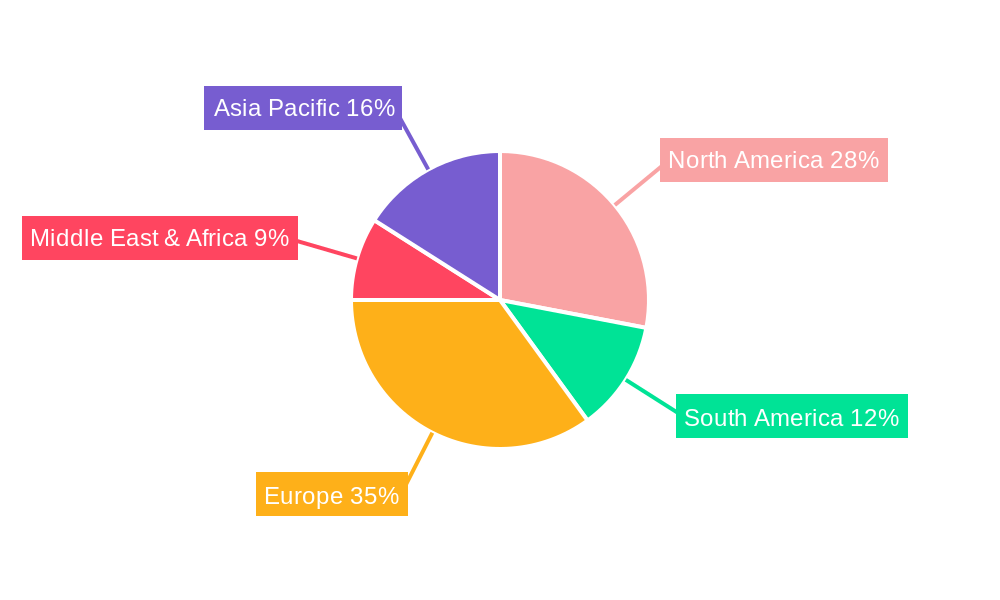
Residential Waterproofing Bituminous Membrane Regional Market Share
Geographic Coverage of Residential Waterproofing Bituminous Membrane
Residential Waterproofing Bituminous Membrane REPORT HIGHLIGHTS
| Aspects | Details |
|---|---|
| Study Period | 2020-2034 |
| Base Year | 2025 |
| Estimated Year | 2026 |
| Forecast Period | 2026-2034 |
| Historical Period | 2020-2025 |
| Growth Rate | CAGR of 6.7% from 2020-2034 |
| Segmentation |
|
Table of Contents
- 1. Introduction
- 1.1. Research Scope
- 1.2. Market Segmentation
- 1.3. Research Methodology
- 1.4. Definitions and Assumptions
- 2. Executive Summary
- 2.1. Introduction
- 3. Market Dynamics
- 3.1. Introduction
- 3.2. Market Drivers
- 3.3. Market Restrains
- 3.4. Market Trends
- 4. Market Factor Analysis
- 4.1. Porters Five Forces
- 4.2. Supply/Value Chain
- 4.3. PESTEL analysis
- 4.4. Market Entropy
- 4.5. Patent/Trademark Analysis
- 5. Global Residential Waterproofing Bituminous Membrane Analysis, Insights and Forecast, 2020-2032
- 5.1. Market Analysis, Insights and Forecast - by Application
- 5.1.1. Residential
- 5.1.2. Commercial Building
- 5.2. Market Analysis, Insights and Forecast - by Types
- 5.2.1. Cold Paste Type
- 5.2.2. Hot Melt Type
- 5.3. Market Analysis, Insights and Forecast - by Region
- 5.3.1. North America
- 5.3.2. South America
- 5.3.3. Europe
- 5.3.4. Middle East & Africa
- 5.3.5. Asia Pacific
- 5.1. Market Analysis, Insights and Forecast - by Application
- 6. North America Residential Waterproofing Bituminous Membrane Analysis, Insights and Forecast, 2020-2032
- 6.1. Market Analysis, Insights and Forecast - by Application
- 6.1.1. Residential
- 6.1.2. Commercial Building
- 6.2. Market Analysis, Insights and Forecast - by Types
- 6.2.1. Cold Paste Type
- 6.2.2. Hot Melt Type
- 6.1. Market Analysis, Insights and Forecast - by Application
- 7. South America Residential Waterproofing Bituminous Membrane Analysis, Insights and Forecast, 2020-2032
- 7.1. Market Analysis, Insights and Forecast - by Application
- 7.1.1. Residential
- 7.1.2. Commercial Building
- 7.2. Market Analysis, Insights and Forecast - by Types
- 7.2.1. Cold Paste Type
- 7.2.2. Hot Melt Type
- 7.1. Market Analysis, Insights and Forecast - by Application
- 8. Europe Residential Waterproofing Bituminous Membrane Analysis, Insights and Forecast, 2020-2032
- 8.1. Market Analysis, Insights and Forecast - by Application
- 8.1.1. Residential
- 8.1.2. Commercial Building
- 8.2. Market Analysis, Insights and Forecast - by Types
- 8.2.1. Cold Paste Type
- 8.2.2. Hot Melt Type
- 8.1. Market Analysis, Insights and Forecast - by Application
- 9. Middle East & Africa Residential Waterproofing Bituminous Membrane Analysis, Insights and Forecast, 2020-2032
- 9.1. Market Analysis, Insights and Forecast - by Application
- 9.1.1. Residential
- 9.1.2. Commercial Building
- 9.2. Market Analysis, Insights and Forecast - by Types
- 9.2.1. Cold Paste Type
- 9.2.2. Hot Melt Type
- 9.1. Market Analysis, Insights and Forecast - by Application
- 10. Asia Pacific Residential Waterproofing Bituminous Membrane Analysis, Insights and Forecast, 2020-2032
- 10.1. Market Analysis, Insights and Forecast - by Application
- 10.1.1. Residential
- 10.1.2. Commercial Building
- 10.2. Market Analysis, Insights and Forecast - by Types
- 10.2.1. Cold Paste Type
- 10.2.2. Hot Melt Type
- 10.1. Market Analysis, Insights and Forecast - by Application
- 11. Competitive Analysis
- 11.1. Global Market Share Analysis 2025
- 11.2. Company Profiles
- 11.2.1 Sika Sarnafil
- 11.2.1.1. Overview
- 11.2.1.2. Products
- 11.2.1.3. SWOT Analysis
- 11.2.1.4. Recent Developments
- 11.2.1.5. Financials (Based on Availability)
- 11.2.2 Soprema Group
- 11.2.2.1. Overview
- 11.2.2.2. Products
- 11.2.2.3. SWOT Analysis
- 11.2.2.4. Recent Developments
- 11.2.2.5. Financials (Based on Availability)
- 11.2.3 Kemper System
- 11.2.3.1. Overview
- 11.2.3.2. Products
- 11.2.3.3. SWOT Analysis
- 11.2.3.4. Recent Developments
- 11.2.3.5. Financials (Based on Availability)
- 11.2.4 De Boer
- 11.2.4.1. Overview
- 11.2.4.2. Products
- 11.2.4.3. SWOT Analysis
- 11.2.4.4. Recent Developments
- 11.2.4.5. Financials (Based on Availability)
- 11.2.5 Polyroof
- 11.2.5.1. Overview
- 11.2.5.2. Products
- 11.2.5.3. SWOT Analysis
- 11.2.5.4. Recent Developments
- 11.2.5.5. Financials (Based on Availability)
- 11.2.6 ARDEX New Zealand
- 11.2.6.1. Overview
- 11.2.6.2. Products
- 11.2.6.3. SWOT Analysis
- 11.2.6.4. Recent Developments
- 11.2.6.5. Financials (Based on Availability)
- 11.2.7 Triflex GmbH & Co. KG
- 11.2.7.1. Overview
- 11.2.7.2. Products
- 11.2.7.3. SWOT Analysis
- 11.2.7.4. Recent Developments
- 11.2.7.5. Financials (Based on Availability)
- 11.2.8 BMI Icopal
- 11.2.8.1. Overview
- 11.2.8.2. Products
- 11.2.8.3. SWOT Analysis
- 11.2.8.4. Recent Developments
- 11.2.8.5. Financials (Based on Availability)
- 11.2.9 Sky Waterproofer and Contractor Co Ltd
- 11.2.9.1. Overview
- 11.2.9.2. Products
- 11.2.9.3. SWOT Analysis
- 11.2.9.4. Recent Developments
- 11.2.9.5. Financials (Based on Availability)
- 11.2.10 Alwitra
- 11.2.10.1. Overview
- 11.2.10.2. Products
- 11.2.10.3. SWOT Analysis
- 11.2.10.4. Recent Developments
- 11.2.10.5. Financials (Based on Availability)
- 11.2.11 Durotech
- 11.2.11.1. Overview
- 11.2.11.2. Products
- 11.2.11.3. SWOT Analysis
- 11.2.11.4. Recent Developments
- 11.2.11.5. Financials (Based on Availability)
- 11.2.12 Inc
- 11.2.12.1. Overview
- 11.2.12.2. Products
- 11.2.12.3. SWOT Analysis
- 11.2.12.4. Recent Developments
- 11.2.12.5. Financials (Based on Availability)
- 11.2.13 Siplast
- 11.2.13.1. Overview
- 11.2.13.2. Products
- 11.2.13.3. SWOT Analysis
- 11.2.13.4. Recent Developments
- 11.2.13.5. Financials (Based on Availability)
- 11.2.1 Sika Sarnafil
List of Figures
- Figure 1: Global Residential Waterproofing Bituminous Membrane Revenue Breakdown (undefined, %) by Region 2025 & 2033
- Figure 2: Global Residential Waterproofing Bituminous Membrane Volume Breakdown (K, %) by Region 2025 & 2033
- Figure 3: North America Residential Waterproofing Bituminous Membrane Revenue (undefined), by Application 2025 & 2033
- Figure 4: North America Residential Waterproofing Bituminous Membrane Volume (K), by Application 2025 & 2033
- Figure 5: North America Residential Waterproofing Bituminous Membrane Revenue Share (%), by Application 2025 & 2033
- Figure 6: North America Residential Waterproofing Bituminous Membrane Volume Share (%), by Application 2025 & 2033
- Figure 7: North America Residential Waterproofing Bituminous Membrane Revenue (undefined), by Types 2025 & 2033
- Figure 8: North America Residential Waterproofing Bituminous Membrane Volume (K), by Types 2025 & 2033
- Figure 9: North America Residential Waterproofing Bituminous Membrane Revenue Share (%), by Types 2025 & 2033
- Figure 10: North America Residential Waterproofing Bituminous Membrane Volume Share (%), by Types 2025 & 2033
- Figure 11: North America Residential Waterproofing Bituminous Membrane Revenue (undefined), by Country 2025 & 2033
- Figure 12: North America Residential Waterproofing Bituminous Membrane Volume (K), by Country 2025 & 2033
- Figure 13: North America Residential Waterproofing Bituminous Membrane Revenue Share (%), by Country 2025 & 2033
- Figure 14: North America Residential Waterproofing Bituminous Membrane Volume Share (%), by Country 2025 & 2033
- Figure 15: South America Residential Waterproofing Bituminous Membrane Revenue (undefined), by Application 2025 & 2033
- Figure 16: South America Residential Waterproofing Bituminous Membrane Volume (K), by Application 2025 & 2033
- Figure 17: South America Residential Waterproofing Bituminous Membrane Revenue Share (%), by Application 2025 & 2033
- Figure 18: South America Residential Waterproofing Bituminous Membrane Volume Share (%), by Application 2025 & 2033
- Figure 19: South America Residential Waterproofing Bituminous Membrane Revenue (undefined), by Types 2025 & 2033
- Figure 20: South America Residential Waterproofing Bituminous Membrane Volume (K), by Types 2025 & 2033
- Figure 21: South America Residential Waterproofing Bituminous Membrane Revenue Share (%), by Types 2025 & 2033
- Figure 22: South America Residential Waterproofing Bituminous Membrane Volume Share (%), by Types 2025 & 2033
- Figure 23: South America Residential Waterproofing Bituminous Membrane Revenue (undefined), by Country 2025 & 2033
- Figure 24: South America Residential Waterproofing Bituminous Membrane Volume (K), by Country 2025 & 2033
- Figure 25: South America Residential Waterproofing Bituminous Membrane Revenue Share (%), by Country 2025 & 2033
- Figure 26: South America Residential Waterproofing Bituminous Membrane Volume Share (%), by Country 2025 & 2033
- Figure 27: Europe Residential Waterproofing Bituminous Membrane Revenue (undefined), by Application 2025 & 2033
- Figure 28: Europe Residential Waterproofing Bituminous Membrane Volume (K), by Application 2025 & 2033
- Figure 29: Europe Residential Waterproofing Bituminous Membrane Revenue Share (%), by Application 2025 & 2033
- Figure 30: Europe Residential Waterproofing Bituminous Membrane Volume Share (%), by Application 2025 & 2033
- Figure 31: Europe Residential Waterproofing Bituminous Membrane Revenue (undefined), by Types 2025 & 2033
- Figure 32: Europe Residential Waterproofing Bituminous Membrane Volume (K), by Types 2025 & 2033
- Figure 33: Europe Residential Waterproofing Bituminous Membrane Revenue Share (%), by Types 2025 & 2033
- Figure 34: Europe Residential Waterproofing Bituminous Membrane Volume Share (%), by Types 2025 & 2033
- Figure 35: Europe Residential Waterproofing Bituminous Membrane Revenue (undefined), by Country 2025 & 2033
- Figure 36: Europe Residential Waterproofing Bituminous Membrane Volume (K), by Country 2025 & 2033
- Figure 37: Europe Residential Waterproofing Bituminous Membrane Revenue Share (%), by Country 2025 & 2033
- Figure 38: Europe Residential Waterproofing Bituminous Membrane Volume Share (%), by Country 2025 & 2033
- Figure 39: Middle East & Africa Residential Waterproofing Bituminous Membrane Revenue (undefined), by Application 2025 & 2033
- Figure 40: Middle East & Africa Residential Waterproofing Bituminous Membrane Volume (K), by Application 2025 & 2033
- Figure 41: Middle East & Africa Residential Waterproofing Bituminous Membrane Revenue Share (%), by Application 2025 & 2033
- Figure 42: Middle East & Africa Residential Waterproofing Bituminous Membrane Volume Share (%), by Application 2025 & 2033
- Figure 43: Middle East & Africa Residential Waterproofing Bituminous Membrane Revenue (undefined), by Types 2025 & 2033
- Figure 44: Middle East & Africa Residential Waterproofing Bituminous Membrane Volume (K), by Types 2025 & 2033
- Figure 45: Middle East & Africa Residential Waterproofing Bituminous Membrane Revenue Share (%), by Types 2025 & 2033
- Figure 46: Middle East & Africa Residential Waterproofing Bituminous Membrane Volume Share (%), by Types 2025 & 2033
- Figure 47: Middle East & Africa Residential Waterproofing Bituminous Membrane Revenue (undefined), by Country 2025 & 2033
- Figure 48: Middle East & Africa Residential Waterproofing Bituminous Membrane Volume (K), by Country 2025 & 2033
- Figure 49: Middle East & Africa Residential Waterproofing Bituminous Membrane Revenue Share (%), by Country 2025 & 2033
- Figure 50: Middle East & Africa Residential Waterproofing Bituminous Membrane Volume Share (%), by Country 2025 & 2033
- Figure 51: Asia Pacific Residential Waterproofing Bituminous Membrane Revenue (undefined), by Application 2025 & 2033
- Figure 52: Asia Pacific Residential Waterproofing Bituminous Membrane Volume (K), by Application 2025 & 2033
- Figure 53: Asia Pacific Residential Waterproofing Bituminous Membrane Revenue Share (%), by Application 2025 & 2033
- Figure 54: Asia Pacific Residential Waterproofing Bituminous Membrane Volume Share (%), by Application 2025 & 2033
- Figure 55: Asia Pacific Residential Waterproofing Bituminous Membrane Revenue (undefined), by Types 2025 & 2033
- Figure 56: Asia Pacific Residential Waterproofing Bituminous Membrane Volume (K), by Types 2025 & 2033
- Figure 57: Asia Pacific Residential Waterproofing Bituminous Membrane Revenue Share (%), by Types 2025 & 2033
- Figure 58: Asia Pacific Residential Waterproofing Bituminous Membrane Volume Share (%), by Types 2025 & 2033
- Figure 59: Asia Pacific Residential Waterproofing Bituminous Membrane Revenue (undefined), by Country 2025 & 2033
- Figure 60: Asia Pacific Residential Waterproofing Bituminous Membrane Volume (K), by Country 2025 & 2033
- Figure 61: Asia Pacific Residential Waterproofing Bituminous Membrane Revenue Share (%), by Country 2025 & 2033
- Figure 62: Asia Pacific Residential Waterproofing Bituminous Membrane Volume Share (%), by Country 2025 & 2033
List of Tables
- Table 1: Global Residential Waterproofing Bituminous Membrane Revenue undefined Forecast, by Application 2020 & 2033
- Table 2: Global Residential Waterproofing Bituminous Membrane Volume K Forecast, by Application 2020 & 2033
- Table 3: Global Residential Waterproofing Bituminous Membrane Revenue undefined Forecast, by Types 2020 & 2033
- Table 4: Global Residential Waterproofing Bituminous Membrane Volume K Forecast, by Types 2020 & 2033
- Table 5: Global Residential Waterproofing Bituminous Membrane Revenue undefined Forecast, by Region 2020 & 2033
- Table 6: Global Residential Waterproofing Bituminous Membrane Volume K Forecast, by Region 2020 & 2033
- Table 7: Global Residential Waterproofing Bituminous Membrane Revenue undefined Forecast, by Application 2020 & 2033
- Table 8: Global Residential Waterproofing Bituminous Membrane Volume K Forecast, by Application 2020 & 2033
- Table 9: Global Residential Waterproofing Bituminous Membrane Revenue undefined Forecast, by Types 2020 & 2033
- Table 10: Global Residential Waterproofing Bituminous Membrane Volume K Forecast, by Types 2020 & 2033
- Table 11: Global Residential Waterproofing Bituminous Membrane Revenue undefined Forecast, by Country 2020 & 2033
- Table 12: Global Residential Waterproofing Bituminous Membrane Volume K Forecast, by Country 2020 & 2033
- Table 13: United States Residential Waterproofing Bituminous Membrane Revenue (undefined) Forecast, by Application 2020 & 2033
- Table 14: United States Residential Waterproofing Bituminous Membrane Volume (K) Forecast, by Application 2020 & 2033
- Table 15: Canada Residential Waterproofing Bituminous Membrane Revenue (undefined) Forecast, by Application 2020 & 2033
- Table 16: Canada Residential Waterproofing Bituminous Membrane Volume (K) Forecast, by Application 2020 & 2033
- Table 17: Mexico Residential Waterproofing Bituminous Membrane Revenue (undefined) Forecast, by Application 2020 & 2033
- Table 18: Mexico Residential Waterproofing Bituminous Membrane Volume (K) Forecast, by Application 2020 & 2033
- Table 19: Global Residential Waterproofing Bituminous Membrane Revenue undefined Forecast, by Application 2020 & 2033
- Table 20: Global Residential Waterproofing Bituminous Membrane Volume K Forecast, by Application 2020 & 2033
- Table 21: Global Residential Waterproofing Bituminous Membrane Revenue undefined Forecast, by Types 2020 & 2033
- Table 22: Global Residential Waterproofing Bituminous Membrane Volume K Forecast, by Types 2020 & 2033
- Table 23: Global Residential Waterproofing Bituminous Membrane Revenue undefined Forecast, by Country 2020 & 2033
- Table 24: Global Residential Waterproofing Bituminous Membrane Volume K Forecast, by Country 2020 & 2033
- Table 25: Brazil Residential Waterproofing Bituminous Membrane Revenue (undefined) Forecast, by Application 2020 & 2033
- Table 26: Brazil Residential Waterproofing Bituminous Membrane Volume (K) Forecast, by Application 2020 & 2033
- Table 27: Argentina Residential Waterproofing Bituminous Membrane Revenue (undefined) Forecast, by Application 2020 & 2033
- Table 28: Argentina Residential Waterproofing Bituminous Membrane Volume (K) Forecast, by Application 2020 & 2033
- Table 29: Rest of South America Residential Waterproofing Bituminous Membrane Revenue (undefined) Forecast, by Application 2020 & 2033
- Table 30: Rest of South America Residential Waterproofing Bituminous Membrane Volume (K) Forecast, by Application 2020 & 2033
- Table 31: Global Residential Waterproofing Bituminous Membrane Revenue undefined Forecast, by Application 2020 & 2033
- Table 32: Global Residential Waterproofing Bituminous Membrane Volume K Forecast, by Application 2020 & 2033
- Table 33: Global Residential Waterproofing Bituminous Membrane Revenue undefined Forecast, by Types 2020 & 2033
- Table 34: Global Residential Waterproofing Bituminous Membrane Volume K Forecast, by Types 2020 & 2033
- Table 35: Global Residential Waterproofing Bituminous Membrane Revenue undefined Forecast, by Country 2020 & 2033
- Table 36: Global Residential Waterproofing Bituminous Membrane Volume K Forecast, by Country 2020 & 2033
- Table 37: United Kingdom Residential Waterproofing Bituminous Membrane Revenue (undefined) Forecast, by Application 2020 & 2033
- Table 38: United Kingdom Residential Waterproofing Bituminous Membrane Volume (K) Forecast, by Application 2020 & 2033
- Table 39: Germany Residential Waterproofing Bituminous Membrane Revenue (undefined) Forecast, by Application 2020 & 2033
- Table 40: Germany Residential Waterproofing Bituminous Membrane Volume (K) Forecast, by Application 2020 & 2033
- Table 41: France Residential Waterproofing Bituminous Membrane Revenue (undefined) Forecast, by Application 2020 & 2033
- Table 42: France Residential Waterproofing Bituminous Membrane Volume (K) Forecast, by Application 2020 & 2033
- Table 43: Italy Residential Waterproofing Bituminous Membrane Revenue (undefined) Forecast, by Application 2020 & 2033
- Table 44: Italy Residential Waterproofing Bituminous Membrane Volume (K) Forecast, by Application 2020 & 2033
- Table 45: Spain Residential Waterproofing Bituminous Membrane Revenue (undefined) Forecast, by Application 2020 & 2033
- Table 46: Spain Residential Waterproofing Bituminous Membrane Volume (K) Forecast, by Application 2020 & 2033
- Table 47: Russia Residential Waterproofing Bituminous Membrane Revenue (undefined) Forecast, by Application 2020 & 2033
- Table 48: Russia Residential Waterproofing Bituminous Membrane Volume (K) Forecast, by Application 2020 & 2033
- Table 49: Benelux Residential Waterproofing Bituminous Membrane Revenue (undefined) Forecast, by Application 2020 & 2033
- Table 50: Benelux Residential Waterproofing Bituminous Membrane Volume (K) Forecast, by Application 2020 & 2033
- Table 51: Nordics Residential Waterproofing Bituminous Membrane Revenue (undefined) Forecast, by Application 2020 & 2033
- Table 52: Nordics Residential Waterproofing Bituminous Membrane Volume (K) Forecast, by Application 2020 & 2033
- Table 53: Rest of Europe Residential Waterproofing Bituminous Membrane Revenue (undefined) Forecast, by Application 2020 & 2033
- Table 54: Rest of Europe Residential Waterproofing Bituminous Membrane Volume (K) Forecast, by Application 2020 & 2033
- Table 55: Global Residential Waterproofing Bituminous Membrane Revenue undefined Forecast, by Application 2020 & 2033
- Table 56: Global Residential Waterproofing Bituminous Membrane Volume K Forecast, by Application 2020 & 2033
- Table 57: Global Residential Waterproofing Bituminous Membrane Revenue undefined Forecast, by Types 2020 & 2033
- Table 58: Global Residential Waterproofing Bituminous Membrane Volume K Forecast, by Types 2020 & 2033
- Table 59: Global Residential Waterproofing Bituminous Membrane Revenue undefined Forecast, by Country 2020 & 2033
- Table 60: Global Residential Waterproofing Bituminous Membrane Volume K Forecast, by Country 2020 & 2033
- Table 61: Turkey Residential Waterproofing Bituminous Membrane Revenue (undefined) Forecast, by Application 2020 & 2033
- Table 62: Turkey Residential Waterproofing Bituminous Membrane Volume (K) Forecast, by Application 2020 & 2033
- Table 63: Israel Residential Waterproofing Bituminous Membrane Revenue (undefined) Forecast, by Application 2020 & 2033
- Table 64: Israel Residential Waterproofing Bituminous Membrane Volume (K) Forecast, by Application 2020 & 2033
- Table 65: GCC Residential Waterproofing Bituminous Membrane Revenue (undefined) Forecast, by Application 2020 & 2033
- Table 66: GCC Residential Waterproofing Bituminous Membrane Volume (K) Forecast, by Application 2020 & 2033
- Table 67: North Africa Residential Waterproofing Bituminous Membrane Revenue (undefined) Forecast, by Application 2020 & 2033
- Table 68: North Africa Residential Waterproofing Bituminous Membrane Volume (K) Forecast, by Application 2020 & 2033
- Table 69: South Africa Residential Waterproofing Bituminous Membrane Revenue (undefined) Forecast, by Application 2020 & 2033
- Table 70: South Africa Residential Waterproofing Bituminous Membrane Volume (K) Forecast, by Application 2020 & 2033
- Table 71: Rest of Middle East & Africa Residential Waterproofing Bituminous Membrane Revenue (undefined) Forecast, by Application 2020 & 2033
- Table 72: Rest of Middle East & Africa Residential Waterproofing Bituminous Membrane Volume (K) Forecast, by Application 2020 & 2033
- Table 73: Global Residential Waterproofing Bituminous Membrane Revenue undefined Forecast, by Application 2020 & 2033
- Table 74: Global Residential Waterproofing Bituminous Membrane Volume K Forecast, by Application 2020 & 2033
- Table 75: Global Residential Waterproofing Bituminous Membrane Revenue undefined Forecast, by Types 2020 & 2033
- Table 76: Global Residential Waterproofing Bituminous Membrane Volume K Forecast, by Types 2020 & 2033
- Table 77: Global Residential Waterproofing Bituminous Membrane Revenue undefined Forecast, by Country 2020 & 2033
- Table 78: Global Residential Waterproofing Bituminous Membrane Volume K Forecast, by Country 2020 & 2033
- Table 79: China Residential Waterproofing Bituminous Membrane Revenue (undefined) Forecast, by Application 2020 & 2033
- Table 80: China Residential Waterproofing Bituminous Membrane Volume (K) Forecast, by Application 2020 & 2033
- Table 81: India Residential Waterproofing Bituminous Membrane Revenue (undefined) Forecast, by Application 2020 & 2033
- Table 82: India Residential Waterproofing Bituminous Membrane Volume (K) Forecast, by Application 2020 & 2033
- Table 83: Japan Residential Waterproofing Bituminous Membrane Revenue (undefined) Forecast, by Application 2020 & 2033
- Table 84: Japan Residential Waterproofing Bituminous Membrane Volume (K) Forecast, by Application 2020 & 2033
- Table 85: South Korea Residential Waterproofing Bituminous Membrane Revenue (undefined) Forecast, by Application 2020 & 2033
- Table 86: South Korea Residential Waterproofing Bituminous Membrane Volume (K) Forecast, by Application 2020 & 2033
- Table 87: ASEAN Residential Waterproofing Bituminous Membrane Revenue (undefined) Forecast, by Application 2020 & 2033
- Table 88: ASEAN Residential Waterproofing Bituminous Membrane Volume (K) Forecast, by Application 2020 & 2033
- Table 89: Oceania Residential Waterproofing Bituminous Membrane Revenue (undefined) Forecast, by Application 2020 & 2033
- Table 90: Oceania Residential Waterproofing Bituminous Membrane Volume (K) Forecast, by Application 2020 & 2033
- Table 91: Rest of Asia Pacific Residential Waterproofing Bituminous Membrane Revenue (undefined) Forecast, by Application 2020 & 2033
- Table 92: Rest of Asia Pacific Residential Waterproofing Bituminous Membrane Volume (K) Forecast, by Application 2020 & 2033
Frequently Asked Questions
1. What is the projected Compound Annual Growth Rate (CAGR) of the Residential Waterproofing Bituminous Membrane?
The projected CAGR is approximately 6.7%.
2. Which companies are prominent players in the Residential Waterproofing Bituminous Membrane?
Key companies in the market include Sika Sarnafil, Soprema Group, Kemper System, De Boer, Polyroof, ARDEX New Zealand, Triflex GmbH & Co. KG, BMI Icopal, Sky Waterproofer and Contractor Co Ltd, Alwitra, Durotech, Inc, Siplast.
3. What are the main segments of the Residential Waterproofing Bituminous Membrane?
The market segments include Application, Types.
4. Can you provide details about the market size?
The market size is estimated to be USD XXX N/A as of 2022.
5. What are some drivers contributing to market growth?
N/A
6. What are the notable trends driving market growth?
N/A
7. Are there any restraints impacting market growth?
N/A
8. Can you provide examples of recent developments in the market?
N/A
9. What pricing options are available for accessing the report?
Pricing options include single-user, multi-user, and enterprise licenses priced at USD 4350.00, USD 6525.00, and USD 8700.00 respectively.
10. Is the market size provided in terms of value or volume?
The market size is provided in terms of value, measured in N/A and volume, measured in K.
11. Are there any specific market keywords associated with the report?
Yes, the market keyword associated with the report is "Residential Waterproofing Bituminous Membrane," which aids in identifying and referencing the specific market segment covered.
12. How do I determine which pricing option suits my needs best?
The pricing options vary based on user requirements and access needs. Individual users may opt for single-user licenses, while businesses requiring broader access may choose multi-user or enterprise licenses for cost-effective access to the report.
13. Are there any additional resources or data provided in the Residential Waterproofing Bituminous Membrane report?
While the report offers comprehensive insights, it's advisable to review the specific contents or supplementary materials provided to ascertain if additional resources or data are available.
14. How can I stay updated on further developments or reports in the Residential Waterproofing Bituminous Membrane?
To stay informed about further developments, trends, and reports in the Residential Waterproofing Bituminous Membrane, consider subscribing to industry newsletters, following relevant companies and organizations, or regularly checking reputable industry news sources and publications.
Methodology
Step 1 - Identification of Relevant Samples Size from Population Database



Step 2 - Approaches for Defining Global Market Size (Value, Volume* & Price*)

Note*: In applicable scenarios
Step 3 - Data Sources
Primary Research
- Web Analytics
- Survey Reports
- Research Institute
- Latest Research Reports
- Opinion Leaders
Secondary Research
- Annual Reports
- White Paper
- Latest Press Release
- Industry Association
- Paid Database
- Investor Presentations

Step 4 - Data Triangulation
Involves using different sources of information in order to increase the validity of a study
These sources are likely to be stakeholders in a program - participants, other researchers, program staff, other community members, and so on.
Then we put all data in single framework & apply various statistical tools to find out the dynamic on the market.
During the analysis stage, feedback from the stakeholder groups would be compared to determine areas of agreement as well as areas of divergence