


Key Insights
The DTOF LiDAR market is poised for significant expansion, driven by the escalating demand for advanced sensing technologies in robotics, autonomous systems, and industrial automation. With a current market size estimated at $11.04 billion in 2025, the sector is projected to witness robust growth, fueled by a compound annual growth rate (CAGR) of 11.57%. This impressive trajectory is largely attributable to the inherent advantages of DTOF LiDAR, including its superior accuracy, faster data acquisition, and improved performance in challenging environmental conditions compared to other LiDAR technologies. Key application areas such as industrial robots requiring precise navigation and object detection, as well as the burgeoning drone market for aerial surveying and inspection, are primary catalysts for this growth. Emerging applications in smart city infrastructure and advanced driver-assistance systems (ADAS) also contribute to the sustained upward trend.
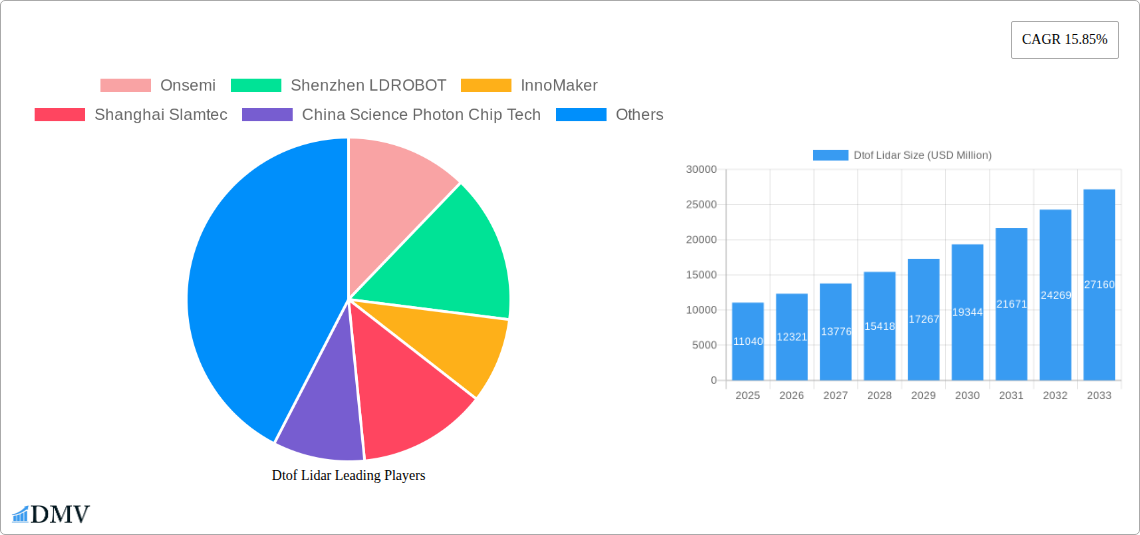
Dtof Lidar Market Size (In Billion)

While the market exhibits strong growth drivers, certain restraints need to be navigated. The initial cost of DTOF LiDAR units can be a barrier for widespread adoption in some cost-sensitive applications. However, ongoing technological advancements and increasing production volumes are expected to gradually bring down prices, democratizing access to this critical sensing technology. Furthermore, the development and standardization of data processing algorithms and software frameworks are crucial for seamless integration and unlocking the full potential of DTOF LiDAR across diverse industries. The market's segmentation by measurement radius indicates a balanced demand for both short-range (≤ 12 m) and long-range (> 12 m) applications, reflecting the versatility of DTOF LiDAR in addressing a wide spectrum of operational needs. Leading companies in this space are actively innovating to enhance performance, reduce costs, and expand the application horizons of DTOF LiDAR.
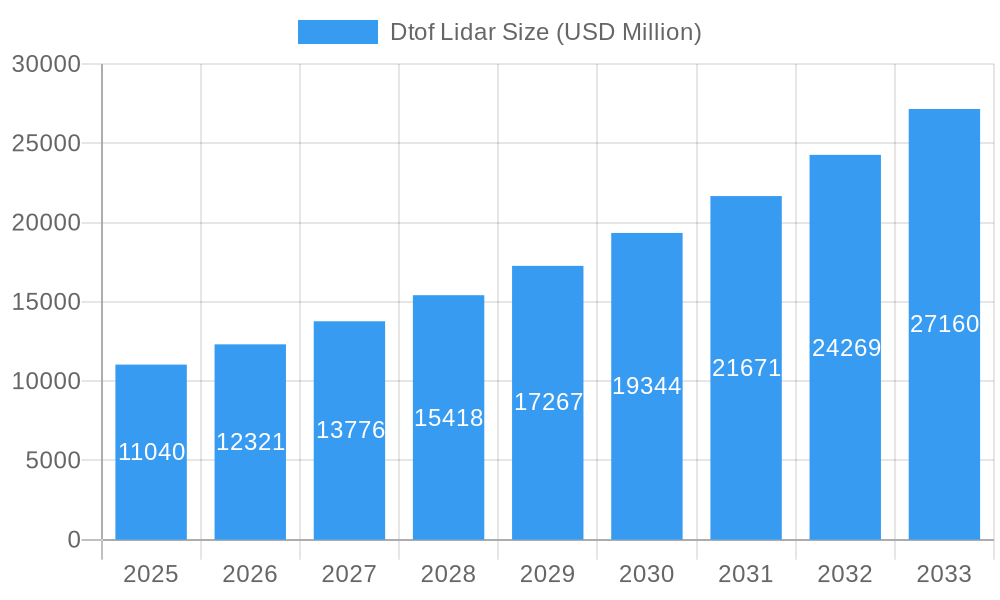
Dtof Lidar Company Market Share
The DTOF LiDAR market is characterized by dynamic innovation and a widening adoption across diverse applications. Market concentration is currently moderate, with key players like Onsemi, Shenzhen LDROBOT, InnoMaker, Shanghai Slamtec, China Science Photon Chip Tech, Angstrong Tech, and SMIT Group actively shaping the competitive landscape. Innovation catalysts include the relentless pursuit of higher resolution, extended range, and reduced form factors for LiDAR sensors. The regulatory landscape is still evolving, with safety and performance standards gradually being established to facilitate mass deployment, particularly in autonomous systems. Substitute products, such as ultrasonic sensors and stereo vision systems, offer alternative sensing solutions, but DTOF LiDAR’s superior accuracy and performance in varying lighting conditions often give it a distinct advantage. End-user profiles are expanding beyond traditional robotics and automotive sectors to include industrial automation, smart city infrastructure, and consumer electronics. Mergers and acquisitions (M&A) activity, while currently at an estimated XX billion in deal value, is expected to accelerate as larger companies seek to integrate advanced LiDAR capabilities into their product portfolios, further consolidating the market. This strategic consolidation, driven by evolving technology and market demand, is a significant trend shaping the future trajectory of the DTOF LiDAR industry.
Dtof Lidar Industry Evolution
The DTOF LiDAR industry is poised for exponential growth, driven by a confluence of technological breakthroughs, expanding application horizons, and a discernible shift in consumer and industrial demands. Over the Historical Period (2019–2024), the market has witnessed a steady climb, fueled by early adoption in research and development projects and niche industrial applications. However, the Base Year (2025) marks a pivotal point, with the market set to enter a phase of accelerated expansion. This surge is intrinsically linked to the maturity of key enabling technologies, including advancements in semiconductor manufacturing for LiDAR components, sophisticated signal processing algorithms, and the miniaturization of LiDAR systems. The Study Period (2019–2033) encapsulates this transformative journey, projecting a Compound Annual Growth Rate (CAGR) of approximately XX% from 2025 onwards. Technological advancements are not merely incremental; they represent fundamental leaps in performance. We are observing a significant increase in the Measure Radius ≤ 12 m segment, driven by its suitability for close-range robotics, AGVs, and indoor navigation applications, which are experiencing rapid market penetration. Simultaneously, the Measure Radius > 12 m segment is witnessing robust growth, propelled by the demands of autonomous driving, advanced surveillance, and long-range environmental mapping. Shifting consumer demands are playing a crucial role, with a growing appetite for automation, enhanced safety features, and more intuitive human-machine interfaces across various sectors. This burgeoning demand translates into increased adoption metrics for DTOF LiDAR solutions, moving from specialized deployments to mainstream integration. The Forecast Period (2025–2033) is anticipated to be a period of unprecedented innovation and market penetration, where DTOF LiDAR transitions from a niche technology to a fundamental sensing modality across a broad spectrum of industries.
Leading Regions, Countries, or Segments in Dtof Lidar
The DTOF LiDAR market's dominance is currently being shaped by a multifaceted interplay of regional investment, government initiatives, and the specific demands of key application segments. From an Application perspective, Robots represent a significant growth engine, propelled by the burgeoning warehouse automation sector, the increasing deployment of service robots in healthcare and hospitality, and the persistent demand for sophisticated industrial robots. The precision and reliability of DTOF LiDAR are indispensable for tasks such as path planning, obstacle avoidance, and precise manipulation within these robotic systems. Concurrently, Drones are emerging as a critical application area, with DTOF LiDAR enabling advanced functionalities like autonomous flight, precision agriculture mapping, infrastructure inspection, and aerial surveying. The ability to generate high-resolution 3D point clouds from aerial platforms offers unparalleled data acquisition capabilities.
When examining Type, the Measure Radius ≤ 12 m segment is currently exhibiting remarkable traction. This is directly attributable to the widespread adoption of DTOF LiDAR in applications requiring accurate, short-range environmental perception. Key drivers for this segment's leadership include:
- Intensified Investment in Robotics Automation: Billions are being invested globally in automating warehouses, manufacturing facilities, and logistics operations, creating a substantial demand for compact, high-performance LiDAR sensors for indoor navigation and object detection.
- Rapid Growth in Autonomous Mobile Robots (AMRs): The proliferation of AMRs in various industries, from retail to healthcare, relies heavily on DTOF LiDAR for their ability to navigate complex, dynamic environments safely and efficiently.
- Development of Smart Infrastructure and IoT Devices: As cities become "smarter," DTOF LiDAR sensors are finding applications in occupancy sensing, traffic management, and environmental monitoring, often within a limited range.
However, the Measure Radius > 12 m segment is not far behind and is projected to gain significant momentum, driven by the evolving needs of autonomous vehicles and advanced mapping applications. Key drivers for this segment include:
- Advancements in Autonomous Driving Technology: The automotive industry's unwavering commitment to developing fully autonomous vehicles necessitates LiDAR systems capable of perceiving the environment at longer distances for enhanced safety and decision-making.
- Large-Scale Infrastructure Inspection and Surveying: Drones and ground-based vehicles equipped with longer-range DTOF LiDAR are increasingly used for inspecting bridges, power lines, pipelines, and performing detailed topographic surveys, where a wider field of view and extended reach are paramount.
- Emerging Applications in Security and Defense: Long-range DTOF LiDAR is finding niche applications in perimeter security, surveillance, and reconnaissance, providing detailed situational awareness in complex scenarios.
Geographically, Asia-Pacific is emerging as a dominant region, driven by China's robust manufacturing capabilities, substantial government support for high-tech industries, and a rapidly growing domestic market for robotics and industrial automation. North America and Europe follow closely, propelled by significant investments in autonomous vehicle research and development and a strong focus on smart city initiatives. The interplay between these application segments and regional advancements will continue to define the leading edges of the DTOF LiDAR market.
Dtof Lidar Product Innovations
DTOF LiDAR technology is witnessing a rapid evolution in product innovations, focusing on enhanced performance and broader applicability. Recent advancements include the development of ultra-compact LiDAR modules with integrated processing capabilities, enabling seamless integration into smaller devices like drones and consumer electronics. Innovations in solid-state LiDAR designs are promising increased robustness, lower power consumption, and significantly reduced manufacturing costs, projected to be in the billions. Furthermore, improved sensor fusion algorithms are allowing DTOF LiDAR to work synergistically with other sensors, such as cameras and IMUs, to provide richer and more accurate environmental perception. Performance metrics are consistently being pushed, with advancements in range, resolution, and scan rates, leading to the creation of LiDAR systems capable of generating detailed 3D environmental maps in real-time with unprecedented accuracy, opening doors for novel applications.
Propelling Factors for Dtof Lidar Growth
The DTOF LiDAR market is experiencing robust growth fueled by several key factors. Technologically, the ongoing miniaturization and cost reduction of LiDAR components, coupled with advancements in signal processing and artificial intelligence for data interpretation, are making DTOF LiDAR more accessible and practical for a wider range of applications. Economically, the burgeoning demand for automation across industries like logistics, manufacturing, and agriculture is a significant driver, with companies investing billions to enhance efficiency and productivity. Regulatory landscapes are also evolving to support the deployment of autonomous systems, such as self-driving vehicles and delivery robots, thereby indirectly boosting the demand for reliable sensing technologies like DTOF LiDAR. The increasing exploration of DTOF LiDAR in smart cities for traffic management and public safety further amplifies its growth trajectory.
Obstacles in the Dtof Lidar Market
Despite its promising growth, the DTOF LiDAR market faces several challenges. Regulatory hurdles, particularly concerning safety standards and data privacy for autonomous systems, can slow down widespread adoption. Supply chain disruptions and the reliance on specialized components can lead to price volatility and availability issues, impacting production timelines. Furthermore, the competitive pressure from alternative sensing technologies, such as advanced cameras and radar systems, necessitates continuous innovation to maintain a competitive edge. High initial costs for some advanced DTOF LiDAR systems can also be a barrier to entry for smaller businesses, although this is gradually being mitigated by technological advancements and economies of scale, with estimated cost reductions reaching billions.
Future Opportunities in Dtof Lidar
The future for DTOF LiDAR is rife with emerging opportunities. The expansion of autonomous driving beyond passenger vehicles to include commercial trucks, buses, and delivery fleets presents a vast untapped market, with billions in potential revenue. The continued growth of the robotics sector, from industrial automation to personal assistance robots, will further drive demand for sophisticated DTOF LiDAR solutions. The "Internet of Things" (IoT) is also opening new avenues, with DTOF LiDAR poised to enhance smart homes, intelligent buildings, and smart city infrastructure through advanced environmental sensing and occupancy detection. Furthermore, the exploration of DTOF LiDAR in emerging fields like augmented reality (AR) and virtual reality (VR) for immersive experiences and spatial mapping offers significant long-term growth potential.
Major Players in the Dtof Lidar Ecosystem
- Onsemi
- Shenzhen LDROBOT
- InnoMaker
- Shanghai Slamtec
- China Science Photon Chip Tech
- Angstrong Tech
- SMIT Group
Key Developments in Dtof Lidar Industry
- 2023/09: Onsemi announces a new family of LiDAR-focused automotive sensors, enhancing safety and performance for advanced driver-assistance systems.
- 2024/01: Shenzhen LDROBOT unveils a new ultra-compact DTOF LiDAR module designed for widespread integration into robotics and consumer electronics, further driving down costs in the billions.
- 2024/05: InnoMaker showcases a high-resolution, long-range DTOF LiDAR sensor at a major industry exhibition, signaling advancements in performance for autonomous vehicle applications.
- 2024/07: Shanghai Slamtec announces a strategic partnership to expand its DTOF LiDAR offerings into the industrial automation sector, targeting billions in new market penetration.
- 2024/10: China Science Photon Chip Tech reveals breakthroughs in LiDAR chip manufacturing, promising significant cost reductions and improved performance for future DTOF LiDAR systems.
- 2025/01: Angstrong Tech introduces an innovative DTOF LiDAR solution optimized for drone-based surveying and inspection, expanding its reach in the aerial robotics market.
- 2025/04: SMIT Group announces a significant investment in DTOF LiDAR research and development, aiming to capture a larger share of the rapidly growing autonomous mobility market, with billions earmarked for expansion.
Strategic Dtof Lidar Market Forecast
The strategic forecast for the DTOF LiDAR market points towards sustained and accelerated growth, driven by compelling market catalysts. The increasing adoption of automation across all industrial sectors, from manufacturing to logistics and agriculture, will continue to be a primary growth engine, with billions being invested in intelligent automation solutions. The relentless pursuit of enhanced safety and efficiency in autonomous vehicles and robots will necessitate increasingly sophisticated DTOF LiDAR systems, further pushing market penetration. Emerging applications in smart cities, consumer electronics, and even augmented reality environments represent significant future growth opportunities, promising billions in incremental market value. The ongoing technological advancements in miniaturization, cost reduction, and performance enhancement will make DTOF LiDAR an indispensable component in a vast array of future technologies, solidifying its strategic importance.
Dtof Lidar Segmentation
-
1. Application
- 1.1. Robot
- 1.2. Drone
- 1.3. Other
-
2. Type
- 2.1. Measure Radius ≤ 12 m
- 2.2. Measure radius > 12 m
Dtof Lidar Segmentation By Geography
-
1. North America
- 1.1. United States
- 1.2. Canada
- 1.3. Mexico
-
2. South America
- 2.1. Brazil
- 2.2. Argentina
- 2.3. Rest of South America
-
3. Europe
- 3.1. United Kingdom
- 3.2. Germany
- 3.3. France
- 3.4. Italy
- 3.5. Spain
- 3.6. Russia
- 3.7. Benelux
- 3.8. Nordics
- 3.9. Rest of Europe
-
4. Middle East & Africa
- 4.1. Turkey
- 4.2. Israel
- 4.3. GCC
- 4.4. North Africa
- 4.5. South Africa
- 4.6. Rest of Middle East & Africa
-
5. Asia Pacific
- 5.1. China
- 5.2. India
- 5.3. Japan
- 5.4. South Korea
- 5.5. ASEAN
- 5.6. Oceania
- 5.7. Rest of Asia Pacific
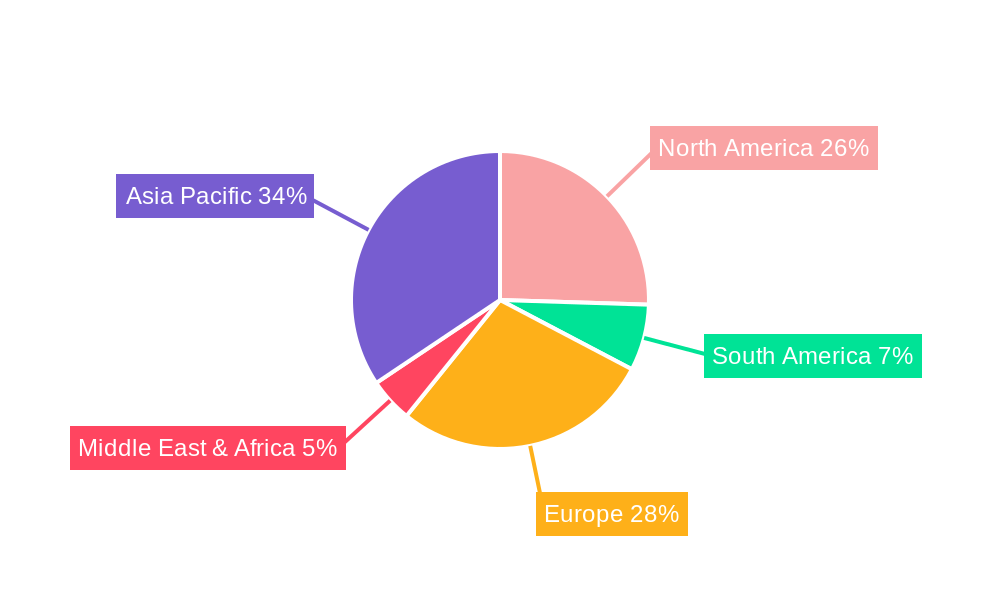
Dtof Lidar Regional Market Share
Geographic Coverage of Dtof Lidar
Dtof Lidar REPORT HIGHLIGHTS
| Aspects | Details |
|---|---|
| Study Period | 2020-2034 |
| Base Year | 2025 |
| Estimated Year | 2026 |
| Forecast Period | 2026-2034 |
| Historical Period | 2020-2025 |
| Growth Rate | CAGR of 11.57% from 2020-2034 |
| Segmentation |
|
Table of Contents
- 1. Introduction
- 1.1. Research Scope
- 1.2. Market Segmentation
- 1.3. Research Methodology
- 1.4. Definitions and Assumptions
- 2. Executive Summary
- 2.1. Introduction
- 3. Market Dynamics
- 3.1. Introduction
- 3.2. Market Drivers
- 3.3. Market Restrains
- 3.4. Market Trends
- 4. Market Factor Analysis
- 4.1. Porters Five Forces
- 4.2. Supply/Value Chain
- 4.3. PESTEL analysis
- 4.4. Market Entropy
- 4.5. Patent/Trademark Analysis
- 5. Global Dtof Lidar Analysis, Insights and Forecast, 2020-2032
- 5.1. Market Analysis, Insights and Forecast - by Application
- 5.1.1. Robot
- 5.1.2. Drone
- 5.1.3. Other
- 5.2. Market Analysis, Insights and Forecast - by Type
- 5.2.1. Measure Radius ≤ 12 m
- 5.2.2. Measure radius > 12 m
- 5.3. Market Analysis, Insights and Forecast - by Region
- 5.3.1. North America
- 5.3.2. South America
- 5.3.3. Europe
- 5.3.4. Middle East & Africa
- 5.3.5. Asia Pacific
- 5.1. Market Analysis, Insights and Forecast - by Application
- 6. North America Dtof Lidar Analysis, Insights and Forecast, 2020-2032
- 6.1. Market Analysis, Insights and Forecast - by Application
- 6.1.1. Robot
- 6.1.2. Drone
- 6.1.3. Other
- 6.2. Market Analysis, Insights and Forecast - by Type
- 6.2.1. Measure Radius ≤ 12 m
- 6.2.2. Measure radius > 12 m
- 6.1. Market Analysis, Insights and Forecast - by Application
- 7. South America Dtof Lidar Analysis, Insights and Forecast, 2020-2032
- 7.1. Market Analysis, Insights and Forecast - by Application
- 7.1.1. Robot
- 7.1.2. Drone
- 7.1.3. Other
- 7.2. Market Analysis, Insights and Forecast - by Type
- 7.2.1. Measure Radius ≤ 12 m
- 7.2.2. Measure radius > 12 m
- 7.1. Market Analysis, Insights and Forecast - by Application
- 8. Europe Dtof Lidar Analysis, Insights and Forecast, 2020-2032
- 8.1. Market Analysis, Insights and Forecast - by Application
- 8.1.1. Robot
- 8.1.2. Drone
- 8.1.3. Other
- 8.2. Market Analysis, Insights and Forecast - by Type
- 8.2.1. Measure Radius ≤ 12 m
- 8.2.2. Measure radius > 12 m
- 8.1. Market Analysis, Insights and Forecast - by Application
- 9. Middle East & Africa Dtof Lidar Analysis, Insights and Forecast, 2020-2032
- 9.1. Market Analysis, Insights and Forecast - by Application
- 9.1.1. Robot
- 9.1.2. Drone
- 9.1.3. Other
- 9.2. Market Analysis, Insights and Forecast - by Type
- 9.2.1. Measure Radius ≤ 12 m
- 9.2.2. Measure radius > 12 m
- 9.1. Market Analysis, Insights and Forecast - by Application
- 10. Asia Pacific Dtof Lidar Analysis, Insights and Forecast, 2020-2032
- 10.1. Market Analysis, Insights and Forecast - by Application
- 10.1.1. Robot
- 10.1.2. Drone
- 10.1.3. Other
- 10.2. Market Analysis, Insights and Forecast - by Type
- 10.2.1. Measure Radius ≤ 12 m
- 10.2.2. Measure radius > 12 m
- 10.1. Market Analysis, Insights and Forecast - by Application
- 11. Competitive Analysis
- 11.1. Global Market Share Analysis 2025
- 11.2. Company Profiles
- 11.2.1 Onsemi
- 11.2.1.1. Overview
- 11.2.1.2. Products
- 11.2.1.3. SWOT Analysis
- 11.2.1.4. Recent Developments
- 11.2.1.5. Financials (Based on Availability)
- 11.2.2 Shenzhen LDROBOT
- 11.2.2.1. Overview
- 11.2.2.2. Products
- 11.2.2.3. SWOT Analysis
- 11.2.2.4. Recent Developments
- 11.2.2.5. Financials (Based on Availability)
- 11.2.3 InnoMaker
- 11.2.3.1. Overview
- 11.2.3.2. Products
- 11.2.3.3. SWOT Analysis
- 11.2.3.4. Recent Developments
- 11.2.3.5. Financials (Based on Availability)
- 11.2.4 Shanghai Slamtec
- 11.2.4.1. Overview
- 11.2.4.2. Products
- 11.2.4.3. SWOT Analysis
- 11.2.4.4. Recent Developments
- 11.2.4.5. Financials (Based on Availability)
- 11.2.5 China Science Photon Chip Tech
- 11.2.5.1. Overview
- 11.2.5.2. Products
- 11.2.5.3. SWOT Analysis
- 11.2.5.4. Recent Developments
- 11.2.5.5. Financials (Based on Availability)
- 11.2.6 Angstrong Tech
- 11.2.6.1. Overview
- 11.2.6.2. Products
- 11.2.6.3. SWOT Analysis
- 11.2.6.4. Recent Developments
- 11.2.6.5. Financials (Based on Availability)
- 11.2.7 SMIT Group
- 11.2.7.1. Overview
- 11.2.7.2. Products
- 11.2.7.3. SWOT Analysis
- 11.2.7.4. Recent Developments
- 11.2.7.5. Financials (Based on Availability)
- 11.2.1 Onsemi
List of Figures
- Figure 1: Global Dtof Lidar Revenue Breakdown (undefined, %) by Region 2025 & 2033
- Figure 2: Global Dtof Lidar Volume Breakdown (K, %) by Region 2025 & 2033
- Figure 3: North America Dtof Lidar Revenue (undefined), by Application 2025 & 2033
- Figure 4: North America Dtof Lidar Volume (K), by Application 2025 & 2033
- Figure 5: North America Dtof Lidar Revenue Share (%), by Application 2025 & 2033
- Figure 6: North America Dtof Lidar Volume Share (%), by Application 2025 & 2033
- Figure 7: North America Dtof Lidar Revenue (undefined), by Type 2025 & 2033
- Figure 8: North America Dtof Lidar Volume (K), by Type 2025 & 2033
- Figure 9: North America Dtof Lidar Revenue Share (%), by Type 2025 & 2033
- Figure 10: North America Dtof Lidar Volume Share (%), by Type 2025 & 2033
- Figure 11: North America Dtof Lidar Revenue (undefined), by Country 2025 & 2033
- Figure 12: North America Dtof Lidar Volume (K), by Country 2025 & 2033
- Figure 13: North America Dtof Lidar Revenue Share (%), by Country 2025 & 2033
- Figure 14: North America Dtof Lidar Volume Share (%), by Country 2025 & 2033
- Figure 15: South America Dtof Lidar Revenue (undefined), by Application 2025 & 2033
- Figure 16: South America Dtof Lidar Volume (K), by Application 2025 & 2033
- Figure 17: South America Dtof Lidar Revenue Share (%), by Application 2025 & 2033
- Figure 18: South America Dtof Lidar Volume Share (%), by Application 2025 & 2033
- Figure 19: South America Dtof Lidar Revenue (undefined), by Type 2025 & 2033
- Figure 20: South America Dtof Lidar Volume (K), by Type 2025 & 2033
- Figure 21: South America Dtof Lidar Revenue Share (%), by Type 2025 & 2033
- Figure 22: South America Dtof Lidar Volume Share (%), by Type 2025 & 2033
- Figure 23: South America Dtof Lidar Revenue (undefined), by Country 2025 & 2033
- Figure 24: South America Dtof Lidar Volume (K), by Country 2025 & 2033
- Figure 25: South America Dtof Lidar Revenue Share (%), by Country 2025 & 2033
- Figure 26: South America Dtof Lidar Volume Share (%), by Country 2025 & 2033
- Figure 27: Europe Dtof Lidar Revenue (undefined), by Application 2025 & 2033
- Figure 28: Europe Dtof Lidar Volume (K), by Application 2025 & 2033
- Figure 29: Europe Dtof Lidar Revenue Share (%), by Application 2025 & 2033
- Figure 30: Europe Dtof Lidar Volume Share (%), by Application 2025 & 2033
- Figure 31: Europe Dtof Lidar Revenue (undefined), by Type 2025 & 2033
- Figure 32: Europe Dtof Lidar Volume (K), by Type 2025 & 2033
- Figure 33: Europe Dtof Lidar Revenue Share (%), by Type 2025 & 2033
- Figure 34: Europe Dtof Lidar Volume Share (%), by Type 2025 & 2033
- Figure 35: Europe Dtof Lidar Revenue (undefined), by Country 2025 & 2033
- Figure 36: Europe Dtof Lidar Volume (K), by Country 2025 & 2033
- Figure 37: Europe Dtof Lidar Revenue Share (%), by Country 2025 & 2033
- Figure 38: Europe Dtof Lidar Volume Share (%), by Country 2025 & 2033
- Figure 39: Middle East & Africa Dtof Lidar Revenue (undefined), by Application 2025 & 2033
- Figure 40: Middle East & Africa Dtof Lidar Volume (K), by Application 2025 & 2033
- Figure 41: Middle East & Africa Dtof Lidar Revenue Share (%), by Application 2025 & 2033
- Figure 42: Middle East & Africa Dtof Lidar Volume Share (%), by Application 2025 & 2033
- Figure 43: Middle East & Africa Dtof Lidar Revenue (undefined), by Type 2025 & 2033
- Figure 44: Middle East & Africa Dtof Lidar Volume (K), by Type 2025 & 2033
- Figure 45: Middle East & Africa Dtof Lidar Revenue Share (%), by Type 2025 & 2033
- Figure 46: Middle East & Africa Dtof Lidar Volume Share (%), by Type 2025 & 2033
- Figure 47: Middle East & Africa Dtof Lidar Revenue (undefined), by Country 2025 & 2033
- Figure 48: Middle East & Africa Dtof Lidar Volume (K), by Country 2025 & 2033
- Figure 49: Middle East & Africa Dtof Lidar Revenue Share (%), by Country 2025 & 2033
- Figure 50: Middle East & Africa Dtof Lidar Volume Share (%), by Country 2025 & 2033
- Figure 51: Asia Pacific Dtof Lidar Revenue (undefined), by Application 2025 & 2033
- Figure 52: Asia Pacific Dtof Lidar Volume (K), by Application 2025 & 2033
- Figure 53: Asia Pacific Dtof Lidar Revenue Share (%), by Application 2025 & 2033
- Figure 54: Asia Pacific Dtof Lidar Volume Share (%), by Application 2025 & 2033
- Figure 55: Asia Pacific Dtof Lidar Revenue (undefined), by Type 2025 & 2033
- Figure 56: Asia Pacific Dtof Lidar Volume (K), by Type 2025 & 2033
- Figure 57: Asia Pacific Dtof Lidar Revenue Share (%), by Type 2025 & 2033
- Figure 58: Asia Pacific Dtof Lidar Volume Share (%), by Type 2025 & 2033
- Figure 59: Asia Pacific Dtof Lidar Revenue (undefined), by Country 2025 & 2033
- Figure 60: Asia Pacific Dtof Lidar Volume (K), by Country 2025 & 2033
- Figure 61: Asia Pacific Dtof Lidar Revenue Share (%), by Country 2025 & 2033
- Figure 62: Asia Pacific Dtof Lidar Volume Share (%), by Country 2025 & 2033
List of Tables
- Table 1: Global Dtof Lidar Revenue undefined Forecast, by Application 2020 & 2033
- Table 2: Global Dtof Lidar Volume K Forecast, by Application 2020 & 2033
- Table 3: Global Dtof Lidar Revenue undefined Forecast, by Type 2020 & 2033
- Table 4: Global Dtof Lidar Volume K Forecast, by Type 2020 & 2033
- Table 5: Global Dtof Lidar Revenue undefined Forecast, by Region 2020 & 2033
- Table 6: Global Dtof Lidar Volume K Forecast, by Region 2020 & 2033
- Table 7: Global Dtof Lidar Revenue undefined Forecast, by Application 2020 & 2033
- Table 8: Global Dtof Lidar Volume K Forecast, by Application 2020 & 2033
- Table 9: Global Dtof Lidar Revenue undefined Forecast, by Type 2020 & 2033
- Table 10: Global Dtof Lidar Volume K Forecast, by Type 2020 & 2033
- Table 11: Global Dtof Lidar Revenue undefined Forecast, by Country 2020 & 2033
- Table 12: Global Dtof Lidar Volume K Forecast, by Country 2020 & 2033
- Table 13: United States Dtof Lidar Revenue (undefined) Forecast, by Application 2020 & 2033
- Table 14: United States Dtof Lidar Volume (K) Forecast, by Application 2020 & 2033
- Table 15: Canada Dtof Lidar Revenue (undefined) Forecast, by Application 2020 & 2033
- Table 16: Canada Dtof Lidar Volume (K) Forecast, by Application 2020 & 2033
- Table 17: Mexico Dtof Lidar Revenue (undefined) Forecast, by Application 2020 & 2033
- Table 18: Mexico Dtof Lidar Volume (K) Forecast, by Application 2020 & 2033
- Table 19: Global Dtof Lidar Revenue undefined Forecast, by Application 2020 & 2033
- Table 20: Global Dtof Lidar Volume K Forecast, by Application 2020 & 2033
- Table 21: Global Dtof Lidar Revenue undefined Forecast, by Type 2020 & 2033
- Table 22: Global Dtof Lidar Volume K Forecast, by Type 2020 & 2033
- Table 23: Global Dtof Lidar Revenue undefined Forecast, by Country 2020 & 2033
- Table 24: Global Dtof Lidar Volume K Forecast, by Country 2020 & 2033
- Table 25: Brazil Dtof Lidar Revenue (undefined) Forecast, by Application 2020 & 2033
- Table 26: Brazil Dtof Lidar Volume (K) Forecast, by Application 2020 & 2033
- Table 27: Argentina Dtof Lidar Revenue (undefined) Forecast, by Application 2020 & 2033
- Table 28: Argentina Dtof Lidar Volume (K) Forecast, by Application 2020 & 2033
- Table 29: Rest of South America Dtof Lidar Revenue (undefined) Forecast, by Application 2020 & 2033
- Table 30: Rest of South America Dtof Lidar Volume (K) Forecast, by Application 2020 & 2033
- Table 31: Global Dtof Lidar Revenue undefined Forecast, by Application 2020 & 2033
- Table 32: Global Dtof Lidar Volume K Forecast, by Application 2020 & 2033
- Table 33: Global Dtof Lidar Revenue undefined Forecast, by Type 2020 & 2033
- Table 34: Global Dtof Lidar Volume K Forecast, by Type 2020 & 2033
- Table 35: Global Dtof Lidar Revenue undefined Forecast, by Country 2020 & 2033
- Table 36: Global Dtof Lidar Volume K Forecast, by Country 2020 & 2033
- Table 37: United Kingdom Dtof Lidar Revenue (undefined) Forecast, by Application 2020 & 2033
- Table 38: United Kingdom Dtof Lidar Volume (K) Forecast, by Application 2020 & 2033
- Table 39: Germany Dtof Lidar Revenue (undefined) Forecast, by Application 2020 & 2033
- Table 40: Germany Dtof Lidar Volume (K) Forecast, by Application 2020 & 2033
- Table 41: France Dtof Lidar Revenue (undefined) Forecast, by Application 2020 & 2033
- Table 42: France Dtof Lidar Volume (K) Forecast, by Application 2020 & 2033
- Table 43: Italy Dtof Lidar Revenue (undefined) Forecast, by Application 2020 & 2033
- Table 44: Italy Dtof Lidar Volume (K) Forecast, by Application 2020 & 2033
- Table 45: Spain Dtof Lidar Revenue (undefined) Forecast, by Application 2020 & 2033
- Table 46: Spain Dtof Lidar Volume (K) Forecast, by Application 2020 & 2033
- Table 47: Russia Dtof Lidar Revenue (undefined) Forecast, by Application 2020 & 2033
- Table 48: Russia Dtof Lidar Volume (K) Forecast, by Application 2020 & 2033
- Table 49: Benelux Dtof Lidar Revenue (undefined) Forecast, by Application 2020 & 2033
- Table 50: Benelux Dtof Lidar Volume (K) Forecast, by Application 2020 & 2033
- Table 51: Nordics Dtof Lidar Revenue (undefined) Forecast, by Application 2020 & 2033
- Table 52: Nordics Dtof Lidar Volume (K) Forecast, by Application 2020 & 2033
- Table 53: Rest of Europe Dtof Lidar Revenue (undefined) Forecast, by Application 2020 & 2033
- Table 54: Rest of Europe Dtof Lidar Volume (K) Forecast, by Application 2020 & 2033
- Table 55: Global Dtof Lidar Revenue undefined Forecast, by Application 2020 & 2033
- Table 56: Global Dtof Lidar Volume K Forecast, by Application 2020 & 2033
- Table 57: Global Dtof Lidar Revenue undefined Forecast, by Type 2020 & 2033
- Table 58: Global Dtof Lidar Volume K Forecast, by Type 2020 & 2033
- Table 59: Global Dtof Lidar Revenue undefined Forecast, by Country 2020 & 2033
- Table 60: Global Dtof Lidar Volume K Forecast, by Country 2020 & 2033
- Table 61: Turkey Dtof Lidar Revenue (undefined) Forecast, by Application 2020 & 2033
- Table 62: Turkey Dtof Lidar Volume (K) Forecast, by Application 2020 & 2033
- Table 63: Israel Dtof Lidar Revenue (undefined) Forecast, by Application 2020 & 2033
- Table 64: Israel Dtof Lidar Volume (K) Forecast, by Application 2020 & 2033
- Table 65: GCC Dtof Lidar Revenue (undefined) Forecast, by Application 2020 & 2033
- Table 66: GCC Dtof Lidar Volume (K) Forecast, by Application 2020 & 2033
- Table 67: North Africa Dtof Lidar Revenue (undefined) Forecast, by Application 2020 & 2033
- Table 68: North Africa Dtof Lidar Volume (K) Forecast, by Application 2020 & 2033
- Table 69: South Africa Dtof Lidar Revenue (undefined) Forecast, by Application 2020 & 2033
- Table 70: South Africa Dtof Lidar Volume (K) Forecast, by Application 2020 & 2033
- Table 71: Rest of Middle East & Africa Dtof Lidar Revenue (undefined) Forecast, by Application 2020 & 2033
- Table 72: Rest of Middle East & Africa Dtof Lidar Volume (K) Forecast, by Application 2020 & 2033
- Table 73: Global Dtof Lidar Revenue undefined Forecast, by Application 2020 & 2033
- Table 74: Global Dtof Lidar Volume K Forecast, by Application 2020 & 2033
- Table 75: Global Dtof Lidar Revenue undefined Forecast, by Type 2020 & 2033
- Table 76: Global Dtof Lidar Volume K Forecast, by Type 2020 & 2033
- Table 77: Global Dtof Lidar Revenue undefined Forecast, by Country 2020 & 2033
- Table 78: Global Dtof Lidar Volume K Forecast, by Country 2020 & 2033
- Table 79: China Dtof Lidar Revenue (undefined) Forecast, by Application 2020 & 2033
- Table 80: China Dtof Lidar Volume (K) Forecast, by Application 2020 & 2033
- Table 81: India Dtof Lidar Revenue (undefined) Forecast, by Application 2020 & 2033
- Table 82: India Dtof Lidar Volume (K) Forecast, by Application 2020 & 2033
- Table 83: Japan Dtof Lidar Revenue (undefined) Forecast, by Application 2020 & 2033
- Table 84: Japan Dtof Lidar Volume (K) Forecast, by Application 2020 & 2033
- Table 85: South Korea Dtof Lidar Revenue (undefined) Forecast, by Application 2020 & 2033
- Table 86: South Korea Dtof Lidar Volume (K) Forecast, by Application 2020 & 2033
- Table 87: ASEAN Dtof Lidar Revenue (undefined) Forecast, by Application 2020 & 2033
- Table 88: ASEAN Dtof Lidar Volume (K) Forecast, by Application 2020 & 2033
- Table 89: Oceania Dtof Lidar Revenue (undefined) Forecast, by Application 2020 & 2033
- Table 90: Oceania Dtof Lidar Volume (K) Forecast, by Application 2020 & 2033
- Table 91: Rest of Asia Pacific Dtof Lidar Revenue (undefined) Forecast, by Application 2020 & 2033
- Table 92: Rest of Asia Pacific Dtof Lidar Volume (K) Forecast, by Application 2020 & 2033
Frequently Asked Questions
1. What is the projected Compound Annual Growth Rate (CAGR) of the Dtof Lidar?
The projected CAGR is approximately 11.57%.
2. Which companies are prominent players in the Dtof Lidar?
Key companies in the market include Onsemi, Shenzhen LDROBOT, InnoMaker, Shanghai Slamtec, China Science Photon Chip Tech, Angstrong Tech, SMIT Group.
3. What are the main segments of the Dtof Lidar?
The market segments include Application, Type.
4. Can you provide details about the market size?
The market size is estimated to be USD XXX N/A as of 2022.
5. What are some drivers contributing to market growth?
N/A
6. What are the notable trends driving market growth?
N/A
7. Are there any restraints impacting market growth?
N/A
8. Can you provide examples of recent developments in the market?
N/A
9. What pricing options are available for accessing the report?
Pricing options include single-user, multi-user, and enterprise licenses priced at USD 3950.00, USD 5925.00, and USD 7900.00 respectively.
10. Is the market size provided in terms of value or volume?
The market size is provided in terms of value, measured in N/A and volume, measured in K.
11. Are there any specific market keywords associated with the report?
Yes, the market keyword associated with the report is "Dtof Lidar," which aids in identifying and referencing the specific market segment covered.
12. How do I determine which pricing option suits my needs best?
The pricing options vary based on user requirements and access needs. Individual users may opt for single-user licenses, while businesses requiring broader access may choose multi-user or enterprise licenses for cost-effective access to the report.
13. Are there any additional resources or data provided in the Dtof Lidar report?
While the report offers comprehensive insights, it's advisable to review the specific contents or supplementary materials provided to ascertain if additional resources or data are available.
14. How can I stay updated on further developments or reports in the Dtof Lidar?
To stay informed about further developments, trends, and reports in the Dtof Lidar, consider subscribing to industry newsletters, following relevant companies and organizations, or regularly checking reputable industry news sources and publications.
Methodology
Step 1 - Identification of Relevant Samples Size from Population Database



Step 2 - Approaches for Defining Global Market Size (Value, Volume* & Price*)

Note*: In applicable scenarios
Step 3 - Data Sources
Primary Research
- Web Analytics
- Survey Reports
- Research Institute
- Latest Research Reports
- Opinion Leaders
Secondary Research
- Annual Reports
- White Paper
- Latest Press Release
- Industry Association
- Paid Database
- Investor Presentations

Step 4 - Data Triangulation
Involves using different sources of information in order to increase the validity of a study
These sources are likely to be stakeholders in a program - participants, other researchers, program staff, other community members, and so on.
Then we put all data in single framework & apply various statistical tools to find out the dynamic on the market.
During the analysis stage, feedback from the stakeholder groups would be compared to determine areas of agreement as well as areas of divergence