
Key Insights
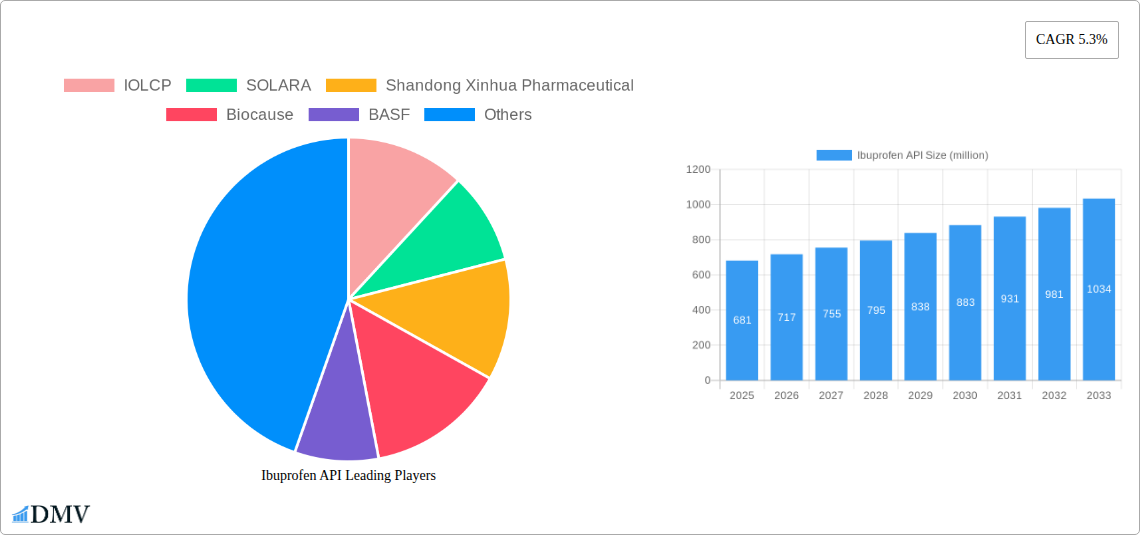
The global Ibuprofen API market is poised for robust expansion, projected to reach a substantial value of \$681 million. This growth is underpinned by a healthy Compound Annual Growth Rate (CAGR) of 5.3%, indicating sustained demand and increasing production in the forecast period of 2025-2033. The market's trajectory is primarily propelled by the unwavering demand for ibuprofen as a foundational Non-Steroidal Anti-Inflammatory Drug (NSAID) for pain relief and fever reduction. Pharmaceutical companies represent a significant segment, driving innovation in drug formulations and expanding access to this essential medication. Contract manufacturing organizations (CMOs) also play a pivotal role, offering specialized expertise and scaled production capabilities to meet the growing needs of the pharmaceutical industry. Emerging economies, particularly in Asia Pacific, are anticipated to contribute significantly to this growth, fueled by increasing healthcare expenditure and a rising prevalence of pain-related conditions.
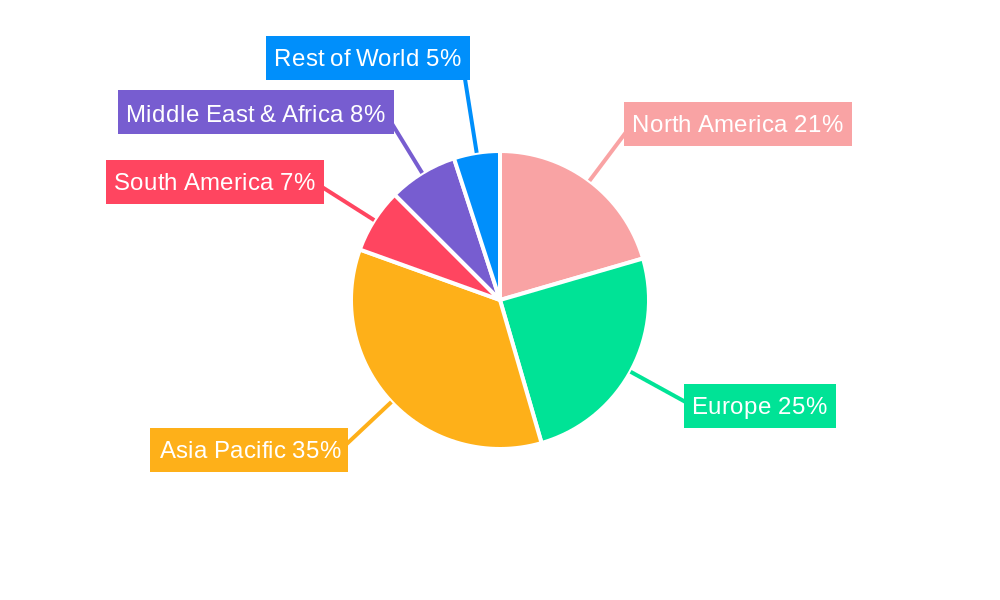
The market's dynamic nature is further shaped by several key trends and drivers. Advancements in manufacturing technologies are optimizing the production of Ibuprofen API, leading to improved efficiency and cost-effectiveness. The growing preference for generic medications, driven by their affordability and accessibility, further bolsters the demand for ibuprofen. Geographically, Asia Pacific is expected to emerge as a dominant region, owing to its large population, expanding pharmaceutical infrastructure, and increasing healthcare awareness. While the market exhibits strong growth potential, certain restraints, such as stringent regulatory hurdles and the fluctuating costs of raw materials, may influence the pace of expansion. However, the consistent and high-volume usage of ibuprofen across diverse patient populations, coupled with ongoing research into novel drug delivery systems, suggests a resilient and expanding market for Ibuprofen API in the coming years.
Ibuprofen API Market Insights: Comprehensive Analysis & Future Outlook (2019-2033)
This in-depth report provides a definitive analysis of the global Ibuprofen API market, encompassing its current composition, historical evolution, and projected future trajectory. Dive into key industry developments, leading players, and strategic growth opportunities, all meticulously examined within the study period of 2019–2033, with a base year of 2025 and an estimated year of 2025. This report is indispensable for pharmaceutical companies, contract manufacturing organizations, and other stakeholders seeking to understand the dynamics of the Ibuprofen API market, active pharmaceutical ingredient manufacturing, generic drug ingredients, and the broader pain management API sector.
Ibuprofen API Market Composition & Trends
The Ibuprofen API market exhibits moderate to high concentration, driven by a select group of global manufacturers and a growing demand for pain relief solutions. Innovation catalysts include the ongoing pursuit of more efficient synthesis routes and adherence to stringent quality standards for both USP and EP grades. Regulatory landscapes, particularly those governed by agencies like the FDA and EMA, play a crucial role in dictating market entry and product compliance, influencing the pricing of Ibuprofen raw material. Substitute products, while present in the broader pain relief segment, have a limited direct impact on the pure Ibuprofen API market due to its established efficacy and cost-effectiveness. End-user profiles are predominantly pharmaceutical companies specializing in generic and branded analgesics. Mergers and acquisitions (M&A) activity, while not intensely frequent, often involve strategic consolidation to enhance production capacity or secure supply chains. For instance, recent M&A deals in the API sector have seen values in the range of several hundred million to over a billion dollars, reflecting the strategic importance of established API manufacturers. Market share distribution remains concentrated among key players, with projections indicating a steady growth driven by increasing healthcare access and the prevalence of inflammatory conditions.
Ibuprofen API Industry Evolution
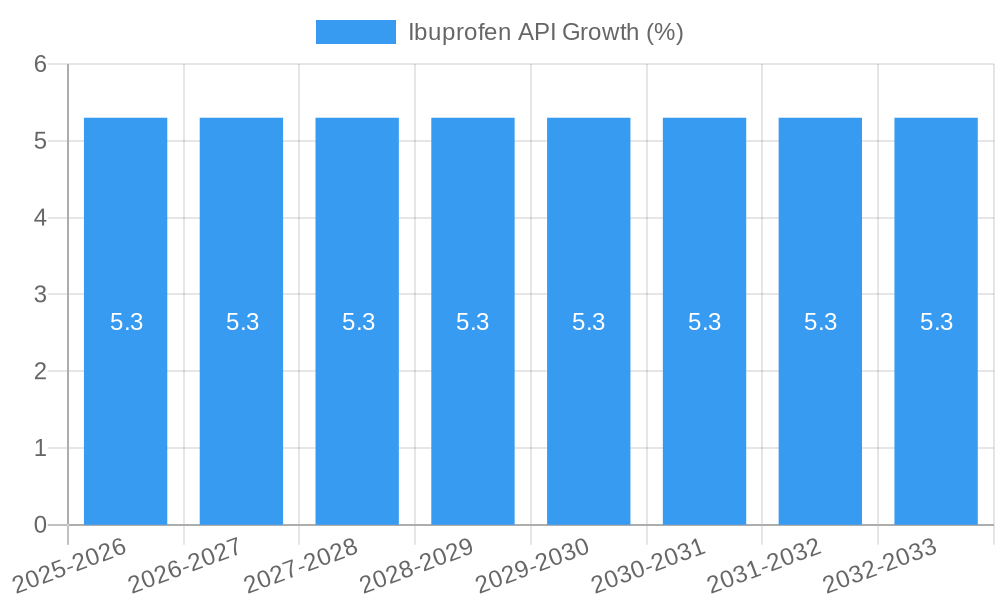
The Ibuprofen API industry has undergone significant evolution over the historical period of 2019–2024, characterized by steady market growth trajectories fueled by the increasing global prevalence of pain and inflammatory conditions. Technological advancements have primarily focused on optimizing synthesis processes to enhance yield, reduce manufacturing costs, and minimize environmental impact. This includes the adoption of greener chemistry principles and continuous manufacturing techniques, leading to a reduction in processing times and improved API purity. Shifting consumer demands have also played a pivotal role, with a growing preference for effective and affordable pain relief options driving the demand for bulk Ibuprofen API. The market has witnessed a consistent Compound Annual Growth Rate (CAGR) of approximately 4% to 6% over the historical period, a trend anticipated to continue into the forecast period of 2025–2033. Adoption metrics for advanced manufacturing technologies are on the rise, with over 70% of major API manufacturers investing in process automation and quality control systems to meet evolving regulatory standards. The increasing demand for high-purity Ibuprofen API for both pharmaceutical formulations and specific medical applications underscores the industry's adaptive capabilities. Furthermore, the growing emphasis on supply chain resilience has led to strategic investments in expanding production capacities, particularly in regions with favorable manufacturing environments. The market's ability to adapt to stringent quality control measures and evolving pharmacopeial standards (USP, EP) has been critical to its sustained growth.
Leading Regions, Countries, or Segments in Ibuprofen API
The global Ibuprofen API market is significantly influenced by the dominance of Asia-Pacific, particularly China and India, as leading manufacturing hubs, owing to their robust chemical synthesis capabilities and cost-effective production environments. Within this region, Contract Manufacturing Organizations (CMOs) play a crucial role, leveraging their specialized expertise and infrastructure to cater to a diverse clientele. Pharmaceutical Companies, both large multinational corporations and regional generic manufacturers, constitute another major segment, driving substantial demand for Ibuprofen API for their downstream formulations. The "Others" segment, encompassing research institutions and specialized chemical suppliers, also contributes to market dynamics.
Key Drivers of Dominance in Asia-Pacific:
- Cost-Effective Production: Lower labor and operational costs in countries like China and India provide a significant competitive advantage for Ibuprofen API suppliers.
- Manufacturing Expertise: Decades of experience in chemical synthesis and API production have fostered a skilled workforce and established manufacturing ecosystems.
- Favorable Regulatory Environment (for API manufacturing): While strict for finished products, the regulatory framework for API production in these regions often facilitates large-scale manufacturing.
- Government Support & Incentives: Many governments in the region offer incentives and policies to promote the pharmaceutical and API manufacturing sectors.
In terms of Ibuprofen API types, the USP (United States Pharmacopeia) and EP (European Pharmacopoeia) grades are the most prevalent, with demand often dictated by the target market for the finished pharmaceutical products. The USP grade Ibuprofen API is essential for products intended for the North American market, while the EP grade caters primarily to European and other international markets adhering to European standards. The sheer volume of Ibuprofen API production originating from Asia-Pacific, coupled with their extensive export networks, solidifies their leading position in the global market.
Ibuprofen API Product Innovations
Product innovation in Ibuprofen API focuses on enhancing purity, improving stability, and developing more sustainable manufacturing processes. Novel synthesis routes are being explored to minimize by-products and reduce the environmental footprint. Advances in particle engineering are leading to Ibuprofen API with improved dissolution profiles, enabling more efficient drug delivery in pharmaceutical formulations. These innovations are critical for meeting the increasing demand for high-quality pharmaceutical grade Ibuprofen API and maintaining a competitive edge in the market.
Propelling Factors for Ibuprofen API Growth
The Ibuprofen API market is propelled by several key factors. The continuously growing global demand for analgesics and anti-inflammatory drugs, driven by an aging population and the increasing incidence of chronic pain conditions, is a primary growth driver. Advancements in pharmaceutical formulation techniques that leverage high-purity Ibuprofen API further boost its utility. Favorable regulatory approvals for generic Ibuprofen-based medications in various markets also contribute significantly. Economic growth in emerging economies translates to increased healthcare expenditure and, consequently, higher demand for essential APIs like Ibuprofen.
Obstacles in the Ibuprofen API Market
Despite robust growth, the Ibuprofen API market faces certain obstacles. Stringent and evolving regulatory requirements across different regions necessitate continuous investment in quality control and compliance, which can increase manufacturing costs. Supply chain disruptions, as evidenced by recent global events, can impact the availability and pricing of raw materials, affecting production timelines. Intense competition among numerous Ibuprofen API manufacturers can lead to price pressures. Furthermore, concerns regarding the environmental impact of chemical synthesis processes are driving the need for more sustainable manufacturing practices.
Future Opportunities in Ibuprofen API
Emerging opportunities in the Ibuprofen API market lie in the development of novel drug delivery systems that enhance efficacy and reduce side effects. The growing trend towards personalized medicine may create niche markets for specialized Ibuprofen API grades. Expanding into underserved emerging markets with increasing healthcare access presents significant growth potential. Furthermore, the continuous pursuit of greener and more efficient synthesis technologies offers opportunities for manufacturers to differentiate themselves and gain a competitive advantage in the bulk Ibuprofen API market.
Major Players in the Ibuprofen API Ecosystem
- IOLCP
- SOLARA
- Shandong Xinhua Pharmaceutical
- Biocause
- BASF
- SI Group
Key Developments in Ibuprofen API Industry
- 2023: Several manufacturers announced capacity expansions to meet rising global demand for Ibuprofen API.
- 2022: New green chemistry initiatives were launched by key players to reduce the environmental impact of API production.
- 2021: Increased focus on supply chain diversification and resilience in the wake of global logistical challenges.
- 2020: Adoption of advanced analytical techniques for enhanced quality control and impurity profiling of Ibuprofen API.
- 2019: Several companies received new GMP certifications, underscoring a commitment to high-quality manufacturing standards for Ibuprofen API.
Strategic Ibuprofen API Market Forecast
The strategic Ibuprofen API market forecast is positive, driven by sustained demand for effective pain management solutions and continuous innovation in manufacturing processes. The anticipated growth is further supported by the increasing accessibility of healthcare globally and the ongoing development of new pharmaceutical formulations utilizing high-quality Ibuprofen API. Manufacturers who invest in sustainable practices and adhere to stringent quality standards are poised to capitalize on future market opportunities, ensuring a robust trajectory for the Ibuprofen API industry.
Ibuprofen API Segmentation
-
1. Application
- 1.1. Contract Manufacturing Organizations
- 1.2. Pharmaceutical Companies
- 1.3. Others
-
2. Types
- 2.1. USP
- 2.2. EP
Ibuprofen API Segmentation By Geography
-
1. North America
- 1.1. United States
- 1.2. Canada
- 1.3. Mexico
-
2. South America
- 2.1. Brazil
- 2.2. Argentina
- 2.3. Rest of South America
-
3. Europe
- 3.1. United Kingdom
- 3.2. Germany
- 3.3. France
- 3.4. Italy
- 3.5. Spain
- 3.6. Russia
- 3.7. Benelux
- 3.8. Nordics
- 3.9. Rest of Europe
-
4. Middle East & Africa
- 4.1. Turkey
- 4.2. Israel
- 4.3. GCC
- 4.4. North Africa
- 4.5. South Africa
- 4.6. Rest of Middle East & Africa
-
5. Asia Pacific
- 5.1. China
- 5.2. India
- 5.3. Japan
- 5.4. South Korea
- 5.5. ASEAN
- 5.6. Oceania
- 5.7. Rest of Asia Pacific
Ibuprofen API REPORT HIGHLIGHTS
| Aspects | Details |
|---|---|
| Study Period | 2019-2033 |
| Base Year | 2024 |
| Estimated Year | 2025 |
| Forecast Period | 2025-2033 |
| Historical Period | 2019-2024 |
| Growth Rate | CAGR of 5.3% from 2019-2033 |
| Segmentation |
|
Table of Contents
- 1. Introduction
- 1.1. Research Scope
- 1.2. Market Segmentation
- 1.3. Research Methodology
- 1.4. Definitions and Assumptions
- 2. Executive Summary
- 2.1. Introduction
- 3. Market Dynamics
- 3.1. Introduction
- 3.2. Market Drivers
- 3.3. Market Restrains
- 3.4. Market Trends
- 4. Market Factor Analysis
- 4.1. Porters Five Forces
- 4.2. Supply/Value Chain
- 4.3. PESTEL analysis
- 4.4. Market Entropy
- 4.5. Patent/Trademark Analysis
- 5. Global Ibuprofen API Analysis, Insights and Forecast, 2019-2031
- 5.1. Market Analysis, Insights and Forecast - by Application
- 5.1.1. Contract Manufacturing Organizations
- 5.1.2. Pharmaceutical Companies
- 5.1.3. Others
- 5.2. Market Analysis, Insights and Forecast - by Types
- 5.2.1. USP
- 5.2.2. EP
- 5.3. Market Analysis, Insights and Forecast - by Region
- 5.3.1. North America
- 5.3.2. South America
- 5.3.3. Europe
- 5.3.4. Middle East & Africa
- 5.3.5. Asia Pacific
- 5.1. Market Analysis, Insights and Forecast - by Application
- 6. North America Ibuprofen API Analysis, Insights and Forecast, 2019-2031
- 6.1. Market Analysis, Insights and Forecast - by Application
- 6.1.1. Contract Manufacturing Organizations
- 6.1.2. Pharmaceutical Companies
- 6.1.3. Others
- 6.2. Market Analysis, Insights and Forecast - by Types
- 6.2.1. USP
- 6.2.2. EP
- 6.1. Market Analysis, Insights and Forecast - by Application
- 7. South America Ibuprofen API Analysis, Insights and Forecast, 2019-2031
- 7.1. Market Analysis, Insights and Forecast - by Application
- 7.1.1. Contract Manufacturing Organizations
- 7.1.2. Pharmaceutical Companies
- 7.1.3. Others
- 7.2. Market Analysis, Insights and Forecast - by Types
- 7.2.1. USP
- 7.2.2. EP
- 7.1. Market Analysis, Insights and Forecast - by Application
- 8. Europe Ibuprofen API Analysis, Insights and Forecast, 2019-2031
- 8.1. Market Analysis, Insights and Forecast - by Application
- 8.1.1. Contract Manufacturing Organizations
- 8.1.2. Pharmaceutical Companies
- 8.1.3. Others
- 8.2. Market Analysis, Insights and Forecast - by Types
- 8.2.1. USP
- 8.2.2. EP
- 8.1. Market Analysis, Insights and Forecast - by Application
- 9. Middle East & Africa Ibuprofen API Analysis, Insights and Forecast, 2019-2031
- 9.1. Market Analysis, Insights and Forecast - by Application
- 9.1.1. Contract Manufacturing Organizations
- 9.1.2. Pharmaceutical Companies
- 9.1.3. Others
- 9.2. Market Analysis, Insights and Forecast - by Types
- 9.2.1. USP
- 9.2.2. EP
- 9.1. Market Analysis, Insights and Forecast - by Application
- 10. Asia Pacific Ibuprofen API Analysis, Insights and Forecast, 2019-2031
- 10.1. Market Analysis, Insights and Forecast - by Application
- 10.1.1. Contract Manufacturing Organizations
- 10.1.2. Pharmaceutical Companies
- 10.1.3. Others
- 10.2. Market Analysis, Insights and Forecast - by Types
- 10.2.1. USP
- 10.2.2. EP
- 10.1. Market Analysis, Insights and Forecast - by Application
- 11. Competitive Analysis
- 11.1. Global Market Share Analysis 2024
- 11.2. Company Profiles
- 11.2.1 IOLCP
- 11.2.1.1. Overview
- 11.2.1.2. Products
- 11.2.1.3. SWOT Analysis
- 11.2.1.4. Recent Developments
- 11.2.1.5. Financials (Based on Availability)
- 11.2.2 SOLARA
- 11.2.2.1. Overview
- 11.2.2.2. Products
- 11.2.2.3. SWOT Analysis
- 11.2.2.4. Recent Developments
- 11.2.2.5. Financials (Based on Availability)
- 11.2.3 Shandong Xinhua Pharmaceutical
- 11.2.3.1. Overview
- 11.2.3.2. Products
- 11.2.3.3. SWOT Analysis
- 11.2.3.4. Recent Developments
- 11.2.3.5. Financials (Based on Availability)
- 11.2.4 Biocause
- 11.2.4.1. Overview
- 11.2.4.2. Products
- 11.2.4.3. SWOT Analysis
- 11.2.4.4. Recent Developments
- 11.2.4.5. Financials (Based on Availability)
- 11.2.5 BASF
- 11.2.5.1. Overview
- 11.2.5.2. Products
- 11.2.5.3. SWOT Analysis
- 11.2.5.4. Recent Developments
- 11.2.5.5. Financials (Based on Availability)
- 11.2.6 SI Group
- 11.2.6.1. Overview
- 11.2.6.2. Products
- 11.2.6.3. SWOT Analysis
- 11.2.6.4. Recent Developments
- 11.2.6.5. Financials (Based on Availability)
- 11.2.1 IOLCP
List of Figures
- Figure 1: Global Ibuprofen API Revenue Breakdown (million, %) by Region 2024 & 2032
- Figure 2: North America Ibuprofen API Revenue (million), by Application 2024 & 2032
- Figure 3: North America Ibuprofen API Revenue Share (%), by Application 2024 & 2032
- Figure 4: North America Ibuprofen API Revenue (million), by Types 2024 & 2032
- Figure 5: North America Ibuprofen API Revenue Share (%), by Types 2024 & 2032
- Figure 6: North America Ibuprofen API Revenue (million), by Country 2024 & 2032
- Figure 7: North America Ibuprofen API Revenue Share (%), by Country 2024 & 2032
- Figure 8: South America Ibuprofen API Revenue (million), by Application 2024 & 2032
- Figure 9: South America Ibuprofen API Revenue Share (%), by Application 2024 & 2032
- Figure 10: South America Ibuprofen API Revenue (million), by Types 2024 & 2032
- Figure 11: South America Ibuprofen API Revenue Share (%), by Types 2024 & 2032
- Figure 12: South America Ibuprofen API Revenue (million), by Country 2024 & 2032
- Figure 13: South America Ibuprofen API Revenue Share (%), by Country 2024 & 2032
- Figure 14: Europe Ibuprofen API Revenue (million), by Application 2024 & 2032
- Figure 15: Europe Ibuprofen API Revenue Share (%), by Application 2024 & 2032
- Figure 16: Europe Ibuprofen API Revenue (million), by Types 2024 & 2032
- Figure 17: Europe Ibuprofen API Revenue Share (%), by Types 2024 & 2032
- Figure 18: Europe Ibuprofen API Revenue (million), by Country 2024 & 2032
- Figure 19: Europe Ibuprofen API Revenue Share (%), by Country 2024 & 2032
- Figure 20: Middle East & Africa Ibuprofen API Revenue (million), by Application 2024 & 2032
- Figure 21: Middle East & Africa Ibuprofen API Revenue Share (%), by Application 2024 & 2032
- Figure 22: Middle East & Africa Ibuprofen API Revenue (million), by Types 2024 & 2032
- Figure 23: Middle East & Africa Ibuprofen API Revenue Share (%), by Types 2024 & 2032
- Figure 24: Middle East & Africa Ibuprofen API Revenue (million), by Country 2024 & 2032
- Figure 25: Middle East & Africa Ibuprofen API Revenue Share (%), by Country 2024 & 2032
- Figure 26: Asia Pacific Ibuprofen API Revenue (million), by Application 2024 & 2032
- Figure 27: Asia Pacific Ibuprofen API Revenue Share (%), by Application 2024 & 2032
- Figure 28: Asia Pacific Ibuprofen API Revenue (million), by Types 2024 & 2032
- Figure 29: Asia Pacific Ibuprofen API Revenue Share (%), by Types 2024 & 2032
- Figure 30: Asia Pacific Ibuprofen API Revenue (million), by Country 2024 & 2032
- Figure 31: Asia Pacific Ibuprofen API Revenue Share (%), by Country 2024 & 2032
List of Tables
- Table 1: Global Ibuprofen API Revenue million Forecast, by Region 2019 & 2032
- Table 2: Global Ibuprofen API Revenue million Forecast, by Application 2019 & 2032
- Table 3: Global Ibuprofen API Revenue million Forecast, by Types 2019 & 2032
- Table 4: Global Ibuprofen API Revenue million Forecast, by Region 2019 & 2032
- Table 5: Global Ibuprofen API Revenue million Forecast, by Application 2019 & 2032
- Table 6: Global Ibuprofen API Revenue million Forecast, by Types 2019 & 2032
- Table 7: Global Ibuprofen API Revenue million Forecast, by Country 2019 & 2032
- Table 8: United States Ibuprofen API Revenue (million) Forecast, by Application 2019 & 2032
- Table 9: Canada Ibuprofen API Revenue (million) Forecast, by Application 2019 & 2032
- Table 10: Mexico Ibuprofen API Revenue (million) Forecast, by Application 2019 & 2032
- Table 11: Global Ibuprofen API Revenue million Forecast, by Application 2019 & 2032
- Table 12: Global Ibuprofen API Revenue million Forecast, by Types 2019 & 2032
- Table 13: Global Ibuprofen API Revenue million Forecast, by Country 2019 & 2032
- Table 14: Brazil Ibuprofen API Revenue (million) Forecast, by Application 2019 & 2032
- Table 15: Argentina Ibuprofen API Revenue (million) Forecast, by Application 2019 & 2032
- Table 16: Rest of South America Ibuprofen API Revenue (million) Forecast, by Application 2019 & 2032
- Table 17: Global Ibuprofen API Revenue million Forecast, by Application 2019 & 2032
- Table 18: Global Ibuprofen API Revenue million Forecast, by Types 2019 & 2032
- Table 19: Global Ibuprofen API Revenue million Forecast, by Country 2019 & 2032
- Table 20: United Kingdom Ibuprofen API Revenue (million) Forecast, by Application 2019 & 2032
- Table 21: Germany Ibuprofen API Revenue (million) Forecast, by Application 2019 & 2032
- Table 22: France Ibuprofen API Revenue (million) Forecast, by Application 2019 & 2032
- Table 23: Italy Ibuprofen API Revenue (million) Forecast, by Application 2019 & 2032
- Table 24: Spain Ibuprofen API Revenue (million) Forecast, by Application 2019 & 2032
- Table 25: Russia Ibuprofen API Revenue (million) Forecast, by Application 2019 & 2032
- Table 26: Benelux Ibuprofen API Revenue (million) Forecast, by Application 2019 & 2032
- Table 27: Nordics Ibuprofen API Revenue (million) Forecast, by Application 2019 & 2032
- Table 28: Rest of Europe Ibuprofen API Revenue (million) Forecast, by Application 2019 & 2032
- Table 29: Global Ibuprofen API Revenue million Forecast, by Application 2019 & 2032
- Table 30: Global Ibuprofen API Revenue million Forecast, by Types 2019 & 2032
- Table 31: Global Ibuprofen API Revenue million Forecast, by Country 2019 & 2032
- Table 32: Turkey Ibuprofen API Revenue (million) Forecast, by Application 2019 & 2032
- Table 33: Israel Ibuprofen API Revenue (million) Forecast, by Application 2019 & 2032
- Table 34: GCC Ibuprofen API Revenue (million) Forecast, by Application 2019 & 2032
- Table 35: North Africa Ibuprofen API Revenue (million) Forecast, by Application 2019 & 2032
- Table 36: South Africa Ibuprofen API Revenue (million) Forecast, by Application 2019 & 2032
- Table 37: Rest of Middle East & Africa Ibuprofen API Revenue (million) Forecast, by Application 2019 & 2032
- Table 38: Global Ibuprofen API Revenue million Forecast, by Application 2019 & 2032
- Table 39: Global Ibuprofen API Revenue million Forecast, by Types 2019 & 2032
- Table 40: Global Ibuprofen API Revenue million Forecast, by Country 2019 & 2032
- Table 41: China Ibuprofen API Revenue (million) Forecast, by Application 2019 & 2032
- Table 42: India Ibuprofen API Revenue (million) Forecast, by Application 2019 & 2032
- Table 43: Japan Ibuprofen API Revenue (million) Forecast, by Application 2019 & 2032
- Table 44: South Korea Ibuprofen API Revenue (million) Forecast, by Application 2019 & 2032
- Table 45: ASEAN Ibuprofen API Revenue (million) Forecast, by Application 2019 & 2032
- Table 46: Oceania Ibuprofen API Revenue (million) Forecast, by Application 2019 & 2032
- Table 47: Rest of Asia Pacific Ibuprofen API Revenue (million) Forecast, by Application 2019 & 2032
Frequently Asked Questions
1. What is the projected Compound Annual Growth Rate (CAGR) of the Ibuprofen API?
The projected CAGR is approximately 5.3%.
2. Which companies are prominent players in the Ibuprofen API?
Key companies in the market include IOLCP, SOLARA, Shandong Xinhua Pharmaceutical, Biocause, BASF, SI Group.
3. What are the main segments of the Ibuprofen API?
The market segments include Application, Types.
4. Can you provide details about the market size?
The market size is estimated to be USD 681 million as of 2022.
5. What are some drivers contributing to market growth?
N/A
6. What are the notable trends driving market growth?
N/A
7. Are there any restraints impacting market growth?
N/A
8. Can you provide examples of recent developments in the market?
N/A
9. What pricing options are available for accessing the report?
Pricing options include single-user, multi-user, and enterprise licenses priced at USD 2900.00, USD 4350.00, and USD 5800.00 respectively.
10. Is the market size provided in terms of value or volume?
The market size is provided in terms of value, measured in million.
11. Are there any specific market keywords associated with the report?
Yes, the market keyword associated with the report is "Ibuprofen API," which aids in identifying and referencing the specific market segment covered.
12. How do I determine which pricing option suits my needs best?
The pricing options vary based on user requirements and access needs. Individual users may opt for single-user licenses, while businesses requiring broader access may choose multi-user or enterprise licenses for cost-effective access to the report.
13. Are there any additional resources or data provided in the Ibuprofen API report?
While the report offers comprehensive insights, it's advisable to review the specific contents or supplementary materials provided to ascertain if additional resources or data are available.
14. How can I stay updated on further developments or reports in the Ibuprofen API?
To stay informed about further developments, trends, and reports in the Ibuprofen API, consider subscribing to industry newsletters, following relevant companies and organizations, or regularly checking reputable industry news sources and publications.
Methodology
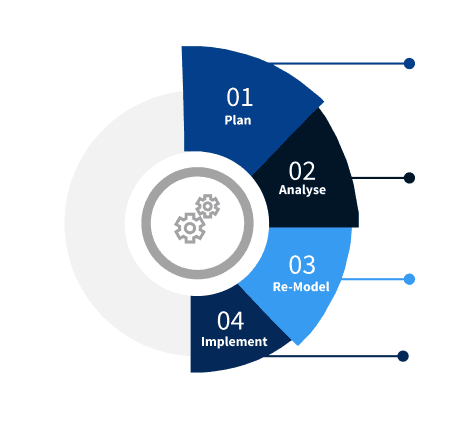
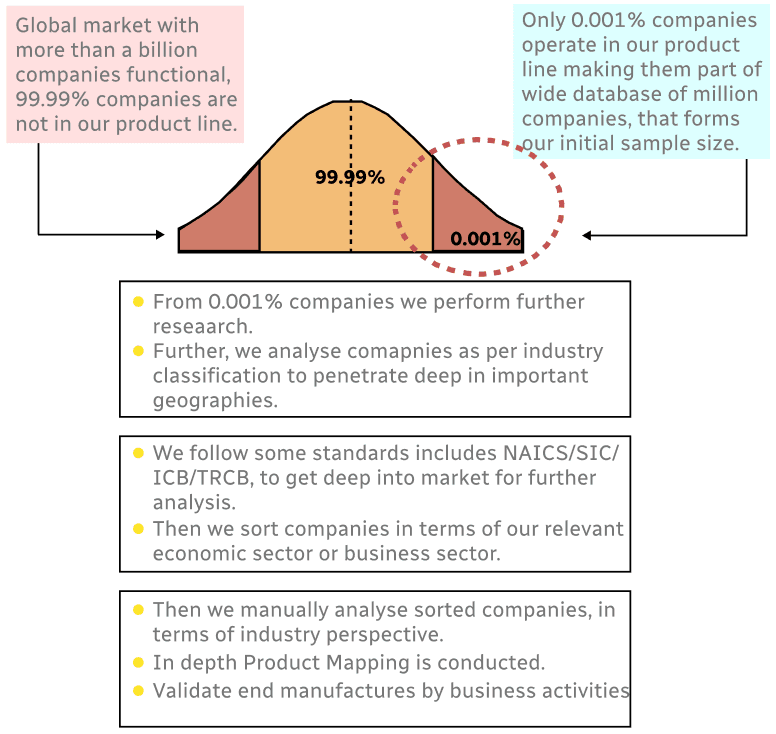
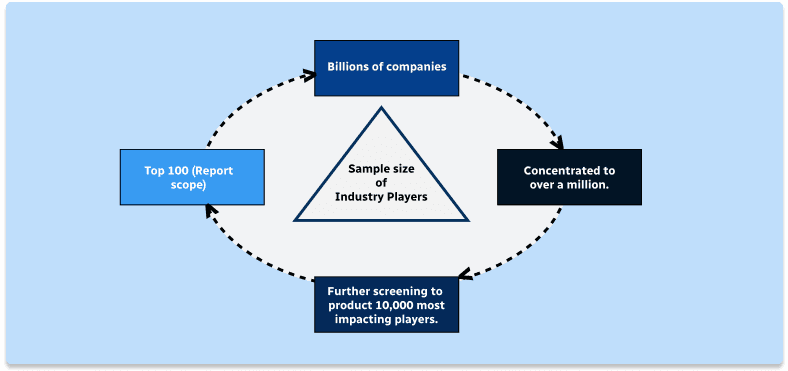
Step 1 - Identification of Relevant Samples Size from Population Database
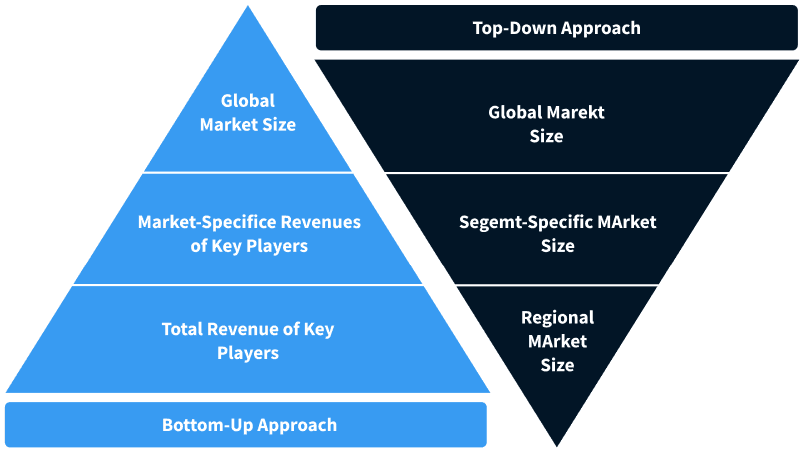
Step 2 - Approaches for Defining Global Market Size (Value, Volume* & Price*)
Note*: In applicable scenarios
Step 3 - Data Sources
Primary Research
- Web Analytics
- Survey Reports
- Research Institute
- Latest Research Reports
- Opinion Leaders
Secondary Research
- Annual Reports
- White Paper
- Latest Press Release
- Industry Association
- Paid Database
- Investor Presentations
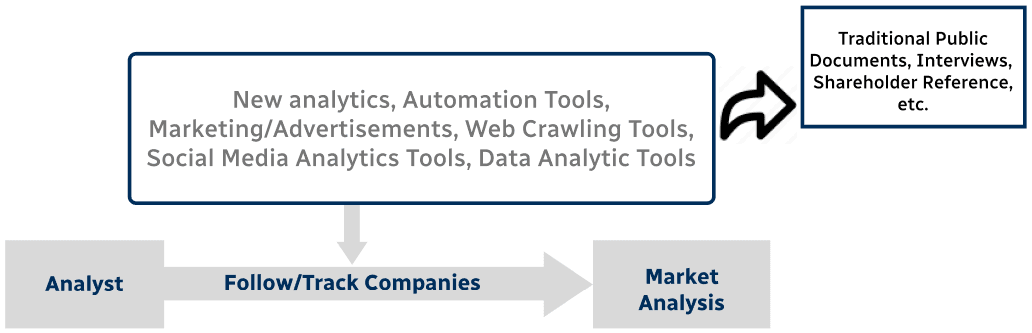
Step 4 - Data Triangulation
Involves using different sources of information in order to increase the validity of a study
These sources are likely to be stakeholders in a program - participants, other researchers, program staff, other community members, and so on.
Then we put all data in single framework & apply various statistical tools to find out the dynamic on the market.
During the analysis stage, feedback from the stakeholder groups would be compared to determine areas of agreement as well as areas of divergence