


Key Insights
The global Remote Electrocardiogram (ECG) Monitoring market is poised for significant expansion, projected to reach an estimated $30.05 billion in 2025. This robust growth is fueled by a projected Compound Annual Growth Rate (CAGR) of 6.55% from 2019 to 2033, indicating sustained momentum and increasing adoption across various sectors. The primary drivers behind this upward trajectory include the escalating prevalence of cardiovascular diseases globally, a growing demand for convenient and accessible healthcare solutions, and the continuous technological advancements in wearable devices and remote patient monitoring platforms. The increasing need for continuous patient oversight, especially for individuals with chronic cardiac conditions, further propels the market forward, enabling timely interventions and reducing hospital readmissions.
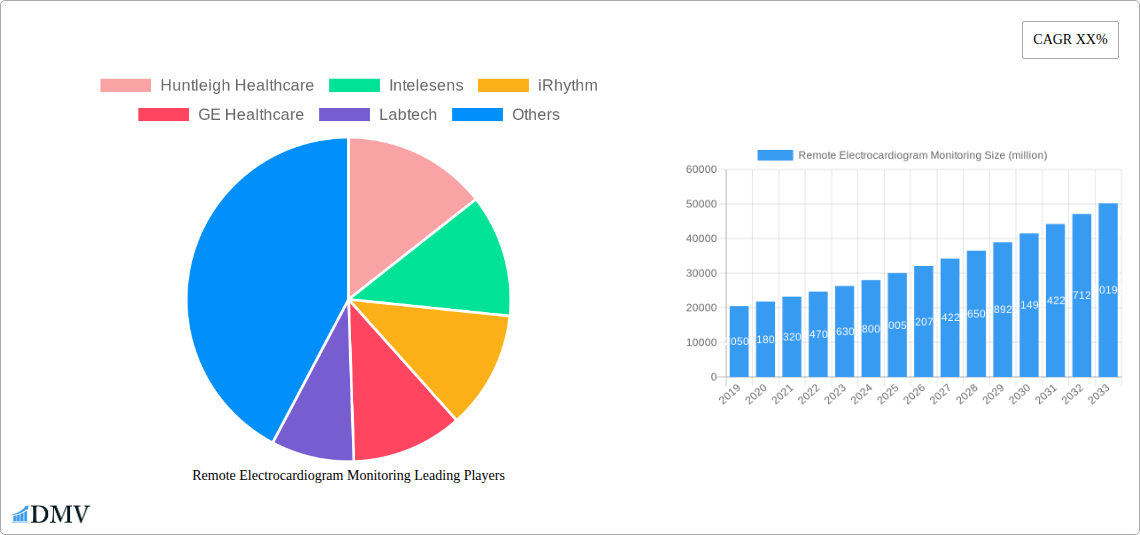
Remote Electrocardiogram Monitoring Market Size (In Billion)

The market's segmentation reveals a strong presence in personal use applications, driven by consumer-grade wearable ECG devices and a growing health-conscious population. However, hospital use represents a substantial segment, as healthcare facilities increasingly adopt remote monitoring to manage patient populations more efficiently, improve diagnostic accuracy, and optimize resource allocation. The types of remote ECG monitoring solutions, such as CRT with Remote Electrocardiogram Monitoring and ICD CRT-D with Remote Electrocardiogram Monitoring, are gaining traction due to their ability to provide critical data for managing complex cardiac conditions. Geographically, North America and Europe are leading the market due to advanced healthcare infrastructure and high patient awareness, while the Asia Pacific region is emerging as a significant growth area driven by increasing healthcare investments and a rising disposable income.
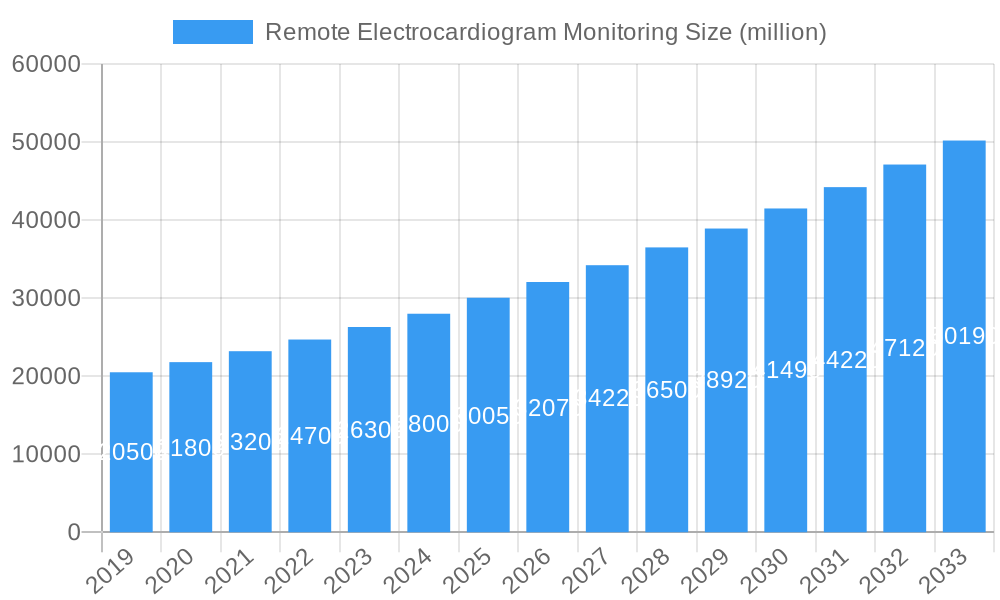
Remote Electrocardiogram Monitoring Company Market Share
The global Remote Electrocardiogram Monitoring market is experiencing robust expansion, driven by an increasing prevalence of cardiovascular diseases and a growing demand for convenient, at-home health solutions. Market concentration is moderately fragmented, with key players like iRhythm, GE Healthcare, and Huntleigh Healthcare holding significant stakes. Innovation catalysts include advancements in wearable sensor technology, AI-powered diagnostic algorithms, and the integration of telehealth platforms. Regulatory landscapes are evolving to support remote patient monitoring, with bodies like the FDA increasingly providing pathways for novel devices. Substitute products, such as traditional Holter monitors, are gradually being displaced by the superior convenience and continuous data collection capabilities of remote ECG solutions. End-user profiles are diverse, encompassing individuals seeking proactive health management for personal use, healthcare providers aiming to optimize patient care and reduce hospital readmissions for hospital use, and specialized healthcare facilities for other applications. Mergers and acquisitions (M&A) are playing a crucial role in consolidating the market and expanding product portfolios. For instance, recent M&A deal values in the remote patient monitoring sector have reached billions, indicating strong investor confidence and strategic consolidation. The market share distribution reflects a dynamic competitive environment where companies are vying for dominance through technological superiority and strategic partnerships. The pursuit of continuous innovation and expanded application areas continues to shape the market's trajectory, ensuring sustained growth.
Remote Electrocardiogram Monitoring Industry Evolution
The remote electrocardiogram (ECG) monitoring industry has undergone a significant evolution, transforming from a niche medical technology to a mainstream healthcare solution. The historical period from 2019 to 2024 witnessed an accelerated adoption curve, primarily fueled by the global pandemic which underscored the critical need for remote patient care. During this period, the market experienced a Compound Annual Growth Rate (CAGR) of approximately 15%, with market valuations reaching hundreds of billions by the end of 2024. The base year of 2025 sets a crucial benchmark, with the market estimated to be valued at over $X billion, reflecting sustained growth.
Technological advancements have been the bedrock of this evolution. The transition from cumbersome, short-term monitoring devices to sleek, wearable, and long-term continuous ECG monitors has revolutionized patient care. Innovations in sensor accuracy, battery life, and data transmission capabilities have enabled seamless, unobtrusive monitoring for extended periods. Furthermore, the integration of sophisticated algorithms powered by artificial intelligence (AI) and machine learning (ML) has dramatically improved the diagnostic accuracy and efficiency of remote ECG analysis. These AI-driven tools can detect subtle arrhythmias and other cardiac anomalies that might be missed by traditional methods, providing physicians with actionable insights.
Shifting consumer demands have also played a pivotal role. Patients are increasingly empowered and seeking greater control over their health management. The convenience of monitoring their cardiac health from the comfort of their homes, without the need for frequent clinic visits, resonates strongly with individuals of all ages, particularly those with chronic conditions or a predisposition to heart issues. This shift towards patient-centric care aligns perfectly with the capabilities offered by remote ECG monitoring solutions. The demand for personalized health insights and early detection of potential cardiac events has propelled the adoption of these technologies, driving market growth trajectories. The forecast period from 2025 to 2033 anticipates continued strong growth, with projected market values to exceed trillions of dollars, fueled by further technological integration, expanding applications, and increasing global healthcare infrastructure investment in digital health solutions.
Leading Regions, Countries, or Segments in Remote Electrocardiogram Monitoring
The global Remote Electrocardiogram Monitoring market exhibits distinct regional strengths and segment dominance, shaped by a confluence of factors including healthcare infrastructure, regulatory support, and patient demographics.
Dominant Region: North America
North America, encompassing the United States and Canada, stands as the leading region in the remote electrocardiogram monitoring market. This dominance is underpinned by several key drivers:
- Advanced Healthcare Infrastructure and High Adoption Rates: North America boasts one of the most developed healthcare systems globally, with a strong emphasis on technological integration and patient-centric care. The widespread availability of advanced medical facilities and a proactive approach to adopting innovative healthcare solutions contribute significantly to the high adoption of remote ECG monitoring.
- High Prevalence of Cardiovascular Diseases: The region faces a substantial burden of cardiovascular diseases (CVDs), a leading cause of morbidity and mortality. This demographic reality creates a continuous and substantial demand for effective cardiac monitoring solutions.
- Favorable Regulatory Environment: Regulatory bodies in North America, such as the Food and Drug Administration (FDA), have established clear pathways for the approval and reimbursement of remote patient monitoring devices, encouraging innovation and market entry. The Centers for Medicare & Medicaid Services (CMS) have also expanded coverage for remote patient monitoring services, further incentivizing adoption by healthcare providers.
- Significant Investment in Digital Health: North America consistently leads in investment in digital health technologies, including telehealth and remote monitoring. Venture capital funding and strategic partnerships between technology companies and healthcare providers are robust, fostering rapid market expansion.
- Technological Sophistication and Innovation: The presence of leading technology and medical device companies in the region fuels continuous innovation in remote ECG monitoring devices, leading to enhanced accuracy, user-friendliness, and data analytics capabilities.
Dominant Segment by Application: Hospital Use
Within the application segments, Hospital Use emerges as a primary driver of the remote ECG monitoring market.
- Improved Patient Management and Reduced Readmissions: Hospitals are leveraging remote ECG monitoring to manage patients with chronic heart conditions, post-operative recovery, and those at high risk of cardiac events. This enables continuous oversight, leading to early detection of complications and a significant reduction in hospital readmission rates, thereby saving substantial healthcare costs.
- Enhanced Workflow Efficiency: Remote monitoring allows hospital staff to focus on critical care by offloading routine patient observation for stable individuals. Data streams provide real-time alerts, enabling timely interventions without constant physical presence.
- Expansion of Telehealth Services: The growing integration of telehealth platforms by hospitals is a major catalyst. Remote ECG monitoring seamlessly fits into these established telehealth frameworks, extending the reach of care beyond the hospital walls.
Dominant Segment by Type: ICD CRT-D with Remote Electrocardiogram Monitoring
The ICD CRT-D with Remote Electrocardiogram Monitoring segment is a significant contributor to the market's value.
- Essential for Device Management: Implantable Cardioverter-Defibrillators (ICDs) and Cardiac Resynchronization Therapy Defibrillators (CRT-Ds) are critical for managing life-threatening arrhythmias and heart failure. Remote monitoring is essential for tracking device performance, battery life, and detecting any device-related issues or emergent arrhythmias.
- Proactive Patient Care for High-Risk Individuals: Patients with implanted CRT-Ds are often highly symptomatic and at significant risk. Remote ECG monitoring provides continuous assurance and allows for immediate alerts to healthcare providers in case of device malfunction or critical cardiac events, directly impacting patient outcomes.
- Technological Integration: The sophisticated technology embedded in these devices, coupled with advancements in wireless communication, makes integrated remote monitoring a natural and indispensable feature for optimal patient management.
Remote Electrocardiogram Monitoring Product Innovations
The remote electrocardiogram monitoring landscape is being reshaped by groundbreaking product innovations that enhance accuracy, usability, and data insights. Companies are developing ultra-thin, wearable sensors that integrate seamlessly into daily life, often disguised as patches or integrated into apparel, offering unparalleled comfort for continuous monitoring. Advanced AI and machine learning algorithms are now capable of identifying an expanded range of cardiac anomalies, from subtle arrhythmias to early signs of heart failure, with remarkable precision. Performance metrics are seeing significant improvements, with devices boasting longer battery lives, greater data transmission reliability, and enhanced signal clarity even in challenging environments. Unique selling propositions often revolve around the continuous, unobtrusive nature of the monitoring, the speed and accuracy of data analysis, and seamless integration with electronic health records and telehealth platforms, providing a holistic view of patient cardiac health.
Propelling Factors for Remote Electrocardiogram Monitoring Growth
The remote electrocardiogram monitoring market is propelled by a confluence of powerful factors. Technological advancements in miniaturized sensors, wireless connectivity, and AI-powered data analytics are enabling more accurate, convenient, and continuous monitoring. The growing prevalence of cardiovascular diseases globally creates a sustained demand for effective diagnostic and management tools. Increasing healthcare costs and the drive for efficiency encourage the adoption of remote monitoring to reduce hospitalizations and improve patient outcomes. Furthermore, supportive regulatory frameworks and expanding reimbursement policies for remote patient monitoring services are incentivizing healthcare providers to integrate these solutions. The rising patient preference for home-based healthcare and greater control over their well-being further fuels market expansion.
Obstacles in the Remote Electrocardiogram Monitoring Market
Despite its robust growth, the remote electrocardiogram monitoring market faces several significant obstacles. Data security and privacy concerns remain paramount, with the sensitive nature of health information requiring stringent safeguards against breaches. Regulatory hurdles and the lengthy approval processes for new devices and software updates can slow down market entry and innovation. Interoperability challenges between different devices, software platforms, and electronic health records can hinder seamless data integration and workflow efficiency. Reimbursement complexities and variability across different healthcare systems and insurance providers can also create financial barriers for widespread adoption. Finally, user adoption challenges, including digital literacy among certain patient demographics and resistance to adopting new technologies by some healthcare professionals, can impede market penetration.
Future Opportunities in Remote Electrocardiogram Monitoring
The future of remote electrocardiogram monitoring is brimming with opportunities for innovation and market expansion. The integration of wearable technology with other health sensors (e.g., glucose monitors, activity trackers) offers the potential for comprehensive, multi-modal physiological monitoring, providing a more holistic view of patient health. The development of predictive analytics and early warning systems powered by AI will further enhance the ability to proactively identify and manage cardiac risks, potentially preventing critical events. Expansion into emerging markets with growing healthcare needs presents a significant growth avenue, particularly in regions with developing healthcare infrastructure. The increasing focus on preventive healthcare and personalized medicine will drive demand for continuous, data-driven cardiac health management. Furthermore, the evolution of remote cardiac rehabilitation programs leveraging ECG monitoring will open new therapeutic avenues.
Major Players in the Remote Electrocardiogram Monitoring Ecosystem
- Huntleigh Healthcare
- Intelesens
- iRhythm
- GE Healthcare
- Labtech
Key Developments in Remote Electrocardiogram Monitoring Industry
- 2023/08: Launch of advanced AI-powered arrhythmia detection algorithms by a leading company, improving diagnostic accuracy for atrial fibrillation.
- 2023/11: Strategic partnership formed between a remote monitoring device manufacturer and a major telehealth platform to enhance integrated patient care solutions.
- 2024/01: Acquisition of a smaller wearable sensor technology firm by a major medical device corporation, bolstering its remote monitoring capabilities and product portfolio.
- 2024/04: Significant expansion of reimbursement codes for remote patient monitoring services by a governmental health authority, encouraging wider adoption by healthcare providers.
- 2024/07: Introduction of a new generation of long-term wearable ECG monitors with extended battery life and improved patient comfort, enhancing compliance.
Strategic Remote Electrocardiogram Monitoring Market Forecast
The strategic remote electrocardiogram monitoring market is poised for exceptional growth, driven by a strong synergy of technological innovation and evolving healthcare demands. Future opportunities lie in the deeper integration of AI for predictive cardiac event detection and personalized treatment plans, a trend projected to significantly enhance patient outcomes. The expansion of remote monitoring into chronic disease management beyond cardiovascular conditions presents a vast untapped market. Furthermore, advancements in miniaturization and wireless communication will lead to more discreet and user-friendly devices, fostering higher patient compliance and enabling broader adoption. Government initiatives promoting digital health and expanding reimbursement for remote services will continue to act as significant catalysts, making remote ECG monitoring an indispensable component of future healthcare delivery.
Remote Electrocardiogram Monitoring Segmentation
-
1. Application
- 1.1. Personal Use
- 1.2. Hospital Use
- 1.3. Others
-
2. Types
- 2.1. CRT with Remote Electrocardiogram Monitoring
- 2.2. ICD CRT-D with Remote Electrocardiogram Monitoring
- 2.3. Others
Remote Electrocardiogram Monitoring Segmentation By Geography
-
1. North America
- 1.1. United States
- 1.2. Canada
- 1.3. Mexico
-
2. South America
- 2.1. Brazil
- 2.2. Argentina
- 2.3. Rest of South America
-
3. Europe
- 3.1. United Kingdom
- 3.2. Germany
- 3.3. France
- 3.4. Italy
- 3.5. Spain
- 3.6. Russia
- 3.7. Benelux
- 3.8. Nordics
- 3.9. Rest of Europe
-
4. Middle East & Africa
- 4.1. Turkey
- 4.2. Israel
- 4.3. GCC
- 4.4. North Africa
- 4.5. South Africa
- 4.6. Rest of Middle East & Africa
-
5. Asia Pacific
- 5.1. China
- 5.2. India
- 5.3. Japan
- 5.4. South Korea
- 5.5. ASEAN
- 5.6. Oceania
- 5.7. Rest of Asia Pacific
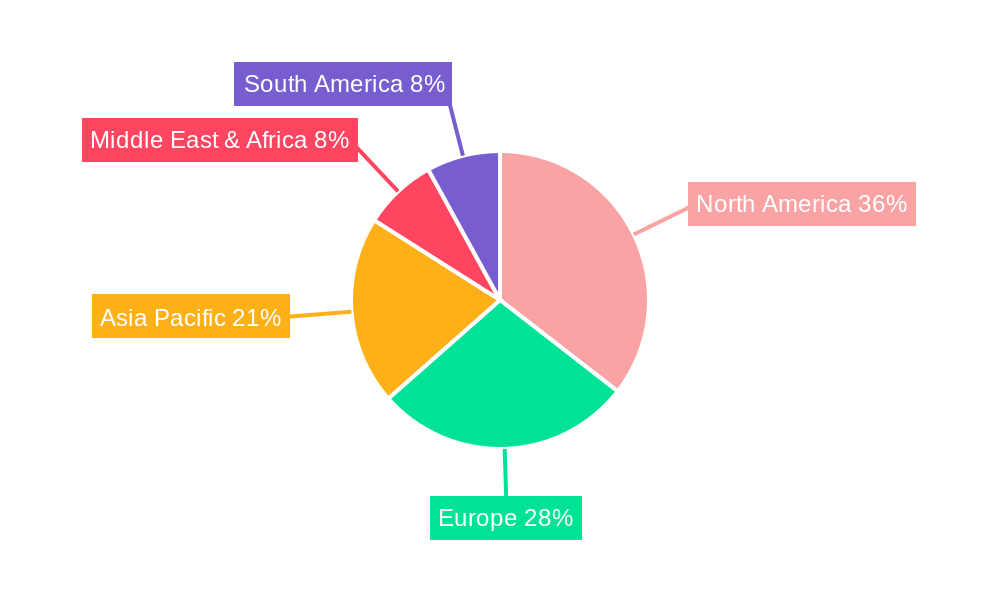
Remote Electrocardiogram Monitoring Regional Market Share
Geographic Coverage of Remote Electrocardiogram Monitoring
Remote Electrocardiogram Monitoring REPORT HIGHLIGHTS
| Aspects | Details |
|---|---|
| Study Period | 2020-2034 |
| Base Year | 2025 |
| Estimated Year | 2026 |
| Forecast Period | 2026-2034 |
| Historical Period | 2020-2025 |
| Growth Rate | CAGR of 6.55% from 2020-2034 |
| Segmentation |
|
Table of Contents
- 1. Introduction
- 1.1. Research Scope
- 1.2. Market Segmentation
- 1.3. Research Methodology
- 1.4. Definitions and Assumptions
- 2. Executive Summary
- 2.1. Introduction
- 3. Market Dynamics
- 3.1. Introduction
- 3.2. Market Drivers
- 3.3. Market Restrains
- 3.4. Market Trends
- 4. Market Factor Analysis
- 4.1. Porters Five Forces
- 4.2. Supply/Value Chain
- 4.3. PESTEL analysis
- 4.4. Market Entropy
- 4.5. Patent/Trademark Analysis
- 5. Global Remote Electrocardiogram Monitoring Analysis, Insights and Forecast, 2020-2032
- 5.1. Market Analysis, Insights and Forecast - by Application
- 5.1.1. Personal Use
- 5.1.2. Hospital Use
- 5.1.3. Others
- 5.2. Market Analysis, Insights and Forecast - by Types
- 5.2.1. CRT with Remote Electrocardiogram Monitoring
- 5.2.2. ICD CRT-D with Remote Electrocardiogram Monitoring
- 5.2.3. Others
- 5.3. Market Analysis, Insights and Forecast - by Region
- 5.3.1. North America
- 5.3.2. South America
- 5.3.3. Europe
- 5.3.4. Middle East & Africa
- 5.3.5. Asia Pacific
- 5.1. Market Analysis, Insights and Forecast - by Application
- 6. North America Remote Electrocardiogram Monitoring Analysis, Insights and Forecast, 2020-2032
- 6.1. Market Analysis, Insights and Forecast - by Application
- 6.1.1. Personal Use
- 6.1.2. Hospital Use
- 6.1.3. Others
- 6.2. Market Analysis, Insights and Forecast - by Types
- 6.2.1. CRT with Remote Electrocardiogram Monitoring
- 6.2.2. ICD CRT-D with Remote Electrocardiogram Monitoring
- 6.2.3. Others
- 6.1. Market Analysis, Insights and Forecast - by Application
- 7. South America Remote Electrocardiogram Monitoring Analysis, Insights and Forecast, 2020-2032
- 7.1. Market Analysis, Insights and Forecast - by Application
- 7.1.1. Personal Use
- 7.1.2. Hospital Use
- 7.1.3. Others
- 7.2. Market Analysis, Insights and Forecast - by Types
- 7.2.1. CRT with Remote Electrocardiogram Monitoring
- 7.2.2. ICD CRT-D with Remote Electrocardiogram Monitoring
- 7.2.3. Others
- 7.1. Market Analysis, Insights and Forecast - by Application
- 8. Europe Remote Electrocardiogram Monitoring Analysis, Insights and Forecast, 2020-2032
- 8.1. Market Analysis, Insights and Forecast - by Application
- 8.1.1. Personal Use
- 8.1.2. Hospital Use
- 8.1.3. Others
- 8.2. Market Analysis, Insights and Forecast - by Types
- 8.2.1. CRT with Remote Electrocardiogram Monitoring
- 8.2.2. ICD CRT-D with Remote Electrocardiogram Monitoring
- 8.2.3. Others
- 8.1. Market Analysis, Insights and Forecast - by Application
- 9. Middle East & Africa Remote Electrocardiogram Monitoring Analysis, Insights and Forecast, 2020-2032
- 9.1. Market Analysis, Insights and Forecast - by Application
- 9.1.1. Personal Use
- 9.1.2. Hospital Use
- 9.1.3. Others
- 9.2. Market Analysis, Insights and Forecast - by Types
- 9.2.1. CRT with Remote Electrocardiogram Monitoring
- 9.2.2. ICD CRT-D with Remote Electrocardiogram Monitoring
- 9.2.3. Others
- 9.1. Market Analysis, Insights and Forecast - by Application
- 10. Asia Pacific Remote Electrocardiogram Monitoring Analysis, Insights and Forecast, 2020-2032
- 10.1. Market Analysis, Insights and Forecast - by Application
- 10.1.1. Personal Use
- 10.1.2. Hospital Use
- 10.1.3. Others
- 10.2. Market Analysis, Insights and Forecast - by Types
- 10.2.1. CRT with Remote Electrocardiogram Monitoring
- 10.2.2. ICD CRT-D with Remote Electrocardiogram Monitoring
- 10.2.3. Others
- 10.1. Market Analysis, Insights and Forecast - by Application
- 11. Competitive Analysis
- 11.1. Global Market Share Analysis 2025
- 11.2. Company Profiles
- 11.2.1 Huntleigh Healthcare
- 11.2.1.1. Overview
- 11.2.1.2. Products
- 11.2.1.3. SWOT Analysis
- 11.2.1.4. Recent Developments
- 11.2.1.5. Financials (Based on Availability)
- 11.2.2 Intelesens
- 11.2.2.1. Overview
- 11.2.2.2. Products
- 11.2.2.3. SWOT Analysis
- 11.2.2.4. Recent Developments
- 11.2.2.5. Financials (Based on Availability)
- 11.2.3 iRhythm
- 11.2.3.1. Overview
- 11.2.3.2. Products
- 11.2.3.3. SWOT Analysis
- 11.2.3.4. Recent Developments
- 11.2.3.5. Financials (Based on Availability)
- 11.2.4 GE Healthcare
- 11.2.4.1. Overview
- 11.2.4.2. Products
- 11.2.4.3. SWOT Analysis
- 11.2.4.4. Recent Developments
- 11.2.4.5. Financials (Based on Availability)
- 11.2.5 Labtech
- 11.2.5.1. Overview
- 11.2.5.2. Products
- 11.2.5.3. SWOT Analysis
- 11.2.5.4. Recent Developments
- 11.2.5.5. Financials (Based on Availability)
- 11.2.1 Huntleigh Healthcare
List of Figures
- Figure 1: Global Remote Electrocardiogram Monitoring Revenue Breakdown (undefined, %) by Region 2025 & 2033
- Figure 2: North America Remote Electrocardiogram Monitoring Revenue (undefined), by Application 2025 & 2033
- Figure 3: North America Remote Electrocardiogram Monitoring Revenue Share (%), by Application 2025 & 2033
- Figure 4: North America Remote Electrocardiogram Monitoring Revenue (undefined), by Types 2025 & 2033
- Figure 5: North America Remote Electrocardiogram Monitoring Revenue Share (%), by Types 2025 & 2033
- Figure 6: North America Remote Electrocardiogram Monitoring Revenue (undefined), by Country 2025 & 2033
- Figure 7: North America Remote Electrocardiogram Monitoring Revenue Share (%), by Country 2025 & 2033
- Figure 8: South America Remote Electrocardiogram Monitoring Revenue (undefined), by Application 2025 & 2033
- Figure 9: South America Remote Electrocardiogram Monitoring Revenue Share (%), by Application 2025 & 2033
- Figure 10: South America Remote Electrocardiogram Monitoring Revenue (undefined), by Types 2025 & 2033
- Figure 11: South America Remote Electrocardiogram Monitoring Revenue Share (%), by Types 2025 & 2033
- Figure 12: South America Remote Electrocardiogram Monitoring Revenue (undefined), by Country 2025 & 2033
- Figure 13: South America Remote Electrocardiogram Monitoring Revenue Share (%), by Country 2025 & 2033
- Figure 14: Europe Remote Electrocardiogram Monitoring Revenue (undefined), by Application 2025 & 2033
- Figure 15: Europe Remote Electrocardiogram Monitoring Revenue Share (%), by Application 2025 & 2033
- Figure 16: Europe Remote Electrocardiogram Monitoring Revenue (undefined), by Types 2025 & 2033
- Figure 17: Europe Remote Electrocardiogram Monitoring Revenue Share (%), by Types 2025 & 2033
- Figure 18: Europe Remote Electrocardiogram Monitoring Revenue (undefined), by Country 2025 & 2033
- Figure 19: Europe Remote Electrocardiogram Monitoring Revenue Share (%), by Country 2025 & 2033
- Figure 20: Middle East & Africa Remote Electrocardiogram Monitoring Revenue (undefined), by Application 2025 & 2033
- Figure 21: Middle East & Africa Remote Electrocardiogram Monitoring Revenue Share (%), by Application 2025 & 2033
- Figure 22: Middle East & Africa Remote Electrocardiogram Monitoring Revenue (undefined), by Types 2025 & 2033
- Figure 23: Middle East & Africa Remote Electrocardiogram Monitoring Revenue Share (%), by Types 2025 & 2033
- Figure 24: Middle East & Africa Remote Electrocardiogram Monitoring Revenue (undefined), by Country 2025 & 2033
- Figure 25: Middle East & Africa Remote Electrocardiogram Monitoring Revenue Share (%), by Country 2025 & 2033
- Figure 26: Asia Pacific Remote Electrocardiogram Monitoring Revenue (undefined), by Application 2025 & 2033
- Figure 27: Asia Pacific Remote Electrocardiogram Monitoring Revenue Share (%), by Application 2025 & 2033
- Figure 28: Asia Pacific Remote Electrocardiogram Monitoring Revenue (undefined), by Types 2025 & 2033
- Figure 29: Asia Pacific Remote Electrocardiogram Monitoring Revenue Share (%), by Types 2025 & 2033
- Figure 30: Asia Pacific Remote Electrocardiogram Monitoring Revenue (undefined), by Country 2025 & 2033
- Figure 31: Asia Pacific Remote Electrocardiogram Monitoring Revenue Share (%), by Country 2025 & 2033
List of Tables
- Table 1: Global Remote Electrocardiogram Monitoring Revenue undefined Forecast, by Application 2020 & 2033
- Table 2: Global Remote Electrocardiogram Monitoring Revenue undefined Forecast, by Types 2020 & 2033
- Table 3: Global Remote Electrocardiogram Monitoring Revenue undefined Forecast, by Region 2020 & 2033
- Table 4: Global Remote Electrocardiogram Monitoring Revenue undefined Forecast, by Application 2020 & 2033
- Table 5: Global Remote Electrocardiogram Monitoring Revenue undefined Forecast, by Types 2020 & 2033
- Table 6: Global Remote Electrocardiogram Monitoring Revenue undefined Forecast, by Country 2020 & 2033
- Table 7: United States Remote Electrocardiogram Monitoring Revenue (undefined) Forecast, by Application 2020 & 2033
- Table 8: Canada Remote Electrocardiogram Monitoring Revenue (undefined) Forecast, by Application 2020 & 2033
- Table 9: Mexico Remote Electrocardiogram Monitoring Revenue (undefined) Forecast, by Application 2020 & 2033
- Table 10: Global Remote Electrocardiogram Monitoring Revenue undefined Forecast, by Application 2020 & 2033
- Table 11: Global Remote Electrocardiogram Monitoring Revenue undefined Forecast, by Types 2020 & 2033
- Table 12: Global Remote Electrocardiogram Monitoring Revenue undefined Forecast, by Country 2020 & 2033
- Table 13: Brazil Remote Electrocardiogram Monitoring Revenue (undefined) Forecast, by Application 2020 & 2033
- Table 14: Argentina Remote Electrocardiogram Monitoring Revenue (undefined) Forecast, by Application 2020 & 2033
- Table 15: Rest of South America Remote Electrocardiogram Monitoring Revenue (undefined) Forecast, by Application 2020 & 2033
- Table 16: Global Remote Electrocardiogram Monitoring Revenue undefined Forecast, by Application 2020 & 2033
- Table 17: Global Remote Electrocardiogram Monitoring Revenue undefined Forecast, by Types 2020 & 2033
- Table 18: Global Remote Electrocardiogram Monitoring Revenue undefined Forecast, by Country 2020 & 2033
- Table 19: United Kingdom Remote Electrocardiogram Monitoring Revenue (undefined) Forecast, by Application 2020 & 2033
- Table 20: Germany Remote Electrocardiogram Monitoring Revenue (undefined) Forecast, by Application 2020 & 2033
- Table 21: France Remote Electrocardiogram Monitoring Revenue (undefined) Forecast, by Application 2020 & 2033
- Table 22: Italy Remote Electrocardiogram Monitoring Revenue (undefined) Forecast, by Application 2020 & 2033
- Table 23: Spain Remote Electrocardiogram Monitoring Revenue (undefined) Forecast, by Application 2020 & 2033
- Table 24: Russia Remote Electrocardiogram Monitoring Revenue (undefined) Forecast, by Application 2020 & 2033
- Table 25: Benelux Remote Electrocardiogram Monitoring Revenue (undefined) Forecast, by Application 2020 & 2033
- Table 26: Nordics Remote Electrocardiogram Monitoring Revenue (undefined) Forecast, by Application 2020 & 2033
- Table 27: Rest of Europe Remote Electrocardiogram Monitoring Revenue (undefined) Forecast, by Application 2020 & 2033
- Table 28: Global Remote Electrocardiogram Monitoring Revenue undefined Forecast, by Application 2020 & 2033
- Table 29: Global Remote Electrocardiogram Monitoring Revenue undefined Forecast, by Types 2020 & 2033
- Table 30: Global Remote Electrocardiogram Monitoring Revenue undefined Forecast, by Country 2020 & 2033
- Table 31: Turkey Remote Electrocardiogram Monitoring Revenue (undefined) Forecast, by Application 2020 & 2033
- Table 32: Israel Remote Electrocardiogram Monitoring Revenue (undefined) Forecast, by Application 2020 & 2033
- Table 33: GCC Remote Electrocardiogram Monitoring Revenue (undefined) Forecast, by Application 2020 & 2033
- Table 34: North Africa Remote Electrocardiogram Monitoring Revenue (undefined) Forecast, by Application 2020 & 2033
- Table 35: South Africa Remote Electrocardiogram Monitoring Revenue (undefined) Forecast, by Application 2020 & 2033
- Table 36: Rest of Middle East & Africa Remote Electrocardiogram Monitoring Revenue (undefined) Forecast, by Application 2020 & 2033
- Table 37: Global Remote Electrocardiogram Monitoring Revenue undefined Forecast, by Application 2020 & 2033
- Table 38: Global Remote Electrocardiogram Monitoring Revenue undefined Forecast, by Types 2020 & 2033
- Table 39: Global Remote Electrocardiogram Monitoring Revenue undefined Forecast, by Country 2020 & 2033
- Table 40: China Remote Electrocardiogram Monitoring Revenue (undefined) Forecast, by Application 2020 & 2033
- Table 41: India Remote Electrocardiogram Monitoring Revenue (undefined) Forecast, by Application 2020 & 2033
- Table 42: Japan Remote Electrocardiogram Monitoring Revenue (undefined) Forecast, by Application 2020 & 2033
- Table 43: South Korea Remote Electrocardiogram Monitoring Revenue (undefined) Forecast, by Application 2020 & 2033
- Table 44: ASEAN Remote Electrocardiogram Monitoring Revenue (undefined) Forecast, by Application 2020 & 2033
- Table 45: Oceania Remote Electrocardiogram Monitoring Revenue (undefined) Forecast, by Application 2020 & 2033
- Table 46: Rest of Asia Pacific Remote Electrocardiogram Monitoring Revenue (undefined) Forecast, by Application 2020 & 2033
Frequently Asked Questions
1. What is the projected Compound Annual Growth Rate (CAGR) of the Remote Electrocardiogram Monitoring?
The projected CAGR is approximately 6.55%.
2. Which companies are prominent players in the Remote Electrocardiogram Monitoring?
Key companies in the market include Huntleigh Healthcare, Intelesens, iRhythm, GE Healthcare, Labtech.
3. What are the main segments of the Remote Electrocardiogram Monitoring?
The market segments include Application, Types.
4. Can you provide details about the market size?
The market size is estimated to be USD XXX N/A as of 2022.
5. What are some drivers contributing to market growth?
N/A
6. What are the notable trends driving market growth?
N/A
7. Are there any restraints impacting market growth?
N/A
8. Can you provide examples of recent developments in the market?
N/A
9. What pricing options are available for accessing the report?
Pricing options include single-user, multi-user, and enterprise licenses priced at USD 5600.00, USD 8400.00, and USD 11200.00 respectively.
10. Is the market size provided in terms of value or volume?
The market size is provided in terms of value, measured in N/A.
11. Are there any specific market keywords associated with the report?
Yes, the market keyword associated with the report is "Remote Electrocardiogram Monitoring," which aids in identifying and referencing the specific market segment covered.
12. How do I determine which pricing option suits my needs best?
The pricing options vary based on user requirements and access needs. Individual users may opt for single-user licenses, while businesses requiring broader access may choose multi-user or enterprise licenses for cost-effective access to the report.
13. Are there any additional resources or data provided in the Remote Electrocardiogram Monitoring report?
While the report offers comprehensive insights, it's advisable to review the specific contents or supplementary materials provided to ascertain if additional resources or data are available.
14. How can I stay updated on further developments or reports in the Remote Electrocardiogram Monitoring?
To stay informed about further developments, trends, and reports in the Remote Electrocardiogram Monitoring, consider subscribing to industry newsletters, following relevant companies and organizations, or regularly checking reputable industry news sources and publications.
Methodology
Step 1 - Identification of Relevant Samples Size from Population Database



Step 2 - Approaches for Defining Global Market Size (Value, Volume* & Price*)

Note*: In applicable scenarios
Step 3 - Data Sources
Primary Research
- Web Analytics
- Survey Reports
- Research Institute
- Latest Research Reports
- Opinion Leaders
Secondary Research
- Annual Reports
- White Paper
- Latest Press Release
- Industry Association
- Paid Database
- Investor Presentations

Step 4 - Data Triangulation
Involves using different sources of information in order to increase the validity of a study
These sources are likely to be stakeholders in a program - participants, other researchers, program staff, other community members, and so on.
Then we put all data in single framework & apply various statistical tools to find out the dynamic on the market.
During the analysis stage, feedback from the stakeholder groups would be compared to determine areas of agreement as well as areas of divergence