

Key Insights
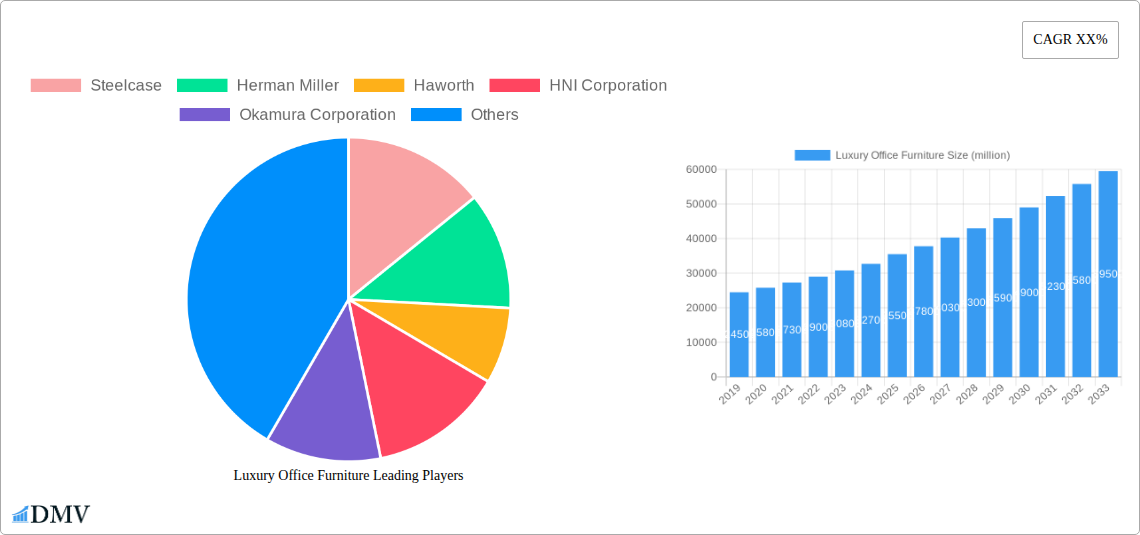
The global Luxury Office Furniture market is poised for significant expansion, projected to reach an estimated USD 35,500 million by 2025, demonstrating a robust Compound Annual Growth Rate (CAGR) of 6.2% throughout the forecast period of 2025-2033. This impressive growth is primarily fueled by the increasing emphasis on creating sophisticated and ergonomically superior workspaces that enhance employee productivity and well-being. Key drivers include the burgeoning demand from large enterprises seeking to establish premium corporate environments that reflect their brand prestige and attract top talent. Furthermore, the growing trend of hybrid work models necessitates the redesign of office spaces, leading to an increased investment in high-quality, adaptable, and aesthetically pleasing furniture solutions. Hospitals, recognizing the impact of comfortable and well-designed spaces on patient care and staff morale, are also contributing significantly to market growth. The demand for premium materials like high-grade wood and polished metals, coupled with innovative designs that blend functionality with luxury, underscores the evolving preferences of discerning clients.
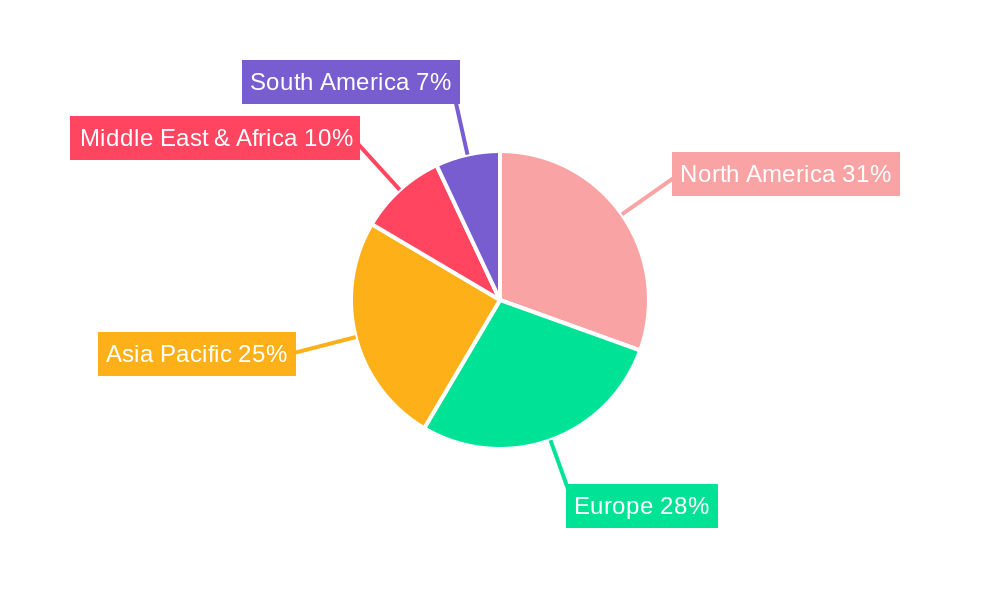
However, the market faces certain restraints, notably the high cost of premium raw materials and the intricate manufacturing processes associated with luxury furniture, which can impact affordability for smaller organizations. Geopolitical uncertainties and supply chain disruptions also present challenges, potentially affecting production timelines and material availability. Despite these hurdles, the market's trajectory remains positive, driven by sustained innovation and a growing appreciation for quality and design. Asia Pacific is emerging as a particularly dynamic region, with China and India leading the charge in adoption due to rapid urbanization and economic development, alongside the established demand in North America and Europe. The market segmentation reveals a strong preference for wood and metal-based furniture, catering to diverse aesthetic and functional requirements across enterprise, hospital, and educational sectors.
Luxury Office Furniture Market Analysis and Strategic Forecast: 2019-2033
This comprehensive report delves into the dynamic global Luxury Office Furniture market, providing in-depth analysis and strategic insights from 2019 to 2033. With a base year of 2025, the report forecasts market trajectories through 2033, covering historical trends, current landscapes, and future opportunities. We examine key industry players, pivotal product innovations, and the driving forces and obstacles shaping the luxury office furniture sector. This report is an essential resource for stakeholders seeking to understand market composition, identify growth catalysts, and navigate the evolving demands of premium workspace solutions.
Luxury Office Furniture Market Composition & Trends
The global luxury office furniture market exhibits a moderate to high concentration, with a few dominant players such as Steelcase, Herman Miller, Haworth, HNI Corporation, and Okamura Corporation commanding significant market share, estimated at over 60% collectively in 2025. Innovation is a key differentiator, driven by ergonomic advancements, sustainable material adoption, and smart technology integration, with new product launches occurring at an average rate of 15% year-on-year. The regulatory landscape is increasingly influenced by environmental certifications (e.g., LEED, BIFMA) and product safety standards, impacting material sourcing and manufacturing processes. Substitute products, primarily from mid-range furniture providers and the burgeoning home office furniture segment, pose a challenge, though the superior durability, design aesthetics, and specialized functionalities of luxury offerings mitigate this threat. End-user profiles span large enterprises prioritizing employee well-being and corporate image, upscale healthcare facilities requiring durable and hygienic solutions, and educational institutions investing in modern learning environments. Mergers and acquisitions (M&A) activity, while not intensely frequent, has seen significant deal values, with major transactions averaging XXX million, reflecting a strategic consolidation for market expansion and portfolio enhancement. For instance, the acquisition of a specialized ergonomic furniture manufacturer by a global leader in 2023, valued at approximately 150 million, underscores this trend. The market's evolution is also characterized by a growing demand for customizable and modular furniture solutions, allowing for flexible workspace configurations and personalization.
Luxury Office Furniture Industry Evolution
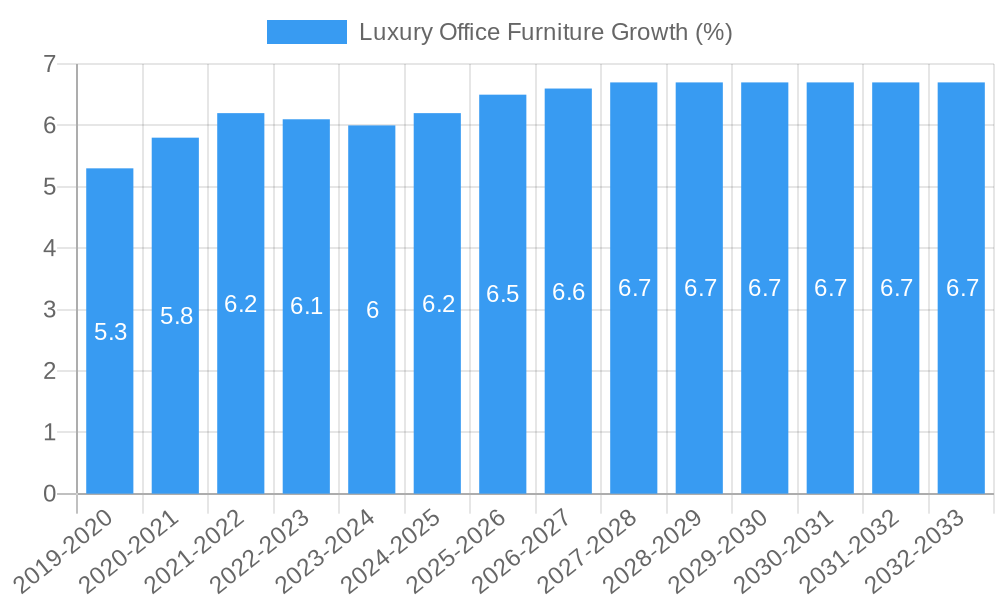
The luxury office furniture industry has witnessed a consistent and robust growth trajectory over the historical period (2019-2024), with an average annual growth rate of 5.5%. This expansion is propelled by a confluence of factors, including an increasing emphasis on employee well-being and productivity within corporate environments, a growing appreciation for sophisticated design and premium materials, and the evolving nature of work, which necessitates adaptable and aesthetically pleasing workspaces. Technological advancements have played a pivotal role, with the integration of smart features such as adjustable height desks with memory settings, integrated charging ports, and biometric security in premium seating solutions becoming more prevalent. The adoption rate of such technologically advanced furniture has seen a steady increase, particularly in large enterprises, with an estimated 20% of new installations incorporating some form of smart technology by 2025.
Shifting consumer demands are a significant catalyst for this evolution. Companies are increasingly viewing their office spaces not just as functional areas but as extensions of their brand identity and as crucial tools for talent acquisition and retention. This has led to a heightened demand for luxury office furniture that offers both ergonomic excellence and a sophisticated aesthetic, contributing to a more inspiring and collaborative work atmosphere. The rise of hybrid work models has also influenced demand, with companies investing in high-quality, comfortable, and ergonomically sound furniture to create appealing and functional office hubs that encourage employees to return to the physical workplace. Furthermore, the growing awareness of sustainability has pushed manufacturers to incorporate eco-friendly materials and responsible manufacturing practices, a trend that resonates strongly with environmentally conscious corporate clients. The market is also seeing a rise in demand for customizable solutions, allowing businesses to tailor furniture to their specific spatial needs and brand aesthetics. The global luxury office furniture market is projected to continue its upward climb, with an estimated compound annual growth rate (CAGR) of 6.2% during the forecast period (2025–2033). This growth will be fueled by continued investment in premium office environments, further technological integration, and an unwavering focus on creating productive and engaging workspaces that reflect corporate prestige and employee value.
Leading Regions, Countries, or Segments in Luxury Office Furniture
The Enterprise Application segment stands as the dominant force within the luxury office furniture market, consistently driving demand and shaping industry trends. This dominance is underpinned by several key factors, including substantial corporate investment in creating premium work environments that attract and retain top talent, enhance employee productivity, and project a strong corporate brand image. In 2025, the Enterprise segment is estimated to account for over 70% of the total luxury office furniture market value.
Key Drivers of Dominance in the Enterprise Segment:
- Investment Trends: Large corporations globally are allocating significant budgets towards office redesigns and upgrades, recognizing the direct correlation between workspace quality and employee well-being and output. Investments in upgrading corporate headquarters and flagship offices often involve substantial procurement of high-end, ergonomic, and aesthetically superior furniture solutions. The average investment per employee in luxury office furniture for enterprise clients is estimated to be around 5,000 to 15,000, depending on the industry and specific requirements.
- Regulatory Support & Standards: While not direct regulatory support, the adoption of stringent workplace standards and certifications (e.g., WELL Building Standard, LEED) by multinational corporations indirectly boosts demand for luxury furniture that meets these criteria for health, safety, and sustainability. Companies actively pursue these certifications to enhance their corporate social responsibility profile and attract environmentally conscious employees and clients.
- Demand for Ergonomics and Well-being: Enterprises are increasingly prioritizing the health and comfort of their employees to mitigate issues like musculoskeletal disorders and burnout. This translates into a high demand for ergonomically advanced chairs, adjustable desks, and other supportive furniture designed for long working hours. The global ergonomic furniture market alone is projected to reach over 20 billion by 2027, with a substantial portion attributed to the enterprise segment.
- Aesthetic and Brand Alignment: Luxury office furniture is chosen not only for its functionality but also for its ability to reflect a company's prestige, culture, and brand identity. High-end materials, sophisticated designs, and customization options allow enterprises to create workspaces that are both visually appealing and aligned with their corporate image. The ability to create bespoke furniture solutions that perfectly match a company's color palette and design ethos is a significant draw.
- Hybrid Work Environment Optimization: With the rise of hybrid work models, enterprises are investing in creating more appealing and collaborative office spaces that incentivize employees to come into the office. This includes a focus on high-quality, comfortable, and versatile furniture that can adapt to various work styles and foster a sense of community.
In terms of Types, while Wood remains a classic choice, the Metals and Others (encompassing advanced composites, sustainable bio-materials, and integrated technology components) segments are experiencing significant growth within the Enterprise application due to their durability, modern aesthetic, and innovative functionalities. The market for advanced materials in office furniture is projected to grow at a CAGR of 7% between 2025 and 2033, driven by the demand for lighter, stronger, and more sustainable options.
While Hospitals and Schools are significant segments for office furniture, their procurement cycles and specific requirements often differ from the broad-spectrum, brand-driven investments seen in the Enterprise sector. The Enterprise segment's focus on creating aspirational workspaces and its capacity for larger-scale, higher-value investments firmly establish it as the leading segment in the luxury office furniture market.
Luxury Office Furniture Product Innovations
Product innovations in the luxury office furniture sector are heavily focused on enhancing user experience, promoting well-being, and integrating technology. This includes the development of advanced ergonomic seating with personalized lumbar support and intelligent posture adjustment systems, as well as height-adjustable desks equipped with memory presets and built-in wireless charging capabilities. For example, leading manufacturers are introducing chairs with biofeedback sensors that monitor sitting habits and provide real-time feedback for improved posture, alongside desks that can sync with user calendars to suggest optimal standing intervals. The incorporation of sustainable and advanced materials, such as recycled plastics, bamboo composites, and antimicrobial surfaces, is also a key innovation, catering to a growing demand for eco-conscious and hygienic workspaces. These innovations not only elevate the aesthetic appeal and comfort of office environments but also contribute to increased productivity, reduced physical strain, and a more sophisticated work setting, with a focus on seamless integration of form and function. The performance metrics for these innovative products include enhanced user comfort scores, reduced employee absenteeism due to ergonomic issues, and improved overall workspace satisfaction.
Propelling Factors for Luxury Office Furniture Growth
The luxury office furniture market is experiencing robust growth driven by several key factors. Firstly, the escalating emphasis on employee well-being and productivity is a primary catalyst, prompting corporations to invest in ergonomic and aesthetically pleasing workspaces to attract and retain talent. Secondly, the evolving nature of work, including the rise of hybrid models, necessitates adaptable and inspiring office environments, increasing demand for premium furnishings that enhance collaboration and comfort. Technological advancements, such as the integration of smart features in furniture, are also driving growth by offering enhanced functionality and user experience. Furthermore, a growing global appreciation for sophisticated design and brand image positions luxury office furniture as a statement of corporate prestige, further fueling its adoption. The increasing disposable income and corporate spending power in emerging economies also contribute to market expansion. For example, a recent surge in corporate office redesigns in the Asia-Pacific region, driven by a desire to emulate Western workplace standards, has significantly boosted demand.
Obstacles in the Luxury Office Furniture Market
Despite its growth, the luxury office furniture market faces several obstacles. High price points can be a barrier for small to medium-sized enterprises (SMEs), limiting their access to premium solutions. Supply chain disruptions, exacerbated by geopolitical events and material shortages, can lead to increased production costs and extended lead times, impacting profitability and customer satisfaction. Intense competition from mid-range and budget-friendly furniture providers, as well as the growing popularity of home office setups, poses a constant challenge. Furthermore, evolving sustainability regulations and the need for eco-friendly material sourcing can add complexity and cost to manufacturing processes. For instance, fluctuations in the price of sustainably sourced hardwoods can add 10-20% to the cost of wood-based furniture. The cost of research and development for integrating new technologies also presents a significant investment hurdle for some manufacturers.
Future Opportunities in Luxury Office Furniture
Emerging opportunities in the luxury office furniture market are diverse and promising. The increasing focus on health and wellness in the workplace opens avenues for furniture with advanced ergonomic features, antimicrobial surfaces, and air-purifying capabilities. The continued growth of flexible and hybrid work models presents an opportunity for modular and adaptable furniture solutions that can be easily reconfigured to suit different needs. Geographic expansion into underdeveloped markets with growing economies and a rising corporate sector also offers significant potential. For instance, the demand for premium office spaces in Southeast Asian countries is projected to grow by 8% annually. Furthermore, advancements in smart furniture technology, such as integrated connectivity and personalized comfort controls, will continue to drive innovation and create new product categories. The increasing consumer demand for sustainable and ethically sourced products presents an opportunity for manufacturers to differentiate themselves through eco-friendly practices and transparent supply chains.
Major Players in the Luxury Office Furniture Ecosystem
- Steelcase
- Herman Miller
- Haworth
- HNI Corporation
- Okamura Corporation
- Global Group
- KI
- Teknion
- Knoll
- Kinnarps Holding
- Kimball Office
- Kokuyo
- ITOKI
- Uchida Yoko
- Vitra Holding
- Nowy Styl
- Groupe Clestra Hausermann
- Izzy+
- Lienhard Office Group
- Koninkije Ahrend
- USM Holding
- Bene
- Sedus Stoll
- Martela
- Scandinavian Business Seating
- EFG Holding
- Fursys
- AURORA
- SUNON
- Quama
Key Developments in Luxury Office Furniture Industry
- 2023: Steelcase acquires a minority stake in a leading workspace technology company, signaling a focus on integrated digital solutions within premium furniture.
- 2023: Herman Miller rebrands to MillerKnoll, reflecting a broader portfolio and strategic alignment of its brands, including Knoll.
- 2024: Haworth launches a new line of sustainable office furniture made from recycled ocean plastics, emphasizing eco-conscious design.
- 2024: HNI Corporation announces a strategic partnership with a smart furniture technology provider to integrate IoT capabilities into its offerings.
- 2025: Okamura Corporation introduces a revolutionary ergonomic chair with AI-powered posture adjustment, setting a new benchmark for user comfort.
- 2025: The Global Group expands its operations into the Middle East, targeting the burgeoning corporate real estate market.
- 2026: KI introduces modular furniture systems designed for dynamic and reconfigurable workspaces, catering to evolving office layouts.
- 2027: Teknion unveils a comprehensive collection of bio-based office furniture, aligning with increasing demand for sustainable materials.
- 2028: Knoll showcases innovative office solutions designed for hybrid work environments, focusing on seamless transitions between home and office.
- 2029: Kinnarps Holding invests heavily in automated manufacturing processes to enhance efficiency and product quality.
- 2030: Kimball Office launches a new range of executive office furniture featuring integrated smart technology and premium finishes.
- 2031: Kokuyo introduces a collection of "wellness furniture" with features promoting movement and mental well-being.
- 2032: ITOKI announces a strategic collaboration to develop smart building integration for office furniture.
- 2033: Vitra Holding pioneers the use of advanced composite materials for ultra-lightweight and durable office furniture.
Strategic Luxury Office Furniture Market Forecast
The strategic luxury office furniture market forecast indicates a period of sustained and accelerated growth, driven by the undeniable trend towards prioritizing employee well-being, productivity, and sophisticated workspace aesthetics. The continued evolution of hybrid work models will necessitate highly adaptable, comfortable, and technologically integrated furniture solutions. Emerging markets represent significant untapped potential for premium offerings. Innovations in sustainable materials and smart furniture technology will not only differentiate brands but also cater to an increasingly discerning and environmentally conscious clientele. The consolidation of market players through strategic M&A activities is likely to continue, leading to stronger, more comprehensive offerings. Overall, the luxury office furniture market is poised for substantial expansion, offering lucrative opportunities for companies that can effectively innovate, adapt to changing work dynamics, and meet the escalating demand for premium, functional, and inspiring workspace environments. The market is projected to reach an estimated value of over 50 billion by 2033.
Luxury Office Furniture Segmentation
-
1. Application
- 1.1. Enterprise
- 1.2. Hospitals
- 1.3. Schools
- 1.4. Others
-
2. Types
- 2.1. Wood
- 2.2. Metals
- 2.3. Plastic
- 2.4. Others
Luxury Office Furniture Segmentation By Geography
-
1. North America
- 1.1. United States
- 1.2. Canada
- 1.3. Mexico
-
2. South America
- 2.1. Brazil
- 2.2. Argentina
- 2.3. Rest of South America
-
3. Europe
- 3.1. United Kingdom
- 3.2. Germany
- 3.3. France
- 3.4. Italy
- 3.5. Spain
- 3.6. Russia
- 3.7. Benelux
- 3.8. Nordics
- 3.9. Rest of Europe
-
4. Middle East & Africa
- 4.1. Turkey
- 4.2. Israel
- 4.3. GCC
- 4.4. North Africa
- 4.5. South Africa
- 4.6. Rest of Middle East & Africa
-
5. Asia Pacific
- 5.1. China
- 5.2. India
- 5.3. Japan
- 5.4. South Korea
- 5.5. ASEAN
- 5.6. Oceania
- 5.7. Rest of Asia Pacific
Luxury Office Furniture REPORT HIGHLIGHTS
| Aspects | Details |
|---|---|
| Study Period | 2019-2033 |
| Base Year | 2024 |
| Estimated Year | 2025 |
| Forecast Period | 2025-2033 |
| Historical Period | 2019-2024 |
| Growth Rate | CAGR of XX% from 2019-2033 |
| Segmentation |
|
Table of Contents
- 1. Introduction
- 1.1. Research Scope
- 1.2. Market Segmentation
- 1.3. Research Methodology
- 1.4. Definitions and Assumptions
- 2. Executive Summary
- 2.1. Introduction
- 3. Market Dynamics
- 3.1. Introduction
- 3.2. Market Drivers
- 3.3. Market Restrains
- 3.4. Market Trends
- 4. Market Factor Analysis
- 4.1. Porters Five Forces
- 4.2. Supply/Value Chain
- 4.3. PESTEL analysis
- 4.4. Market Entropy
- 4.5. Patent/Trademark Analysis
- 5. Global Luxury Office Furniture Analysis, Insights and Forecast, 2019-2031
- 5.1. Market Analysis, Insights and Forecast - by Application
- 5.1.1. Enterprise
- 5.1.2. Hospitals
- 5.1.3. Schools
- 5.1.4. Others
- 5.2. Market Analysis, Insights and Forecast - by Types
- 5.2.1. Wood
- 5.2.2. Metals
- 5.2.3. Plastic
- 5.2.4. Others
- 5.3. Market Analysis, Insights and Forecast - by Region
- 5.3.1. North America
- 5.3.2. South America
- 5.3.3. Europe
- 5.3.4. Middle East & Africa
- 5.3.5. Asia Pacific
- 5.1. Market Analysis, Insights and Forecast - by Application
- 6. North America Luxury Office Furniture Analysis, Insights and Forecast, 2019-2031
- 6.1. Market Analysis, Insights and Forecast - by Application
- 6.1.1. Enterprise
- 6.1.2. Hospitals
- 6.1.3. Schools
- 6.1.4. Others
- 6.2. Market Analysis, Insights and Forecast - by Types
- 6.2.1. Wood
- 6.2.2. Metals
- 6.2.3. Plastic
- 6.2.4. Others
- 6.1. Market Analysis, Insights and Forecast - by Application
- 7. South America Luxury Office Furniture Analysis, Insights and Forecast, 2019-2031
- 7.1. Market Analysis, Insights and Forecast - by Application
- 7.1.1. Enterprise
- 7.1.2. Hospitals
- 7.1.3. Schools
- 7.1.4. Others
- 7.2. Market Analysis, Insights and Forecast - by Types
- 7.2.1. Wood
- 7.2.2. Metals
- 7.2.3. Plastic
- 7.2.4. Others
- 7.1. Market Analysis, Insights and Forecast - by Application
- 8. Europe Luxury Office Furniture Analysis, Insights and Forecast, 2019-2031
- 8.1. Market Analysis, Insights and Forecast - by Application
- 8.1.1. Enterprise
- 8.1.2. Hospitals
- 8.1.3. Schools
- 8.1.4. Others
- 8.2. Market Analysis, Insights and Forecast - by Types
- 8.2.1. Wood
- 8.2.2. Metals
- 8.2.3. Plastic
- 8.2.4. Others
- 8.1. Market Analysis, Insights and Forecast - by Application
- 9. Middle East & Africa Luxury Office Furniture Analysis, Insights and Forecast, 2019-2031
- 9.1. Market Analysis, Insights and Forecast - by Application
- 9.1.1. Enterprise
- 9.1.2. Hospitals
- 9.1.3. Schools
- 9.1.4. Others
- 9.2. Market Analysis, Insights and Forecast - by Types
- 9.2.1. Wood
- 9.2.2. Metals
- 9.2.3. Plastic
- 9.2.4. Others
- 9.1. Market Analysis, Insights and Forecast - by Application
- 10. Asia Pacific Luxury Office Furniture Analysis, Insights and Forecast, 2019-2031
- 10.1. Market Analysis, Insights and Forecast - by Application
- 10.1.1. Enterprise
- 10.1.2. Hospitals
- 10.1.3. Schools
- 10.1.4. Others
- 10.2. Market Analysis, Insights and Forecast - by Types
- 10.2.1. Wood
- 10.2.2. Metals
- 10.2.3. Plastic
- 10.2.4. Others
- 10.1. Market Analysis, Insights and Forecast - by Application
- 11. Competitive Analysis
- 11.1. Global Market Share Analysis 2024
- 11.2. Company Profiles
- 11.2.1 Steelcase
- 11.2.1.1. Overview
- 11.2.1.2. Products
- 11.2.1.3. SWOT Analysis
- 11.2.1.4. Recent Developments
- 11.2.1.5. Financials (Based on Availability)
- 11.2.2 Herman Miller
- 11.2.2.1. Overview
- 11.2.2.2. Products
- 11.2.2.3. SWOT Analysis
- 11.2.2.4. Recent Developments
- 11.2.2.5. Financials (Based on Availability)
- 11.2.3 Haworth
- 11.2.3.1. Overview
- 11.2.3.2. Products
- 11.2.3.3. SWOT Analysis
- 11.2.3.4. Recent Developments
- 11.2.3.5. Financials (Based on Availability)
- 11.2.4 HNI Corporation
- 11.2.4.1. Overview
- 11.2.4.2. Products
- 11.2.4.3. SWOT Analysis
- 11.2.4.4. Recent Developments
- 11.2.4.5. Financials (Based on Availability)
- 11.2.5 Okamura Corporation
- 11.2.5.1. Overview
- 11.2.5.2. Products
- 11.2.5.3. SWOT Analysis
- 11.2.5.4. Recent Developments
- 11.2.5.5. Financials (Based on Availability)
- 11.2.6 Global Group
- 11.2.6.1. Overview
- 11.2.6.2. Products
- 11.2.6.3. SWOT Analysis
- 11.2.6.4. Recent Developments
- 11.2.6.5. Financials (Based on Availability)
- 11.2.7 KI
- 11.2.7.1. Overview
- 11.2.7.2. Products
- 11.2.7.3. SWOT Analysis
- 11.2.7.4. Recent Developments
- 11.2.7.5. Financials (Based on Availability)
- 11.2.8 Teknion
- 11.2.8.1. Overview
- 11.2.8.2. Products
- 11.2.8.3. SWOT Analysis
- 11.2.8.4. Recent Developments
- 11.2.8.5. Financials (Based on Availability)
- 11.2.9 Knoll
- 11.2.9.1. Overview
- 11.2.9.2. Products
- 11.2.9.3. SWOT Analysis
- 11.2.9.4. Recent Developments
- 11.2.9.5. Financials (Based on Availability)
- 11.2.10 Kinnarps Holding
- 11.2.10.1. Overview
- 11.2.10.2. Products
- 11.2.10.3. SWOT Analysis
- 11.2.10.4. Recent Developments
- 11.2.10.5. Financials (Based on Availability)
- 11.2.11 Kimball Office
- 11.2.11.1. Overview
- 11.2.11.2. Products
- 11.2.11.3. SWOT Analysis
- 11.2.11.4. Recent Developments
- 11.2.11.5. Financials (Based on Availability)
- 11.2.12 Kokuyo
- 11.2.12.1. Overview
- 11.2.12.2. Products
- 11.2.12.3. SWOT Analysis
- 11.2.12.4. Recent Developments
- 11.2.12.5. Financials (Based on Availability)
- 11.2.13 ITOKI
- 11.2.13.1. Overview
- 11.2.13.2. Products
- 11.2.13.3. SWOT Analysis
- 11.2.13.4. Recent Developments
- 11.2.13.5. Financials (Based on Availability)
- 11.2.14 Uchida Yoko
- 11.2.14.1. Overview
- 11.2.14.2. Products
- 11.2.14.3. SWOT Analysis
- 11.2.14.4. Recent Developments
- 11.2.14.5. Financials (Based on Availability)
- 11.2.15 Vitra Holding
- 11.2.15.1. Overview
- 11.2.15.2. Products
- 11.2.15.3. SWOT Analysis
- 11.2.15.4. Recent Developments
- 11.2.15.5. Financials (Based on Availability)
- 11.2.16 Nowy Styl
- 11.2.16.1. Overview
- 11.2.16.2. Products
- 11.2.16.3. SWOT Analysis
- 11.2.16.4. Recent Developments
- 11.2.16.5. Financials (Based on Availability)
- 11.2.17 Groupe Clestra Hausermann
- 11.2.17.1. Overview
- 11.2.17.2. Products
- 11.2.17.3. SWOT Analysis
- 11.2.17.4. Recent Developments
- 11.2.17.5. Financials (Based on Availability)
- 11.2.18 Izzy+
- 11.2.18.1. Overview
- 11.2.18.2. Products
- 11.2.18.3. SWOT Analysis
- 11.2.18.4. Recent Developments
- 11.2.18.5. Financials (Based on Availability)
- 11.2.19 Lienhard Office Group
- 11.2.19.1. Overview
- 11.2.19.2. Products
- 11.2.19.3. SWOT Analysis
- 11.2.19.4. Recent Developments
- 11.2.19.5. Financials (Based on Availability)
- 11.2.20 Koninkije Ahrend
- 11.2.20.1. Overview
- 11.2.20.2. Products
- 11.2.20.3. SWOT Analysis
- 11.2.20.4. Recent Developments
- 11.2.20.5. Financials (Based on Availability)
- 11.2.21 USM Holding
- 11.2.21.1. Overview
- 11.2.21.2. Products
- 11.2.21.3. SWOT Analysis
- 11.2.21.4. Recent Developments
- 11.2.21.5. Financials (Based on Availability)
- 11.2.22 Bene
- 11.2.22.1. Overview
- 11.2.22.2. Products
- 11.2.22.3. SWOT Analysis
- 11.2.22.4. Recent Developments
- 11.2.22.5. Financials (Based on Availability)
- 11.2.23 Sedus Stoll
- 11.2.23.1. Overview
- 11.2.23.2. Products
- 11.2.23.3. SWOT Analysis
- 11.2.23.4. Recent Developments
- 11.2.23.5. Financials (Based on Availability)
- 11.2.24 Martela
- 11.2.24.1. Overview
- 11.2.24.2. Products
- 11.2.24.3. SWOT Analysis
- 11.2.24.4. Recent Developments
- 11.2.24.5. Financials (Based on Availability)
- 11.2.25 Scandinavian Business Seating
- 11.2.25.1. Overview
- 11.2.25.2. Products
- 11.2.25.3. SWOT Analysis
- 11.2.25.4. Recent Developments
- 11.2.25.5. Financials (Based on Availability)
- 11.2.26 EFG Holding
- 11.2.26.1. Overview
- 11.2.26.2. Products
- 11.2.26.3. SWOT Analysis
- 11.2.26.4. Recent Developments
- 11.2.26.5. Financials (Based on Availability)
- 11.2.27 Fursys
- 11.2.27.1. Overview
- 11.2.27.2. Products
- 11.2.27.3. SWOT Analysis
- 11.2.27.4. Recent Developments
- 11.2.27.5. Financials (Based on Availability)
- 11.2.28 AURORA
- 11.2.28.1. Overview
- 11.2.28.2. Products
- 11.2.28.3. SWOT Analysis
- 11.2.28.4. Recent Developments
- 11.2.28.5. Financials (Based on Availability)
- 11.2.29 SUNON
- 11.2.29.1. Overview
- 11.2.29.2. Products
- 11.2.29.3. SWOT Analysis
- 11.2.29.4. Recent Developments
- 11.2.29.5. Financials (Based on Availability)
- 11.2.30 Quama
- 11.2.30.1. Overview
- 11.2.30.2. Products
- 11.2.30.3. SWOT Analysis
- 11.2.30.4. Recent Developments
- 11.2.30.5. Financials (Based on Availability)
- 11.2.1 Steelcase
List of Figures
- Figure 1: Global Luxury Office Furniture Revenue Breakdown (million, %) by Region 2024 & 2032
- Figure 2: Global Luxury Office Furniture Volume Breakdown (K, %) by Region 2024 & 2032
- Figure 3: North America Luxury Office Furniture Revenue (million), by Application 2024 & 2032
- Figure 4: North America Luxury Office Furniture Volume (K), by Application 2024 & 2032
- Figure 5: North America Luxury Office Furniture Revenue Share (%), by Application 2024 & 2032
- Figure 6: North America Luxury Office Furniture Volume Share (%), by Application 2024 & 2032
- Figure 7: North America Luxury Office Furniture Revenue (million), by Types 2024 & 2032
- Figure 8: North America Luxury Office Furniture Volume (K), by Types 2024 & 2032
- Figure 9: North America Luxury Office Furniture Revenue Share (%), by Types 2024 & 2032
- Figure 10: North America Luxury Office Furniture Volume Share (%), by Types 2024 & 2032
- Figure 11: North America Luxury Office Furniture Revenue (million), by Country 2024 & 2032
- Figure 12: North America Luxury Office Furniture Volume (K), by Country 2024 & 2032
- Figure 13: North America Luxury Office Furniture Revenue Share (%), by Country 2024 & 2032
- Figure 14: North America Luxury Office Furniture Volume Share (%), by Country 2024 & 2032
- Figure 15: South America Luxury Office Furniture Revenue (million), by Application 2024 & 2032
- Figure 16: South America Luxury Office Furniture Volume (K), by Application 2024 & 2032
- Figure 17: South America Luxury Office Furniture Revenue Share (%), by Application 2024 & 2032
- Figure 18: South America Luxury Office Furniture Volume Share (%), by Application 2024 & 2032
- Figure 19: South America Luxury Office Furniture Revenue (million), by Types 2024 & 2032
- Figure 20: South America Luxury Office Furniture Volume (K), by Types 2024 & 2032
- Figure 21: South America Luxury Office Furniture Revenue Share (%), by Types 2024 & 2032
- Figure 22: South America Luxury Office Furniture Volume Share (%), by Types 2024 & 2032
- Figure 23: South America Luxury Office Furniture Revenue (million), by Country 2024 & 2032
- Figure 24: South America Luxury Office Furniture Volume (K), by Country 2024 & 2032
- Figure 25: South America Luxury Office Furniture Revenue Share (%), by Country 2024 & 2032
- Figure 26: South America Luxury Office Furniture Volume Share (%), by Country 2024 & 2032
- Figure 27: Europe Luxury Office Furniture Revenue (million), by Application 2024 & 2032
- Figure 28: Europe Luxury Office Furniture Volume (K), by Application 2024 & 2032
- Figure 29: Europe Luxury Office Furniture Revenue Share (%), by Application 2024 & 2032
- Figure 30: Europe Luxury Office Furniture Volume Share (%), by Application 2024 & 2032
- Figure 31: Europe Luxury Office Furniture Revenue (million), by Types 2024 & 2032
- Figure 32: Europe Luxury Office Furniture Volume (K), by Types 2024 & 2032
- Figure 33: Europe Luxury Office Furniture Revenue Share (%), by Types 2024 & 2032
- Figure 34: Europe Luxury Office Furniture Volume Share (%), by Types 2024 & 2032
- Figure 35: Europe Luxury Office Furniture Revenue (million), by Country 2024 & 2032
- Figure 36: Europe Luxury Office Furniture Volume (K), by Country 2024 & 2032
- Figure 37: Europe Luxury Office Furniture Revenue Share (%), by Country 2024 & 2032
- Figure 38: Europe Luxury Office Furniture Volume Share (%), by Country 2024 & 2032
- Figure 39: Middle East & Africa Luxury Office Furniture Revenue (million), by Application 2024 & 2032
- Figure 40: Middle East & Africa Luxury Office Furniture Volume (K), by Application 2024 & 2032
- Figure 41: Middle East & Africa Luxury Office Furniture Revenue Share (%), by Application 2024 & 2032
- Figure 42: Middle East & Africa Luxury Office Furniture Volume Share (%), by Application 2024 & 2032
- Figure 43: Middle East & Africa Luxury Office Furniture Revenue (million), by Types 2024 & 2032
- Figure 44: Middle East & Africa Luxury Office Furniture Volume (K), by Types 2024 & 2032
- Figure 45: Middle East & Africa Luxury Office Furniture Revenue Share (%), by Types 2024 & 2032
- Figure 46: Middle East & Africa Luxury Office Furniture Volume Share (%), by Types 2024 & 2032
- Figure 47: Middle East & Africa Luxury Office Furniture Revenue (million), by Country 2024 & 2032
- Figure 48: Middle East & Africa Luxury Office Furniture Volume (K), by Country 2024 & 2032
- Figure 49: Middle East & Africa Luxury Office Furniture Revenue Share (%), by Country 2024 & 2032
- Figure 50: Middle East & Africa Luxury Office Furniture Volume Share (%), by Country 2024 & 2032
- Figure 51: Asia Pacific Luxury Office Furniture Revenue (million), by Application 2024 & 2032
- Figure 52: Asia Pacific Luxury Office Furniture Volume (K), by Application 2024 & 2032
- Figure 53: Asia Pacific Luxury Office Furniture Revenue Share (%), by Application 2024 & 2032
- Figure 54: Asia Pacific Luxury Office Furniture Volume Share (%), by Application 2024 & 2032
- Figure 55: Asia Pacific Luxury Office Furniture Revenue (million), by Types 2024 & 2032
- Figure 56: Asia Pacific Luxury Office Furniture Volume (K), by Types 2024 & 2032
- Figure 57: Asia Pacific Luxury Office Furniture Revenue Share (%), by Types 2024 & 2032
- Figure 58: Asia Pacific Luxury Office Furniture Volume Share (%), by Types 2024 & 2032
- Figure 59: Asia Pacific Luxury Office Furniture Revenue (million), by Country 2024 & 2032
- Figure 60: Asia Pacific Luxury Office Furniture Volume (K), by Country 2024 & 2032
- Figure 61: Asia Pacific Luxury Office Furniture Revenue Share (%), by Country 2024 & 2032
- Figure 62: Asia Pacific Luxury Office Furniture Volume Share (%), by Country 2024 & 2032
List of Tables
- Table 1: Global Luxury Office Furniture Revenue million Forecast, by Region 2019 & 2032
- Table 2: Global Luxury Office Furniture Volume K Forecast, by Region 2019 & 2032
- Table 3: Global Luxury Office Furniture Revenue million Forecast, by Application 2019 & 2032
- Table 4: Global Luxury Office Furniture Volume K Forecast, by Application 2019 & 2032
- Table 5: Global Luxury Office Furniture Revenue million Forecast, by Types 2019 & 2032
- Table 6: Global Luxury Office Furniture Volume K Forecast, by Types 2019 & 2032
- Table 7: Global Luxury Office Furniture Revenue million Forecast, by Region 2019 & 2032
- Table 8: Global Luxury Office Furniture Volume K Forecast, by Region 2019 & 2032
- Table 9: Global Luxury Office Furniture Revenue million Forecast, by Application 2019 & 2032
- Table 10: Global Luxury Office Furniture Volume K Forecast, by Application 2019 & 2032
- Table 11: Global Luxury Office Furniture Revenue million Forecast, by Types 2019 & 2032
- Table 12: Global Luxury Office Furniture Volume K Forecast, by Types 2019 & 2032
- Table 13: Global Luxury Office Furniture Revenue million Forecast, by Country 2019 & 2032
- Table 14: Global Luxury Office Furniture Volume K Forecast, by Country 2019 & 2032
- Table 15: United States Luxury Office Furniture Revenue (million) Forecast, by Application 2019 & 2032
- Table 16: United States Luxury Office Furniture Volume (K) Forecast, by Application 2019 & 2032
- Table 17: Canada Luxury Office Furniture Revenue (million) Forecast, by Application 2019 & 2032
- Table 18: Canada Luxury Office Furniture Volume (K) Forecast, by Application 2019 & 2032
- Table 19: Mexico Luxury Office Furniture Revenue (million) Forecast, by Application 2019 & 2032
- Table 20: Mexico Luxury Office Furniture Volume (K) Forecast, by Application 2019 & 2032
- Table 21: Global Luxury Office Furniture Revenue million Forecast, by Application 2019 & 2032
- Table 22: Global Luxury Office Furniture Volume K Forecast, by Application 2019 & 2032
- Table 23: Global Luxury Office Furniture Revenue million Forecast, by Types 2019 & 2032
- Table 24: Global Luxury Office Furniture Volume K Forecast, by Types 2019 & 2032
- Table 25: Global Luxury Office Furniture Revenue million Forecast, by Country 2019 & 2032
- Table 26: Global Luxury Office Furniture Volume K Forecast, by Country 2019 & 2032
- Table 27: Brazil Luxury Office Furniture Revenue (million) Forecast, by Application 2019 & 2032
- Table 28: Brazil Luxury Office Furniture Volume (K) Forecast, by Application 2019 & 2032
- Table 29: Argentina Luxury Office Furniture Revenue (million) Forecast, by Application 2019 & 2032
- Table 30: Argentina Luxury Office Furniture Volume (K) Forecast, by Application 2019 & 2032
- Table 31: Rest of South America Luxury Office Furniture Revenue (million) Forecast, by Application 2019 & 2032
- Table 32: Rest of South America Luxury Office Furniture Volume (K) Forecast, by Application 2019 & 2032
- Table 33: Global Luxury Office Furniture Revenue million Forecast, by Application 2019 & 2032
- Table 34: Global Luxury Office Furniture Volume K Forecast, by Application 2019 & 2032
- Table 35: Global Luxury Office Furniture Revenue million Forecast, by Types 2019 & 2032
- Table 36: Global Luxury Office Furniture Volume K Forecast, by Types 2019 & 2032
- Table 37: Global Luxury Office Furniture Revenue million Forecast, by Country 2019 & 2032
- Table 38: Global Luxury Office Furniture Volume K Forecast, by Country 2019 & 2032
- Table 39: United Kingdom Luxury Office Furniture Revenue (million) Forecast, by Application 2019 & 2032
- Table 40: United Kingdom Luxury Office Furniture Volume (K) Forecast, by Application 2019 & 2032
- Table 41: Germany Luxury Office Furniture Revenue (million) Forecast, by Application 2019 & 2032
- Table 42: Germany Luxury Office Furniture Volume (K) Forecast, by Application 2019 & 2032
- Table 43: France Luxury Office Furniture Revenue (million) Forecast, by Application 2019 & 2032
- Table 44: France Luxury Office Furniture Volume (K) Forecast, by Application 2019 & 2032
- Table 45: Italy Luxury Office Furniture Revenue (million) Forecast, by Application 2019 & 2032
- Table 46: Italy Luxury Office Furniture Volume (K) Forecast, by Application 2019 & 2032
- Table 47: Spain Luxury Office Furniture Revenue (million) Forecast, by Application 2019 & 2032
- Table 48: Spain Luxury Office Furniture Volume (K) Forecast, by Application 2019 & 2032
- Table 49: Russia Luxury Office Furniture Revenue (million) Forecast, by Application 2019 & 2032
- Table 50: Russia Luxury Office Furniture Volume (K) Forecast, by Application 2019 & 2032
- Table 51: Benelux Luxury Office Furniture Revenue (million) Forecast, by Application 2019 & 2032
- Table 52: Benelux Luxury Office Furniture Volume (K) Forecast, by Application 2019 & 2032
- Table 53: Nordics Luxury Office Furniture Revenue (million) Forecast, by Application 2019 & 2032
- Table 54: Nordics Luxury Office Furniture Volume (K) Forecast, by Application 2019 & 2032
- Table 55: Rest of Europe Luxury Office Furniture Revenue (million) Forecast, by Application 2019 & 2032
- Table 56: Rest of Europe Luxury Office Furniture Volume (K) Forecast, by Application 2019 & 2032
- Table 57: Global Luxury Office Furniture Revenue million Forecast, by Application 2019 & 2032
- Table 58: Global Luxury Office Furniture Volume K Forecast, by Application 2019 & 2032
- Table 59: Global Luxury Office Furniture Revenue million Forecast, by Types 2019 & 2032
- Table 60: Global Luxury Office Furniture Volume K Forecast, by Types 2019 & 2032
- Table 61: Global Luxury Office Furniture Revenue million Forecast, by Country 2019 & 2032
- Table 62: Global Luxury Office Furniture Volume K Forecast, by Country 2019 & 2032
- Table 63: Turkey Luxury Office Furniture Revenue (million) Forecast, by Application 2019 & 2032
- Table 64: Turkey Luxury Office Furniture Volume (K) Forecast, by Application 2019 & 2032
- Table 65: Israel Luxury Office Furniture Revenue (million) Forecast, by Application 2019 & 2032
- Table 66: Israel Luxury Office Furniture Volume (K) Forecast, by Application 2019 & 2032
- Table 67: GCC Luxury Office Furniture Revenue (million) Forecast, by Application 2019 & 2032
- Table 68: GCC Luxury Office Furniture Volume (K) Forecast, by Application 2019 & 2032
- Table 69: North Africa Luxury Office Furniture Revenue (million) Forecast, by Application 2019 & 2032
- Table 70: North Africa Luxury Office Furniture Volume (K) Forecast, by Application 2019 & 2032
- Table 71: South Africa Luxury Office Furniture Revenue (million) Forecast, by Application 2019 & 2032
- Table 72: South Africa Luxury Office Furniture Volume (K) Forecast, by Application 2019 & 2032
- Table 73: Rest of Middle East & Africa Luxury Office Furniture Revenue (million) Forecast, by Application 2019 & 2032
- Table 74: Rest of Middle East & Africa Luxury Office Furniture Volume (K) Forecast, by Application 2019 & 2032
- Table 75: Global Luxury Office Furniture Revenue million Forecast, by Application 2019 & 2032
- Table 76: Global Luxury Office Furniture Volume K Forecast, by Application 2019 & 2032
- Table 77: Global Luxury Office Furniture Revenue million Forecast, by Types 2019 & 2032
- Table 78: Global Luxury Office Furniture Volume K Forecast, by Types 2019 & 2032
- Table 79: Global Luxury Office Furniture Revenue million Forecast, by Country 2019 & 2032
- Table 80: Global Luxury Office Furniture Volume K Forecast, by Country 2019 & 2032
- Table 81: China Luxury Office Furniture Revenue (million) Forecast, by Application 2019 & 2032
- Table 82: China Luxury Office Furniture Volume (K) Forecast, by Application 2019 & 2032
- Table 83: India Luxury Office Furniture Revenue (million) Forecast, by Application 2019 & 2032
- Table 84: India Luxury Office Furniture Volume (K) Forecast, by Application 2019 & 2032
- Table 85: Japan Luxury Office Furniture Revenue (million) Forecast, by Application 2019 & 2032
- Table 86: Japan Luxury Office Furniture Volume (K) Forecast, by Application 2019 & 2032
- Table 87: South Korea Luxury Office Furniture Revenue (million) Forecast, by Application 2019 & 2032
- Table 88: South Korea Luxury Office Furniture Volume (K) Forecast, by Application 2019 & 2032
- Table 89: ASEAN Luxury Office Furniture Revenue (million) Forecast, by Application 2019 & 2032
- Table 90: ASEAN Luxury Office Furniture Volume (K) Forecast, by Application 2019 & 2032
- Table 91: Oceania Luxury Office Furniture Revenue (million) Forecast, by Application 2019 & 2032
- Table 92: Oceania Luxury Office Furniture Volume (K) Forecast, by Application 2019 & 2032
- Table 93: Rest of Asia Pacific Luxury Office Furniture Revenue (million) Forecast, by Application 2019 & 2032
- Table 94: Rest of Asia Pacific Luxury Office Furniture Volume (K) Forecast, by Application 2019 & 2032
Frequently Asked Questions
1. What is the projected Compound Annual Growth Rate (CAGR) of the Luxury Office Furniture?
The projected CAGR is approximately XX%.
2. Which companies are prominent players in the Luxury Office Furniture?
Key companies in the market include Steelcase, Herman Miller, Haworth, HNI Corporation, Okamura Corporation, Global Group, KI, Teknion, Knoll, Kinnarps Holding, Kimball Office, Kokuyo, ITOKI, Uchida Yoko, Vitra Holding, Nowy Styl, Groupe Clestra Hausermann, Izzy+, Lienhard Office Group, Koninkije Ahrend, USM Holding, Bene, Sedus Stoll, Martela, Scandinavian Business Seating, EFG Holding, Fursys, AURORA, SUNON, Quama.
3. What are the main segments of the Luxury Office Furniture?
The market segments include Application, Types.
4. Can you provide details about the market size?
The market size is estimated to be USD XXX million as of 2022.
5. What are some drivers contributing to market growth?
N/A
6. What are the notable trends driving market growth?
N/A
7. Are there any restraints impacting market growth?
N/A
8. Can you provide examples of recent developments in the market?
N/A
9. What pricing options are available for accessing the report?
Pricing options include single-user, multi-user, and enterprise licenses priced at USD 4350.00, USD 6525.00, and USD 8700.00 respectively.
10. Is the market size provided in terms of value or volume?
The market size is provided in terms of value, measured in million and volume, measured in K.
11. Are there any specific market keywords associated with the report?
Yes, the market keyword associated with the report is "Luxury Office Furniture," which aids in identifying and referencing the specific market segment covered.
12. How do I determine which pricing option suits my needs best?
The pricing options vary based on user requirements and access needs. Individual users may opt for single-user licenses, while businesses requiring broader access may choose multi-user or enterprise licenses for cost-effective access to the report.
13. Are there any additional resources or data provided in the Luxury Office Furniture report?
While the report offers comprehensive insights, it's advisable to review the specific contents or supplementary materials provided to ascertain if additional resources or data are available.
14. How can I stay updated on further developments or reports in the Luxury Office Furniture?
To stay informed about further developments, trends, and reports in the Luxury Office Furniture, consider subscribing to industry newsletters, following relevant companies and organizations, or regularly checking reputable industry news sources and publications.
Methodology
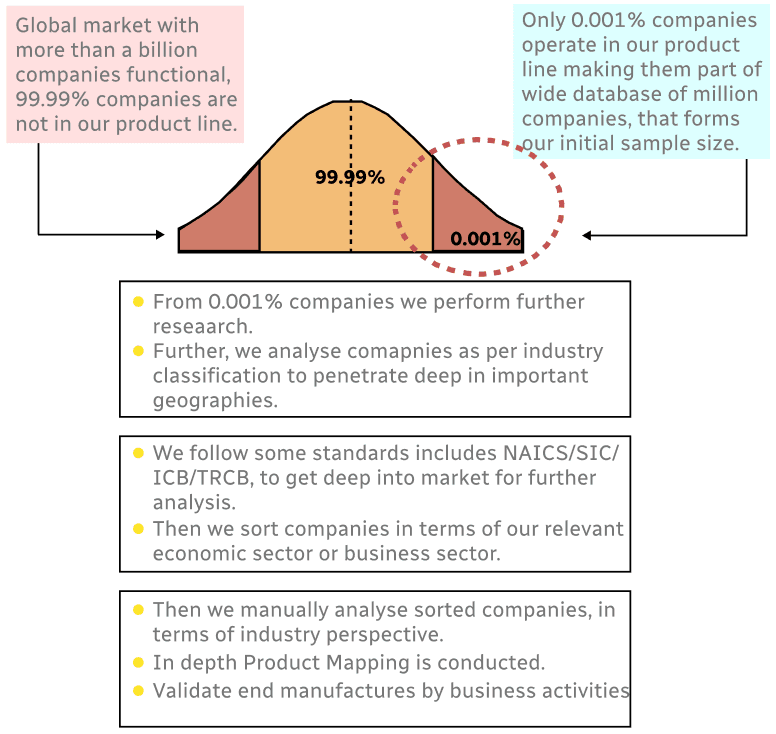
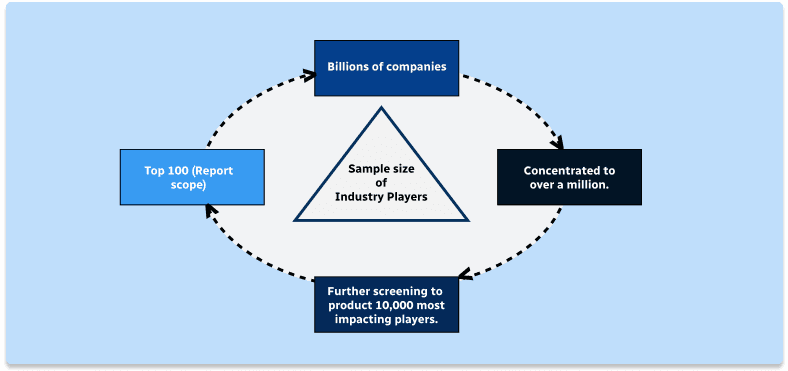
Step 1 - Identification of Relevant Samples Size from Population Database
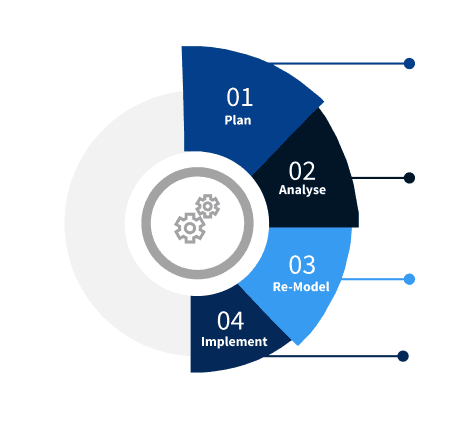
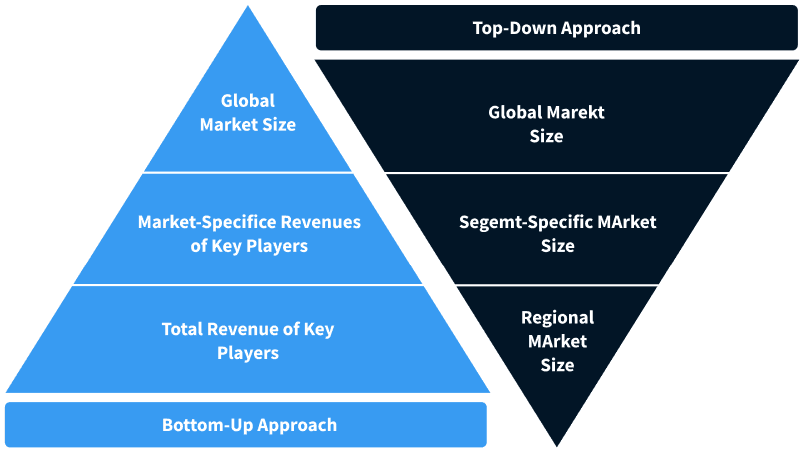
Step 2 - Approaches for Defining Global Market Size (Value, Volume* & Price*)
Note*: In applicable scenarios
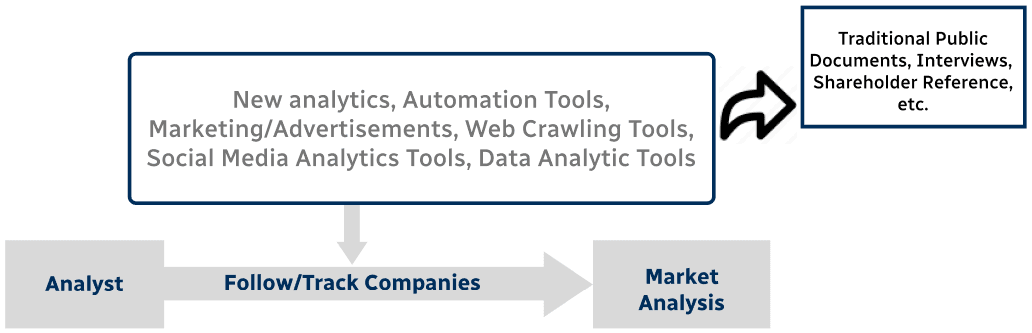
Step 3 - Data Sources
Primary Research
- Web Analytics
- Survey Reports
- Research Institute
- Latest Research Reports
- Opinion Leaders
Secondary Research
- Annual Reports
- White Paper
- Latest Press Release
- Industry Association
- Paid Database
- Investor Presentations
Step 4 - Data Triangulation
Involves using different sources of information in order to increase the validity of a study
These sources are likely to be stakeholders in a program - participants, other researchers, program staff, other community members, and so on.
Then we put all data in single framework & apply various statistical tools to find out the dynamic on the market.
During the analysis stage, feedback from the stakeholder groups would be compared to determine areas of agreement as well as areas of divergence