


Key Insights
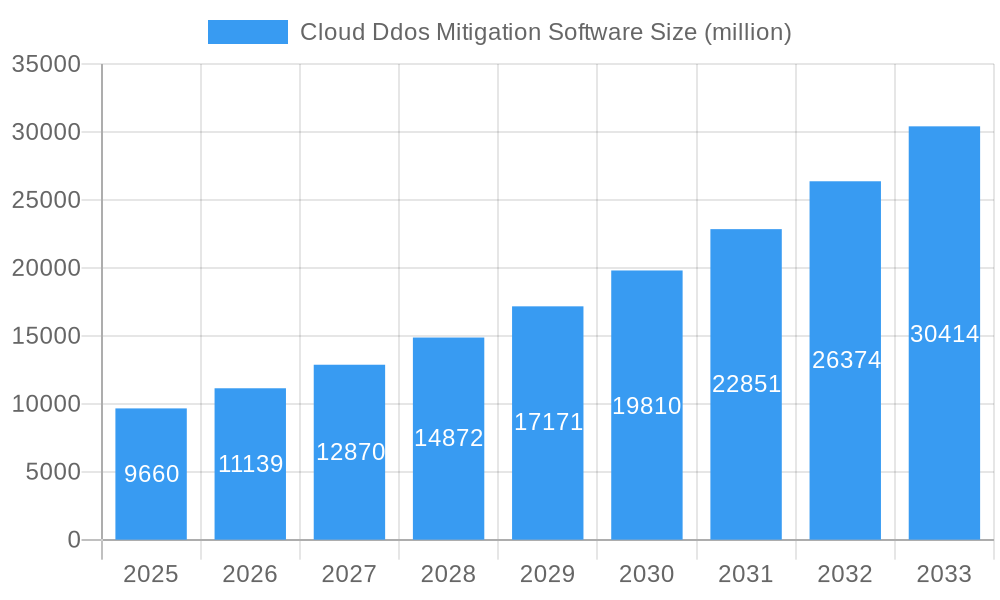
The Cloud DDoS Mitigation Software market is poised for substantial growth, with a projected market size of $9.66 billion in 2025. This expansion is driven by an escalating frequency and sophistication of Distributed Denial of Service (DDoS) attacks, which pose a significant threat to the availability and integrity of online services. Organizations across all sectors are increasingly recognizing the critical need for robust DDoS protection to safeguard their digital assets, customer data, and operational continuity. The CAGR of 15.44% over the forecast period (2025-2033) underscores the market's robust upward trajectory. This growth is fueled by the increasing reliance on cloud infrastructure, the proliferation of IoT devices (which can be exploited for botnets), and the ever-evolving tactics of cybercriminals. Key drivers include the growing adoption of cloud-based solutions, the need for real-time threat detection and response, and the increasing complexity of attack vectors requiring multi-layered defense strategies.
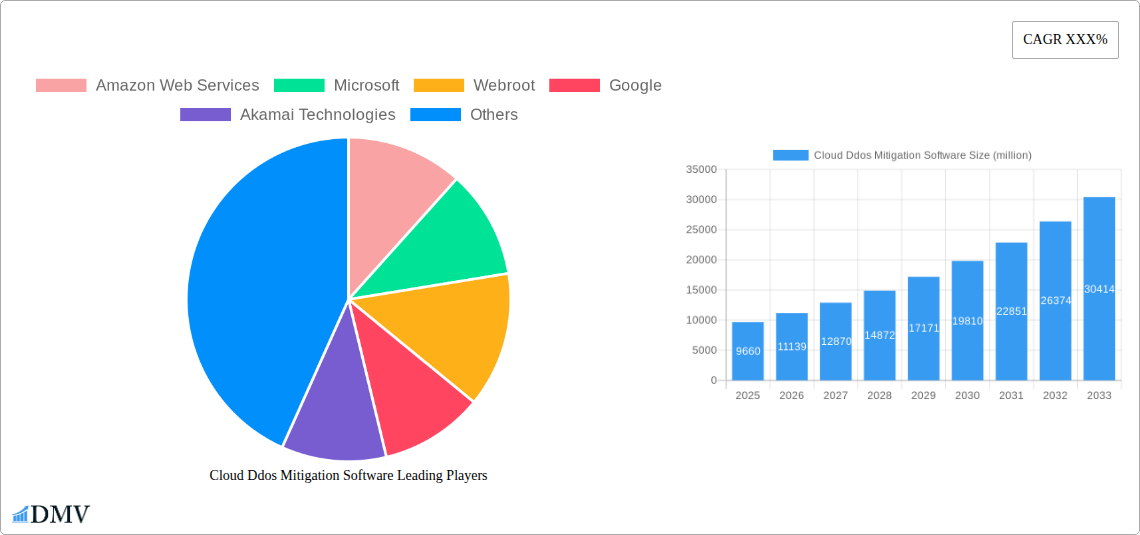
Cloud Ddos Mitigation Software Market Size (In Billion)

The market's dynamism is further shaped by several key trends. The shift towards hybrid and multi-cloud environments necessitates integrated DDoS mitigation solutions that can provide consistent protection across diverse infrastructures. Advanced technologies like artificial intelligence (AI) and machine learning (ML) are being increasingly embedded in these solutions for predictive threat identification and automated response, enabling faster and more effective mitigation. While the market is largely propelled by the increasing attack landscape and the growing awareness of cybersecurity, certain factors could restrain its full potential. The initial cost of implementing sophisticated DDoS mitigation solutions, particularly for smaller enterprises, and the ongoing need for skilled cybersecurity professionals to manage and optimize these systems present challenges. However, the clear benefits of uninterrupted service availability and data security are expected to outweigh these restraints, leading to continued market expansion and innovation in cloud-based DDoS mitigation.
Cloud Ddos Mitigation Software Company Market Share
Cloud DDoS Mitigation Software Market Report: Unlocking Security in a Connected World
This comprehensive report delves deep into the global Cloud DDoS Mitigation Software market, offering an in-depth analysis of its present state and future trajectory. Covering a critical study period from 2019 to 2033, with a base year of 2025, this report equips stakeholders with actionable insights into market dynamics, technological innovations, and competitive landscapes. Understand the evolving threat of Distributed Denial of Service (DDoS) attacks and discover how leading software solutions are fortifying digital infrastructures worldwide. The market is projected to reach a valuation of over $100 billion by 2033, driven by the escalating sophistication of cyber threats and the increasing reliance on cloud-based services across all business segments.
Cloud DDoS Mitigation Software Market Composition & Trends
The Cloud DDoS Mitigation Software market is characterized by a dynamic interplay of established cybersecurity giants and agile innovators, fostering a landscape of intense competition and rapid advancement. Market concentration is moderate, with a significant presence of key players like Cloudflare, Akamai Technologies, Amazon Web Services, and Microsoft, who collectively hold a substantial market share, estimated to be over 70%. Innovation catalysts are primarily driven by the ever-evolving nature of DDoS attack vectors, demanding constant research and development in areas such as machine learning-powered anomaly detection, AI-driven threat intelligence, and sophisticated traffic scrubbing techniques. The regulatory landscape is increasingly stringent, with data protection and cybersecurity mandates influencing the adoption of robust mitigation solutions. Substitute products, while limited in direct scope, can include traditional firewalls and basic network security measures, but they often fall short against large-scale, volumetric DDoS attacks. End-user profiles span across Individual users seeking protection for personal online assets, Enterprise clients requiring comprehensive security for mission-critical operations, and Others, encompassing government agencies and critical infrastructure providers. Merger and Acquisition (M&A) activities are a significant trend, with strategic acquisitions aimed at expanding service portfolios and geographical reach, with total M&A deal values estimated to be in the tens of billions of dollars annually. Key M&A transactions have seen companies like Imperva and Webroot being integrated into larger cybersecurity ecosystems.
Cloud DDoS Mitigation Software Industry Evolution
The Cloud DDoS Mitigation Software industry has witnessed a profound evolution, transforming from a niche security offering to an indispensable component of modern digital infrastructure. The historical period from 2019 to 2024 saw a steady increase in the adoption of cloud-based solutions, driven by the inherent scalability and cost-effectiveness they offer over traditional on-premise systems. During this phase, market growth rates averaged around 15% annually, fueled by a rise in the frequency and sophistication of DDoS attacks targeting businesses of all sizes. Technological advancements have been relentless, with a significant shift towards AI and machine learning for real-time threat detection and mitigation. Early solutions often relied on signature-based detection, which proved ineffective against novel attack methods. The introduction of behavioral analysis and adaptive learning algorithms, a key development around 2022-2023, dramatically improved detection accuracy and reduced false positives. Consumer demand has also played a crucial role, with organizations increasingly prioritizing service availability and data integrity. The average downtime cost due to DDoS attacks, estimated to be over $50,000 per hour for enterprises, has incentivized proactive investment in robust mitigation strategies. The market has moved from basic volumetric attack mitigation to addressing more complex application-layer and protocol-specific attacks. Adoption metrics show a clear trend, with cloud-based solutions now accounting for over 80% of the market share in DDoS mitigation, a stark contrast to the more even split seen in the historical period. The forecast period of 2025–2033 is poised for accelerated growth, with projected annual growth rates of 18%–22%, driven by the continued expansion of cloud computing, the proliferation of IoT devices, and the emergence of novel attack vectors such as botnets leveraging AI. The estimated market size for 2025 is projected to exceed $50 billion, underscoring the critical importance of this sector.
Leading Regions, Countries, or Segments in Cloud DDoS Mitigation Software
The dominance in the Cloud DDoS Mitigation Software market is clearly established within the Enterprise segment and the Cloud-based type, with North America leading as the most significant region. This dominance is driven by a confluence of factors, including a mature digital economy, a higher perceived threat landscape, and substantial investment trends in cybersecurity.
Application Segment Dominance (Enterprise):
- High Investment Capacity: Enterprises possess the financial resources to invest in sophisticated, multi-layered DDoS mitigation solutions that offer comprehensive protection for their critical assets, intellectual property, and customer data.
- Regulatory Compliance: Strict data privacy and cybersecurity regulations (e.g., GDPR, CCPA) in developed economies necessitate robust defenses against service disruption, making DDoS mitigation a non-negotiable aspect of compliance for enterprises.
- Business Continuity: The direct impact of downtime on revenue, reputation, and customer trust is far greater for enterprises, driving a proactive approach to security. The average cost of downtime for an enterprise can exceed $100,000 per hour.
- Complex Infrastructure: Enterprises often manage large and intricate IT infrastructures, making them more susceptible to a wider range of attack vectors that require advanced mitigation capabilities.
Type Segment Dominance (Cloud-based):
- Scalability and Elasticity: Cloud-based solutions offer unparalleled ability to scale resources up or down in response to traffic surges during an attack, a critical requirement for effective mitigation. This elasticity ensures that mitigation capacity can match attack magnitude.
- Cost-Effectiveness: Compared to on-premise deployments, cloud solutions generally offer a more predictable and often lower total cost of ownership, eliminating the need for significant upfront hardware investment.
- Managed Services and Expertise: Cloud providers and specialized DDoS mitigation companies offer managed services, providing 24/7 monitoring and expert response, which many organizations lack internally.
- Global Reach and Deployment Speed: Cloud-based solutions can be deployed rapidly across global points of presence, offering distributed mitigation capabilities essential for combating geographically dispersed attacks.
Regional Dominance (North America):
- Technological Hub: North America, particularly the United States, is a global leader in technological innovation and cloud adoption, creating a fertile ground for advanced cybersecurity solutions.
- High Cybersecurity Awareness: Organizations in North America exhibit a heightened awareness of cybersecurity threats and the potential financial and reputational damage they can cause.
- Strong Regulatory Frameworks: The presence of robust cybersecurity regulations and compliance mandates encourages significant investment in protective measures.
- Concentration of Large Enterprises: The region is home to a vast number of large enterprises across various sectors, driving substantial demand for enterprise-grade security solutions.
- Significant Vendor Presence: Leading DDoS mitigation providers such as Akamai Technologies, Cloudflare, and Amazon Web Services have a strong presence and extensive customer base in North America. Investment trends in cybersecurity in North America are estimated to be over $100 billion annually.
Cloud DDoS Mitigation Software Product Innovations
Cloud DDoS Mitigation Software is continuously evolving with groundbreaking innovations focused on enhanced threat detection and accelerated response times. Key advancements include the integration of sophisticated AI and machine learning algorithms for real-time anomaly detection, enabling proactive identification of subtle attack patterns that bypass traditional signature-based methods. Next-generation solutions are offering multi-layered defense strategies, combining volumetric attack scrubbing, application-layer protection, and bot management capabilities to counter a wider spectrum of threats. Performance metrics like mitigation latency, measured in milliseconds, and the capacity to handle terabits per second (Tbps) of attack traffic are becoming standard benchmarks, with leading solutions consistently exceeding 99.99% uptime guarantees. Furthermore, the introduction of automated remediation workflows and intelligent traffic routing ensures minimal disruption to legitimate users during an attack.
Propelling Factors for Cloud DDoS Mitigation Software Growth
The growth of the Cloud DDoS Mitigation Software market is propelled by several key factors. Firstly, the escalating sophistication and frequency of Distributed Denial of Service (DDoS) attacks, driven by readily available attack tools and botnets, necessitate advanced protective measures. The economic impact of downtime, estimated to cost businesses an average of $5,500 per minute, further incentivizes investment. Secondly, the pervasive adoption of cloud computing and digital transformation across industries expands the attack surface, creating a greater demand for scalable, cloud-native security solutions. Thirdly, evolving regulatory landscapes and data privacy mandates, such as GDPR and CCPA, are compelling organizations to bolster their cybersecurity posture. Finally, the increasing interconnectedness of devices through the Internet of Things (IoT) introduces new vulnerabilities and attack vectors, driving the need for comprehensive DDoS protection.
Obstacles in the Cloud DDoS Mitigation Software Market
Despite robust growth, the Cloud DDoS Mitigation Software market faces several obstacles. The sheer volume and evolving nature of DDoS attacks present a constant challenge, with attackers rapidly developing new techniques to circumvent existing defenses. Furthermore, the cost of advanced mitigation solutions can be prohibitive for small and medium-sized businesses, creating a segment of vulnerable entities. Regulatory complexities and differing data residency laws across regions can also hinder widespread adoption and implementation of global mitigation strategies. Supply chain disruptions, though less direct, can impact the availability of critical hardware components for on-premise elements and affect the overall service delivery of cloud providers. Finally, a shortage of skilled cybersecurity professionals to manage and optimize these sophisticated solutions remains a significant barrier to entry and effective deployment for many organizations.
Future Opportunities in Cloud DDoS Mitigation Software
The future of Cloud DDoS Mitigation Software presents significant opportunities for innovation and market expansion. The burgeoning Internet of Things (IoT) ecosystem, with its vast array of connected devices, offers a new frontier for security, demanding specialized mitigation strategies. The increasing adoption of 5G networks, enabling higher bandwidth and lower latency, will also fuel more sophisticated and larger-scale attacks, requiring even more advanced defense mechanisms. Furthermore, the growing trend of remote work and hybrid office models necessitates robust and accessible security solutions for distributed workforces. Opportunities also lie in developing more intelligent, AI-driven solutions capable of predicting and preempting attacks before they occur, moving beyond reactive mitigation. The integration of quantum-resistant cryptography, while a longer-term prospect, represents another potential area for future development in robust security.
Major Players in the Cloud DDoS Mitigation Software Ecosystem
- Amazon Web Services
- Microsoft
- Webroot
- Akamai Technologies
- Alibaba
- AT&T
- CenturyLink
- Imperva
- Cloudflare
- Cloudbric
- SiteLock
- StackPath
- Check Point Software Technologies
- DOSarrest Internet Security
Key Developments in Cloud DDoS Mitigation Software Industry
- 2019: Increased adoption of AI and machine learning for anomaly detection in DDoS mitigation.
- 2020: Significant rise in application-layer DDoS attacks targeting remote work infrastructure due to the COVID-19 pandemic.
- 2021: Major cloud providers enhance their DDoS protection services with expanded global Points of Presence (PoPs).
- 2022: Introduction of sophisticated bot management solutions integrated with DDoS mitigation platforms.
- 2023: Mergers and acquisitions accelerate as larger cybersecurity firms consolidate portfolios.
- 2024: Growing focus on protecting critical infrastructure and IoT devices from advanced DDoS threats.
Strategic Cloud DDoS Mitigation Software Market Forecast
The strategic forecast for the Cloud DDoS Mitigation Software market indicates continued robust expansion, driven by persistent cyber threats and the escalating reliance on digital infrastructure. The market is set to benefit from ongoing advancements in AI and machine learning, leading to more predictive and adaptive mitigation capabilities. The increasing adoption of cloud-native security solutions by enterprises and the growing need to secure the vast IoT landscape will further fuel demand. Furthermore, the continuous evolution of attack vectors will necessitate ongoing innovation, creating opportunities for solution providers that can offer layered, intelligent, and scalable protection. The market is projected to reach over $100 billion by 2033, with an average annual growth rate of approximately 18%.
Cloud Ddos Mitigation Software Segmentation
-
1. Application
- 1.1. Individual
- 1.2. Enterprise
- 1.3. Others
-
2. Type
- 2.1. On-premise
- 2.2. Cloud-based
Cloud Ddos Mitigation Software Segmentation By Geography
-
1. North America
- 1.1. United States
- 1.2. Canada
- 1.3. Mexico
-
2. South America
- 2.1. Brazil
- 2.2. Argentina
- 2.3. Rest of South America
-
3. Europe
- 3.1. United Kingdom
- 3.2. Germany
- 3.3. France
- 3.4. Italy
- 3.5. Spain
- 3.6. Russia
- 3.7. Benelux
- 3.8. Nordics
- 3.9. Rest of Europe
-
4. Middle East & Africa
- 4.1. Turkey
- 4.2. Israel
- 4.3. GCC
- 4.4. North Africa
- 4.5. South Africa
- 4.6. Rest of Middle East & Africa
-
5. Asia Pacific
- 5.1. China
- 5.2. India
- 5.3. Japan
- 5.4. South Korea
- 5.5. ASEAN
- 5.6. Oceania
- 5.7. Rest of Asia Pacific
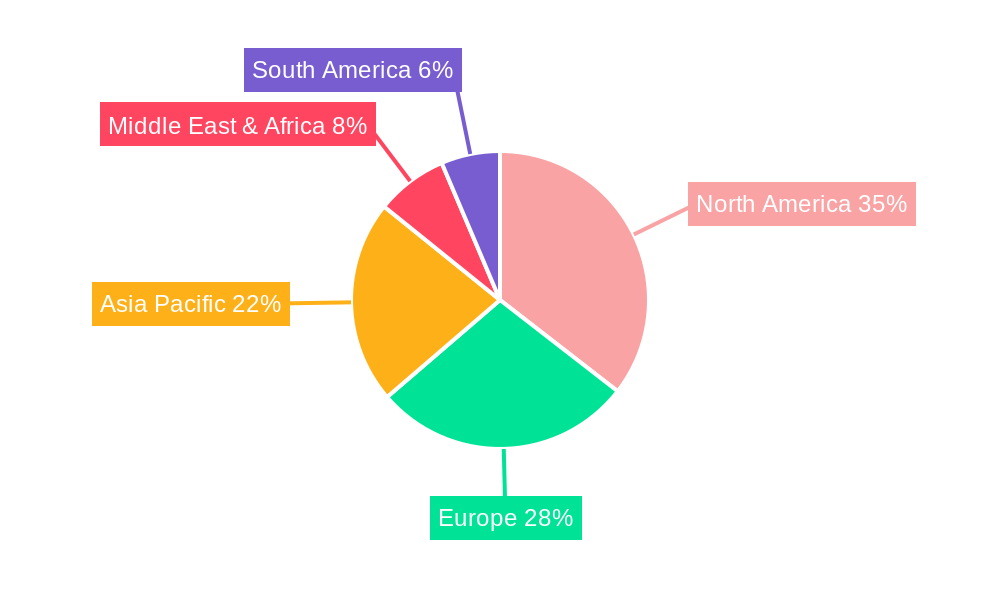
Cloud Ddos Mitigation Software Regional Market Share
Geographic Coverage of Cloud Ddos Mitigation Software
Cloud Ddos Mitigation Software REPORT HIGHLIGHTS
| Aspects | Details |
|---|---|
| Study Period | 2020-2034 |
| Base Year | 2025 |
| Estimated Year | 2026 |
| Forecast Period | 2026-2034 |
| Historical Period | 2020-2025 |
| Growth Rate | CAGR of 15.44% from 2020-2034 |
| Segmentation |
|
Table of Contents
- 1. Introduction
- 1.1. Research Scope
- 1.2. Market Segmentation
- 1.3. Research Methodology
- 1.4. Definitions and Assumptions
- 2. Executive Summary
- 2.1. Introduction
- 3. Market Dynamics
- 3.1. Introduction
- 3.2. Market Drivers
- 3.3. Market Restrains
- 3.4. Market Trends
- 4. Market Factor Analysis
- 4.1. Porters Five Forces
- 4.2. Supply/Value Chain
- 4.3. PESTEL analysis
- 4.4. Market Entropy
- 4.5. Patent/Trademark Analysis
- 5. Global Cloud Ddos Mitigation Software Analysis, Insights and Forecast, 2020-2032
- 5.1. Market Analysis, Insights and Forecast - by Application
- 5.1.1. Individual
- 5.1.2. Enterprise
- 5.1.3. Others
- 5.2. Market Analysis, Insights and Forecast - by Type
- 5.2.1. On-premise
- 5.2.2. Cloud-based
- 5.3. Market Analysis, Insights and Forecast - by Region
- 5.3.1. North America
- 5.3.2. South America
- 5.3.3. Europe
- 5.3.4. Middle East & Africa
- 5.3.5. Asia Pacific
- 5.1. Market Analysis, Insights and Forecast - by Application
- 6. North America Cloud Ddos Mitigation Software Analysis, Insights and Forecast, 2020-2032
- 6.1. Market Analysis, Insights and Forecast - by Application
- 6.1.1. Individual
- 6.1.2. Enterprise
- 6.1.3. Others
- 6.2. Market Analysis, Insights and Forecast - by Type
- 6.2.1. On-premise
- 6.2.2. Cloud-based
- 6.1. Market Analysis, Insights and Forecast - by Application
- 7. South America Cloud Ddos Mitigation Software Analysis, Insights and Forecast, 2020-2032
- 7.1. Market Analysis, Insights and Forecast - by Application
- 7.1.1. Individual
- 7.1.2. Enterprise
- 7.1.3. Others
- 7.2. Market Analysis, Insights and Forecast - by Type
- 7.2.1. On-premise
- 7.2.2. Cloud-based
- 7.1. Market Analysis, Insights and Forecast - by Application
- 8. Europe Cloud Ddos Mitigation Software Analysis, Insights and Forecast, 2020-2032
- 8.1. Market Analysis, Insights and Forecast - by Application
- 8.1.1. Individual
- 8.1.2. Enterprise
- 8.1.3. Others
- 8.2. Market Analysis, Insights and Forecast - by Type
- 8.2.1. On-premise
- 8.2.2. Cloud-based
- 8.1. Market Analysis, Insights and Forecast - by Application
- 9. Middle East & Africa Cloud Ddos Mitigation Software Analysis, Insights and Forecast, 2020-2032
- 9.1. Market Analysis, Insights and Forecast - by Application
- 9.1.1. Individual
- 9.1.2. Enterprise
- 9.1.3. Others
- 9.2. Market Analysis, Insights and Forecast - by Type
- 9.2.1. On-premise
- 9.2.2. Cloud-based
- 9.1. Market Analysis, Insights and Forecast - by Application
- 10. Asia Pacific Cloud Ddos Mitigation Software Analysis, Insights and Forecast, 2020-2032
- 10.1. Market Analysis, Insights and Forecast - by Application
- 10.1.1. Individual
- 10.1.2. Enterprise
- 10.1.3. Others
- 10.2. Market Analysis, Insights and Forecast - by Type
- 10.2.1. On-premise
- 10.2.2. Cloud-based
- 10.1. Market Analysis, Insights and Forecast - by Application
- 11. Competitive Analysis
- 11.1. Global Market Share Analysis 2025
- 11.2. Company Profiles
- 11.2.1 Amazon Web Services
- 11.2.1.1. Overview
- 11.2.1.2. Products
- 11.2.1.3. SWOT Analysis
- 11.2.1.4. Recent Developments
- 11.2.1.5. Financials (Based on Availability)
- 11.2.2 Microsoft
- 11.2.2.1. Overview
- 11.2.2.2. Products
- 11.2.2.3. SWOT Analysis
- 11.2.2.4. Recent Developments
- 11.2.2.5. Financials (Based on Availability)
- 11.2.3 Webroot
- 11.2.3.1. Overview
- 11.2.3.2. Products
- 11.2.3.3. SWOT Analysis
- 11.2.3.4. Recent Developments
- 11.2.3.5. Financials (Based on Availability)
- 11.2.4 Google
- 11.2.4.1. Overview
- 11.2.4.2. Products
- 11.2.4.3. SWOT Analysis
- 11.2.4.4. Recent Developments
- 11.2.4.5. Financials (Based on Availability)
- 11.2.5 Akamai Technologies
- 11.2.5.1. Overview
- 11.2.5.2. Products
- 11.2.5.3. SWOT Analysis
- 11.2.5.4. Recent Developments
- 11.2.5.5. Financials (Based on Availability)
- 11.2.6 Alibaba
- 11.2.6.1. Overview
- 11.2.6.2. Products
- 11.2.6.3. SWOT Analysis
- 11.2.6.4. Recent Developments
- 11.2.6.5. Financials (Based on Availability)
- 11.2.7 AT&T
- 11.2.7.1. Overview
- 11.2.7.2. Products
- 11.2.7.3. SWOT Analysis
- 11.2.7.4. Recent Developments
- 11.2.7.5. Financials (Based on Availability)
- 11.2.8 CenturyLink
- 11.2.8.1. Overview
- 11.2.8.2. Products
- 11.2.8.3. SWOT Analysis
- 11.2.8.4. Recent Developments
- 11.2.8.5. Financials (Based on Availability)
- 11.2.9 Imperva
- 11.2.9.1. Overview
- 11.2.9.2. Products
- 11.2.9.3. SWOT Analysis
- 11.2.9.4. Recent Developments
- 11.2.9.5. Financials (Based on Availability)
- 11.2.10 Cloudflare
- 11.2.10.1. Overview
- 11.2.10.2. Products
- 11.2.10.3. SWOT Analysis
- 11.2.10.4. Recent Developments
- 11.2.10.5. Financials (Based on Availability)
- 11.2.11 Cloudbric
- 11.2.11.1. Overview
- 11.2.11.2. Products
- 11.2.11.3. SWOT Analysis
- 11.2.11.4. Recent Developments
- 11.2.11.5. Financials (Based on Availability)
- 11.2.12 SiteLock
- 11.2.12.1. Overview
- 11.2.12.2. Products
- 11.2.12.3. SWOT Analysis
- 11.2.12.4. Recent Developments
- 11.2.12.5. Financials (Based on Availability)
- 11.2.13 StackPath
- 11.2.13.1. Overview
- 11.2.13.2. Products
- 11.2.13.3. SWOT Analysis
- 11.2.13.4. Recent Developments
- 11.2.13.5. Financials (Based on Availability)
- 11.2.14 Check Point Software Technologies
- 11.2.14.1. Overview
- 11.2.14.2. Products
- 11.2.14.3. SWOT Analysis
- 11.2.14.4. Recent Developments
- 11.2.14.5. Financials (Based on Availability)
- 11.2.15 DOSarrest Internet Security
- 11.2.15.1. Overview
- 11.2.15.2. Products
- 11.2.15.3. SWOT Analysis
- 11.2.15.4. Recent Developments
- 11.2.15.5. Financials (Based on Availability)
- 11.2.1 Amazon Web Services
List of Figures
- Figure 1: Global Cloud Ddos Mitigation Software Revenue Breakdown (undefined, %) by Region 2025 & 2033
- Figure 2: North America Cloud Ddos Mitigation Software Revenue (undefined), by Application 2025 & 2033
- Figure 3: North America Cloud Ddos Mitigation Software Revenue Share (%), by Application 2025 & 2033
- Figure 4: North America Cloud Ddos Mitigation Software Revenue (undefined), by Type 2025 & 2033
- Figure 5: North America Cloud Ddos Mitigation Software Revenue Share (%), by Type 2025 & 2033
- Figure 6: North America Cloud Ddos Mitigation Software Revenue (undefined), by Country 2025 & 2033
- Figure 7: North America Cloud Ddos Mitigation Software Revenue Share (%), by Country 2025 & 2033
- Figure 8: South America Cloud Ddos Mitigation Software Revenue (undefined), by Application 2025 & 2033
- Figure 9: South America Cloud Ddos Mitigation Software Revenue Share (%), by Application 2025 & 2033
- Figure 10: South America Cloud Ddos Mitigation Software Revenue (undefined), by Type 2025 & 2033
- Figure 11: South America Cloud Ddos Mitigation Software Revenue Share (%), by Type 2025 & 2033
- Figure 12: South America Cloud Ddos Mitigation Software Revenue (undefined), by Country 2025 & 2033
- Figure 13: South America Cloud Ddos Mitigation Software Revenue Share (%), by Country 2025 & 2033
- Figure 14: Europe Cloud Ddos Mitigation Software Revenue (undefined), by Application 2025 & 2033
- Figure 15: Europe Cloud Ddos Mitigation Software Revenue Share (%), by Application 2025 & 2033
- Figure 16: Europe Cloud Ddos Mitigation Software Revenue (undefined), by Type 2025 & 2033
- Figure 17: Europe Cloud Ddos Mitigation Software Revenue Share (%), by Type 2025 & 2033
- Figure 18: Europe Cloud Ddos Mitigation Software Revenue (undefined), by Country 2025 & 2033
- Figure 19: Europe Cloud Ddos Mitigation Software Revenue Share (%), by Country 2025 & 2033
- Figure 20: Middle East & Africa Cloud Ddos Mitigation Software Revenue (undefined), by Application 2025 & 2033
- Figure 21: Middle East & Africa Cloud Ddos Mitigation Software Revenue Share (%), by Application 2025 & 2033
- Figure 22: Middle East & Africa Cloud Ddos Mitigation Software Revenue (undefined), by Type 2025 & 2033
- Figure 23: Middle East & Africa Cloud Ddos Mitigation Software Revenue Share (%), by Type 2025 & 2033
- Figure 24: Middle East & Africa Cloud Ddos Mitigation Software Revenue (undefined), by Country 2025 & 2033
- Figure 25: Middle East & Africa Cloud Ddos Mitigation Software Revenue Share (%), by Country 2025 & 2033
- Figure 26: Asia Pacific Cloud Ddos Mitigation Software Revenue (undefined), by Application 2025 & 2033
- Figure 27: Asia Pacific Cloud Ddos Mitigation Software Revenue Share (%), by Application 2025 & 2033
- Figure 28: Asia Pacific Cloud Ddos Mitigation Software Revenue (undefined), by Type 2025 & 2033
- Figure 29: Asia Pacific Cloud Ddos Mitigation Software Revenue Share (%), by Type 2025 & 2033
- Figure 30: Asia Pacific Cloud Ddos Mitigation Software Revenue (undefined), by Country 2025 & 2033
- Figure 31: Asia Pacific Cloud Ddos Mitigation Software Revenue Share (%), by Country 2025 & 2033
List of Tables
- Table 1: Global Cloud Ddos Mitigation Software Revenue undefined Forecast, by Application 2020 & 2033
- Table 2: Global Cloud Ddos Mitigation Software Revenue undefined Forecast, by Type 2020 & 2033
- Table 3: Global Cloud Ddos Mitigation Software Revenue undefined Forecast, by Region 2020 & 2033
- Table 4: Global Cloud Ddos Mitigation Software Revenue undefined Forecast, by Application 2020 & 2033
- Table 5: Global Cloud Ddos Mitigation Software Revenue undefined Forecast, by Type 2020 & 2033
- Table 6: Global Cloud Ddos Mitigation Software Revenue undefined Forecast, by Country 2020 & 2033
- Table 7: United States Cloud Ddos Mitigation Software Revenue (undefined) Forecast, by Application 2020 & 2033
- Table 8: Canada Cloud Ddos Mitigation Software Revenue (undefined) Forecast, by Application 2020 & 2033
- Table 9: Mexico Cloud Ddos Mitigation Software Revenue (undefined) Forecast, by Application 2020 & 2033
- Table 10: Global Cloud Ddos Mitigation Software Revenue undefined Forecast, by Application 2020 & 2033
- Table 11: Global Cloud Ddos Mitigation Software Revenue undefined Forecast, by Type 2020 & 2033
- Table 12: Global Cloud Ddos Mitigation Software Revenue undefined Forecast, by Country 2020 & 2033
- Table 13: Brazil Cloud Ddos Mitigation Software Revenue (undefined) Forecast, by Application 2020 & 2033
- Table 14: Argentina Cloud Ddos Mitigation Software Revenue (undefined) Forecast, by Application 2020 & 2033
- Table 15: Rest of South America Cloud Ddos Mitigation Software Revenue (undefined) Forecast, by Application 2020 & 2033
- Table 16: Global Cloud Ddos Mitigation Software Revenue undefined Forecast, by Application 2020 & 2033
- Table 17: Global Cloud Ddos Mitigation Software Revenue undefined Forecast, by Type 2020 & 2033
- Table 18: Global Cloud Ddos Mitigation Software Revenue undefined Forecast, by Country 2020 & 2033
- Table 19: United Kingdom Cloud Ddos Mitigation Software Revenue (undefined) Forecast, by Application 2020 & 2033
- Table 20: Germany Cloud Ddos Mitigation Software Revenue (undefined) Forecast, by Application 2020 & 2033
- Table 21: France Cloud Ddos Mitigation Software Revenue (undefined) Forecast, by Application 2020 & 2033
- Table 22: Italy Cloud Ddos Mitigation Software Revenue (undefined) Forecast, by Application 2020 & 2033
- Table 23: Spain Cloud Ddos Mitigation Software Revenue (undefined) Forecast, by Application 2020 & 2033
- Table 24: Russia Cloud Ddos Mitigation Software Revenue (undefined) Forecast, by Application 2020 & 2033
- Table 25: Benelux Cloud Ddos Mitigation Software Revenue (undefined) Forecast, by Application 2020 & 2033
- Table 26: Nordics Cloud Ddos Mitigation Software Revenue (undefined) Forecast, by Application 2020 & 2033
- Table 27: Rest of Europe Cloud Ddos Mitigation Software Revenue (undefined) Forecast, by Application 2020 & 2033
- Table 28: Global Cloud Ddos Mitigation Software Revenue undefined Forecast, by Application 2020 & 2033
- Table 29: Global Cloud Ddos Mitigation Software Revenue undefined Forecast, by Type 2020 & 2033
- Table 30: Global Cloud Ddos Mitigation Software Revenue undefined Forecast, by Country 2020 & 2033
- Table 31: Turkey Cloud Ddos Mitigation Software Revenue (undefined) Forecast, by Application 2020 & 2033
- Table 32: Israel Cloud Ddos Mitigation Software Revenue (undefined) Forecast, by Application 2020 & 2033
- Table 33: GCC Cloud Ddos Mitigation Software Revenue (undefined) Forecast, by Application 2020 & 2033
- Table 34: North Africa Cloud Ddos Mitigation Software Revenue (undefined) Forecast, by Application 2020 & 2033
- Table 35: South Africa Cloud Ddos Mitigation Software Revenue (undefined) Forecast, by Application 2020 & 2033
- Table 36: Rest of Middle East & Africa Cloud Ddos Mitigation Software Revenue (undefined) Forecast, by Application 2020 & 2033
- Table 37: Global Cloud Ddos Mitigation Software Revenue undefined Forecast, by Application 2020 & 2033
- Table 38: Global Cloud Ddos Mitigation Software Revenue undefined Forecast, by Type 2020 & 2033
- Table 39: Global Cloud Ddos Mitigation Software Revenue undefined Forecast, by Country 2020 & 2033
- Table 40: China Cloud Ddos Mitigation Software Revenue (undefined) Forecast, by Application 2020 & 2033
- Table 41: India Cloud Ddos Mitigation Software Revenue (undefined) Forecast, by Application 2020 & 2033
- Table 42: Japan Cloud Ddos Mitigation Software Revenue (undefined) Forecast, by Application 2020 & 2033
- Table 43: South Korea Cloud Ddos Mitigation Software Revenue (undefined) Forecast, by Application 2020 & 2033
- Table 44: ASEAN Cloud Ddos Mitigation Software Revenue (undefined) Forecast, by Application 2020 & 2033
- Table 45: Oceania Cloud Ddos Mitigation Software Revenue (undefined) Forecast, by Application 2020 & 2033
- Table 46: Rest of Asia Pacific Cloud Ddos Mitigation Software Revenue (undefined) Forecast, by Application 2020 & 2033
Frequently Asked Questions
1. What is the projected Compound Annual Growth Rate (CAGR) of the Cloud Ddos Mitigation Software?
The projected CAGR is approximately 15.44%.
2. Which companies are prominent players in the Cloud Ddos Mitigation Software?
Key companies in the market include Amazon Web Services, Microsoft, Webroot, Google, Akamai Technologies, Alibaba, AT&T, CenturyLink, Imperva, Cloudflare, Cloudbric, SiteLock, StackPath, Check Point Software Technologies, DOSarrest Internet Security.
3. What are the main segments of the Cloud Ddos Mitigation Software?
The market segments include Application, Type.
4. Can you provide details about the market size?
The market size is estimated to be USD XXX N/A as of 2022.
5. What are some drivers contributing to market growth?
N/A
6. What are the notable trends driving market growth?
N/A
7. Are there any restraints impacting market growth?
N/A
8. Can you provide examples of recent developments in the market?
N/A
9. What pricing options are available for accessing the report?
Pricing options include single-user, multi-user, and enterprise licenses priced at USD 2900.00, USD 4350.00, and USD 5800.00 respectively.
10. Is the market size provided in terms of value or volume?
The market size is provided in terms of value, measured in N/A.
11. Are there any specific market keywords associated with the report?
Yes, the market keyword associated with the report is "Cloud Ddos Mitigation Software," which aids in identifying and referencing the specific market segment covered.
12. How do I determine which pricing option suits my needs best?
The pricing options vary based on user requirements and access needs. Individual users may opt for single-user licenses, while businesses requiring broader access may choose multi-user or enterprise licenses for cost-effective access to the report.
13. Are there any additional resources or data provided in the Cloud Ddos Mitigation Software report?
While the report offers comprehensive insights, it's advisable to review the specific contents or supplementary materials provided to ascertain if additional resources or data are available.
14. How can I stay updated on further developments or reports in the Cloud Ddos Mitigation Software?
To stay informed about further developments, trends, and reports in the Cloud Ddos Mitigation Software, consider subscribing to industry newsletters, following relevant companies and organizations, or regularly checking reputable industry news sources and publications.
Methodology
Step 1 - Identification of Relevant Samples Size from Population Database



Step 2 - Approaches for Defining Global Market Size (Value, Volume* & Price*)

Note*: In applicable scenarios
Step 3 - Data Sources
Primary Research
- Web Analytics
- Survey Reports
- Research Institute
- Latest Research Reports
- Opinion Leaders
Secondary Research
- Annual Reports
- White Paper
- Latest Press Release
- Industry Association
- Paid Database
- Investor Presentations

Step 4 - Data Triangulation
Involves using different sources of information in order to increase the validity of a study
These sources are likely to be stakeholders in a program - participants, other researchers, program staff, other community members, and so on.
Then we put all data in single framework & apply various statistical tools to find out the dynamic on the market.
During the analysis stage, feedback from the stakeholder groups would be compared to determine areas of agreement as well as areas of divergence